
A job seeker with a psychiatric disability wants a strong LinkedIn profile. The counselor coaches professional presence while advising against putting the diagnosis in the headline. What guidance best reflects risk-aware social media use?
Select an answer to reveal the explanation.
Short Explanation
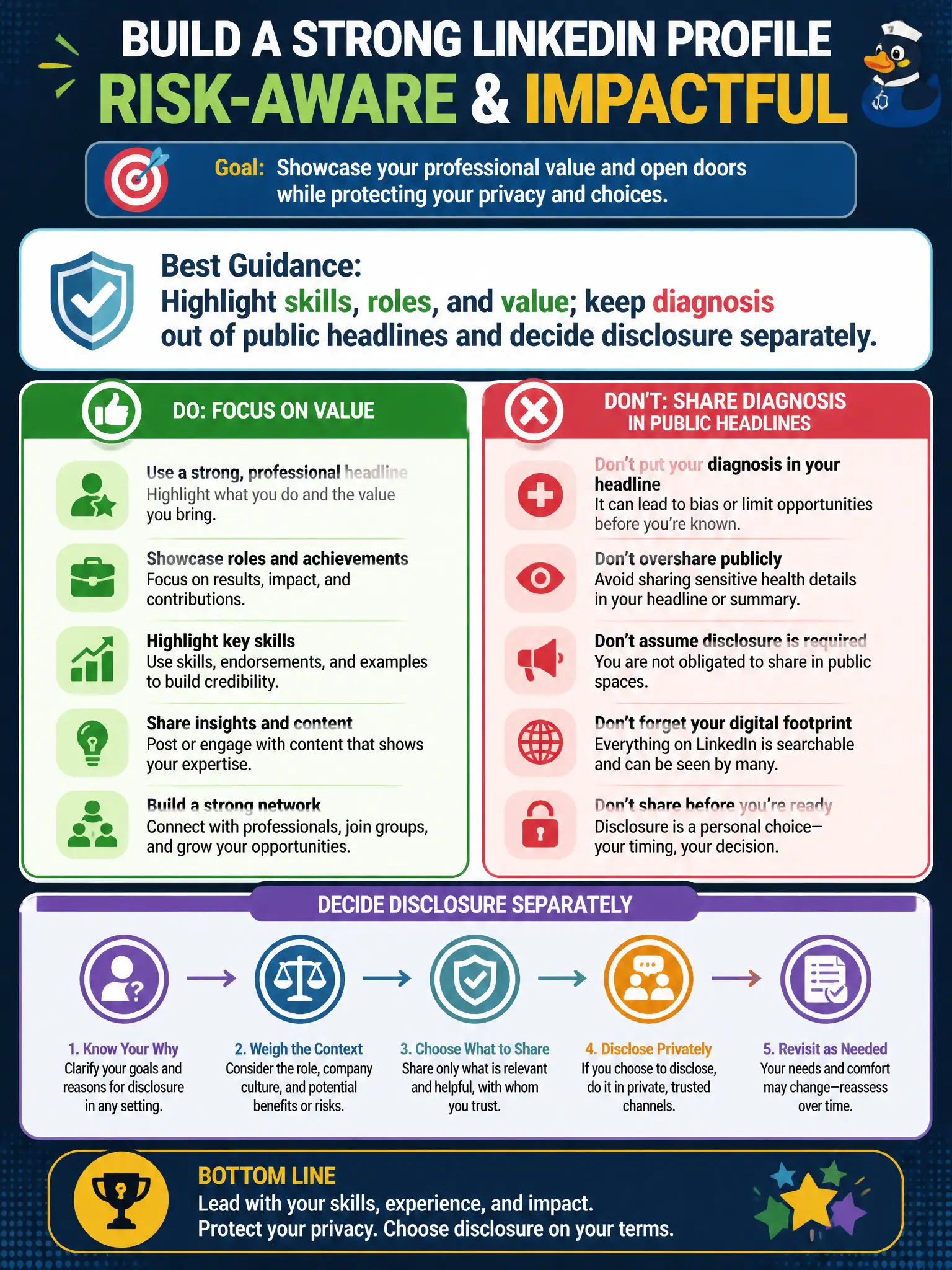
Think of the headline like a storefront sign—it should sell what you do, not your chart. Skills and roles belong up front; diagnosis is a private disclosure choice later. That keeps networking useful without oversharing.
Full Explanation
Risk-aware social media coaching for a job seeker with a psychiatric disability emphasizes highlighting skills, roles, and workplace value while keeping diagnosis out of public headlines and treating disclosure as a separate, intentional decision. That approach supports competitive placement without converting LinkedIn into a clinical chart. Listing the DSM diagnosis in the headline so employers “know accommodations immediately” fails because public diagnosis labels invite stigma, are unnecessary for initial networking, and confuse branding with the interactive accommodation process. Avoiding LinkedIn entirely because any online presence is too risky fails by overgeneralization—many employers expect professional profiles, and risk can be managed with content boundaries. Copying medical history into the About section to prove hiring-incentive eligibility fails because incentive paperwork belongs in appropriate employer/VR channels, not public profiles. Exam caveat: some advocates choose public disability identity as empowerment; counseling still distinguishes voluntary identity expression from dumping clinical detail that does not serve the job goal. Operational check: before publishing, confirm the headline and summary contain no diagnosis codes or treatment narratives and that any accommodation discussion is reserved for private employer conversations the client chooses.