
A client wants to use social media to find job leads after disability onset. What counseling guidance best balances benefit and risk?
Select an answer to reveal the explanation.
Short Explanation
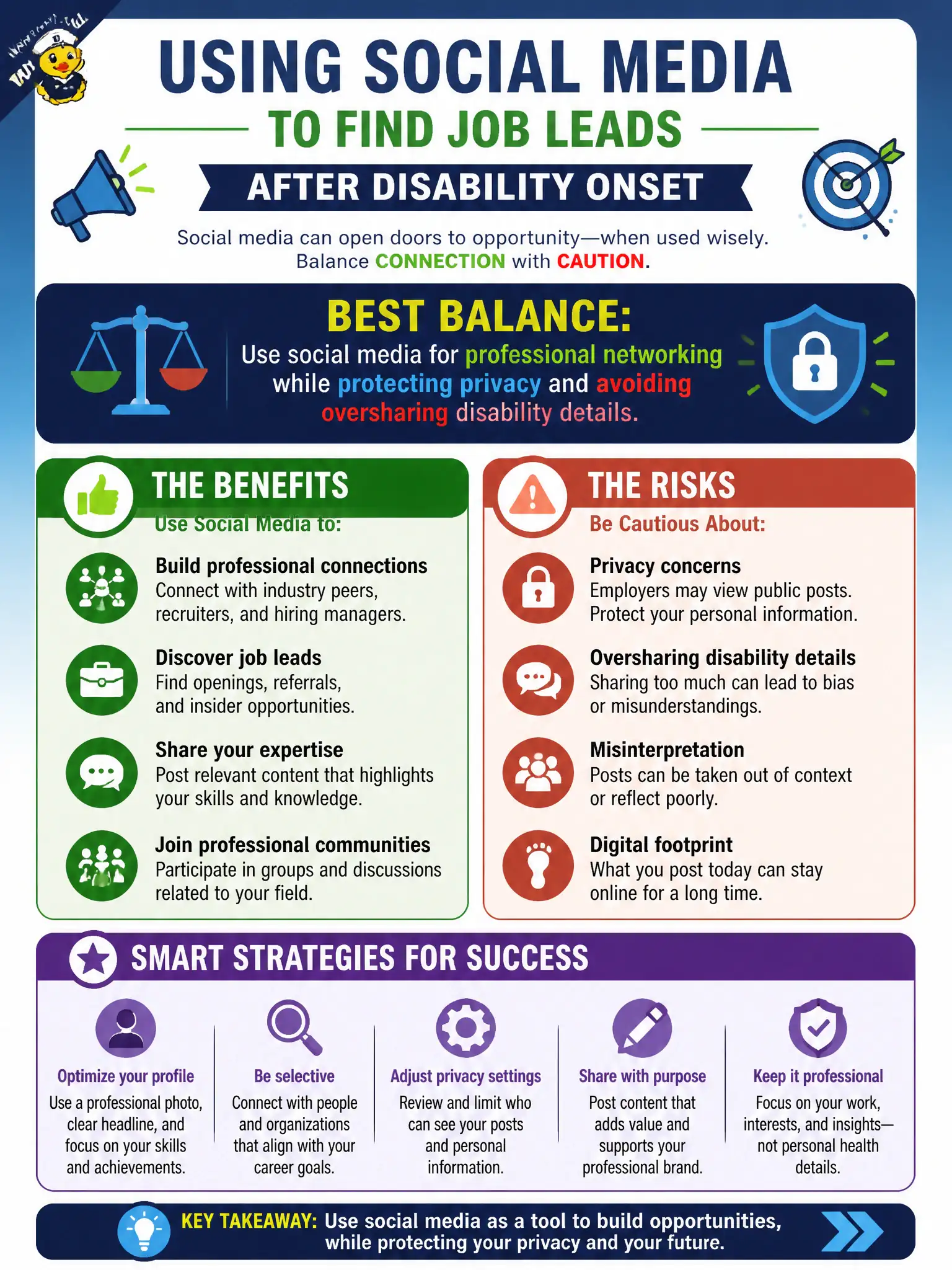
Social media can be a networking megaphone — or a privacy leak. Use it to find leads and look professional, not to dump medical charts or workplace drama. Balance the reach with the guardrails.
Full Explanation
Social media can support job lead generation after disability onset when used for professional networking while protecting privacy and avoiding oversharing of disability or medical details. Counselors coach civic job seekers to present skills and value publicly and to handle disclosure through planned, private channels. Posting full medical records publicly to maximize sympathy fails because it sacrifices privacy, may invite stigma or improper inquiries, and is not a professional branding strategy. Avoiding all networking platforms because social media can never help fails because many openings and contacts now move through professional networks. Sharing every workplace grievance online during an active search fails because public venting damages reputation and employer interest. Exam caveat: platform policies and disability disclosure rights vary; professional presence guidance is counseling practice, not a ban on all disability advocacy done intentionally on the client’s terms. Operational check: review the public profile for diagnosis dumps, grievance posts, or overly intimate medical detail; replace with skills, roles, and accomplishments; keep disclosure decisions for applications/interviews with a planned script.