
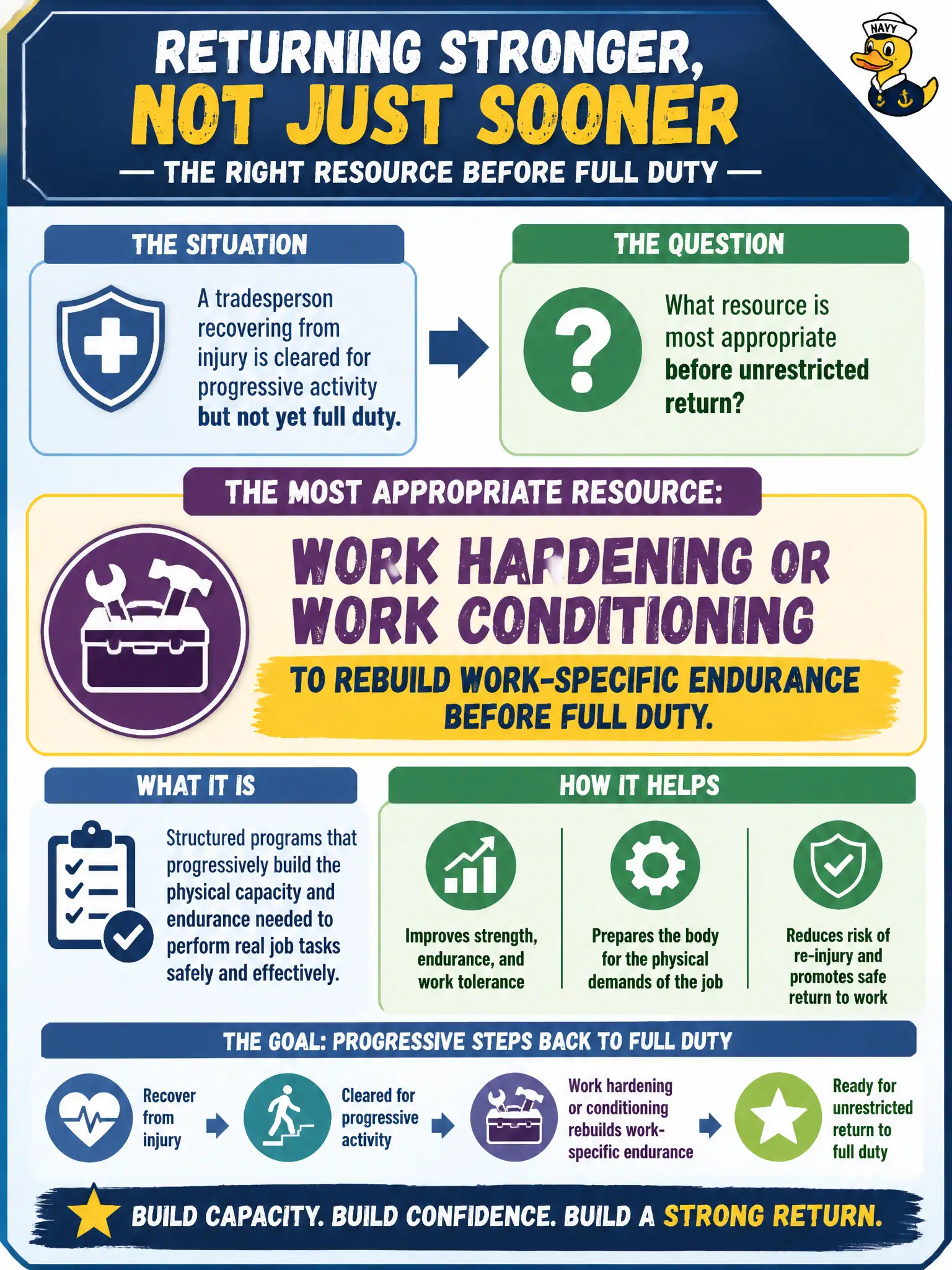
A tradesperson recovering from injury is cleared for progressive activity but not yet full duty. What resource is most appropriate before unrestricted return?
Select an answer to reveal the explanation.
Short Explanation
Jumping straight into full-duty heavy trade work is like running a race on day one of PT. Work hardening rebuilds the job-specific stamina in a graded way. Earn the full shift; don't gamble it.
Full Explanation
When a tradesperson is cleared for progressive activity but not full duty, work hardening or work conditioning is the appropriate resource to rebuild work-specific endurance before unrestricted return. These programs use graded, job-relevant physical tasks to bridge clinic clearance and full occupational demands in industrial, municipal, and construction settings common to public VR caseloads. Immediate full overtime on the heaviest crew to “test toughness” fails because it risks re-injury and ignores graded exposure principles that protect recovery. Unstructured home rest with no graded work simulation fails because rest alone often does not restore job-specific stamina, pace tolerance, tool handling, or shift endurance. Mandating a career change with no physical rehabilitation trial fails because many clients can return to modified or full trade work after proper conditioning and thoughtful accommodation. Exam caveat: work hardening/conditioning should align with physician restrictions and essential job demands; it is not a license to ignore medical limits or to skip employer negotiation when residual deficits remain. Operational check: before full-duty release, compare measured tolerances from hardening/conditioning sessions to the job’s essential physical demands and document any remaining gaps that still require accommodation, more conditioning, or a temporary alternative duty plan.