
A client who values high autonomy is miserable in a tightly supervised assembly role that otherwise fits physical limits. Which theory best explains the mismatch?
Select an answer to reveal the explanation.
Short Explanation
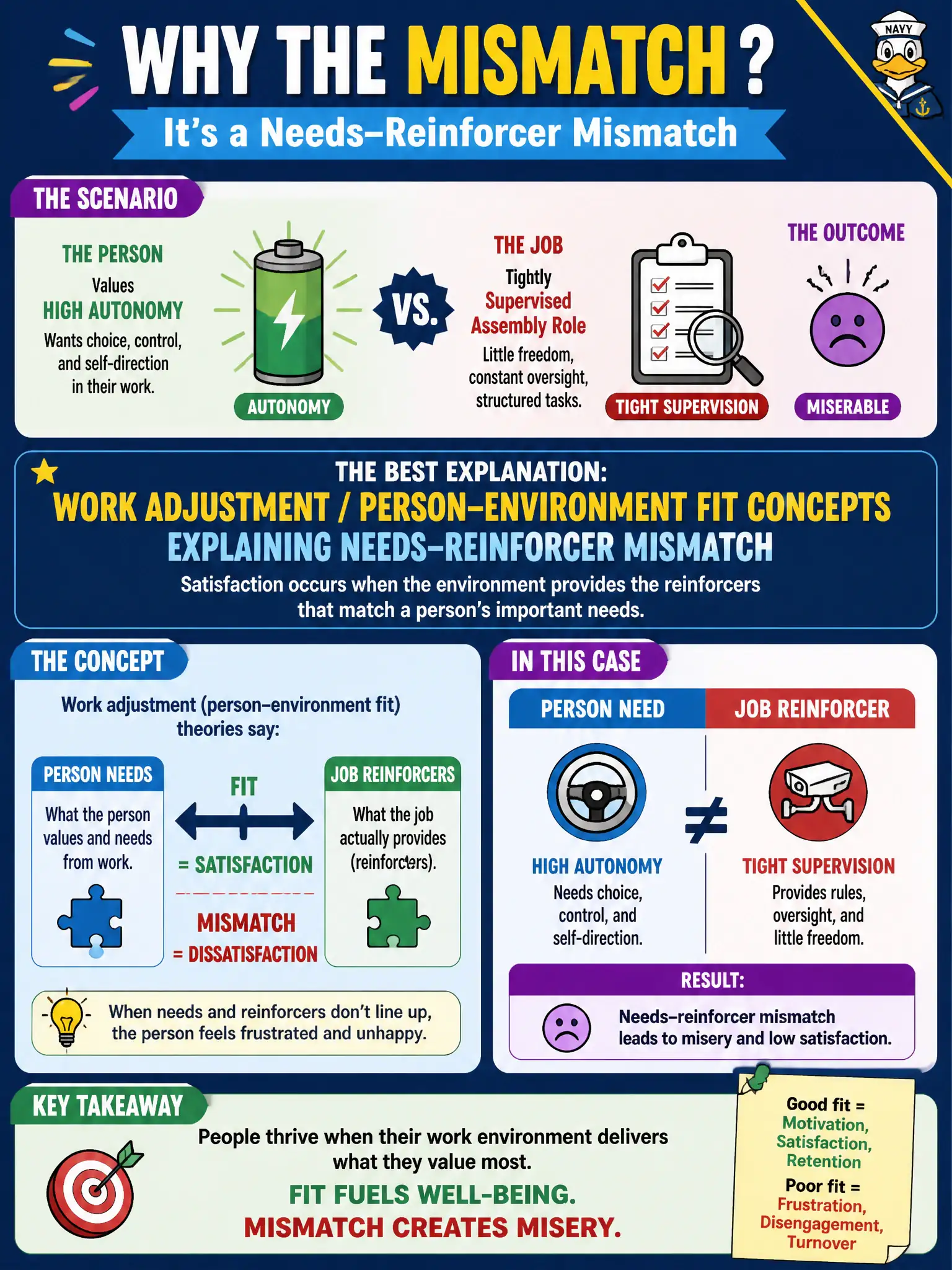
The body can handle the job while the personality hates the leash. Work adjustment thinking says people need reinforcers that match — autonomy lovers wilt under heavy supervision. Fix the fit, not just the lifting chart.
Full Explanation
Work adjustment and person–environment fit concepts explain why a client who values high autonomy can be miserable in a tightly supervised assembly role that otherwise fits physical limits. Needs–reinforcer mismatch predicts dissatisfaction and retention risk even when lifting accommodations are adequate. Claiming autonomy needs are irrelevant whenever lifting limits are accommodated fails because physical accommodation is necessary but not sufficient for satisfactory adjustment. Trait theory claiming all assembly work satisfies every worker equally fails because the same tasks can reinforce or frustrate different need patterns. Using crisis intervention theory as the primary explanation for routine job dissatisfaction fails because ongoing misfit is a work-adjustment issue, not necessarily an acute safety crisis. Exam caveat: severe distress still warrants safety screening, but the conceptual frame for chronic autonomy-versus-control conflict remains person–environment fit. Operational check: assess which reinforcers the job actually provides (autonomy, supervision intensity, pace, social contact) against the client’s rated needs; if mismatch is high, redesign duties, change supervisor style where possible, or consider a better-fitting target before attributing failure to motivation alone.