
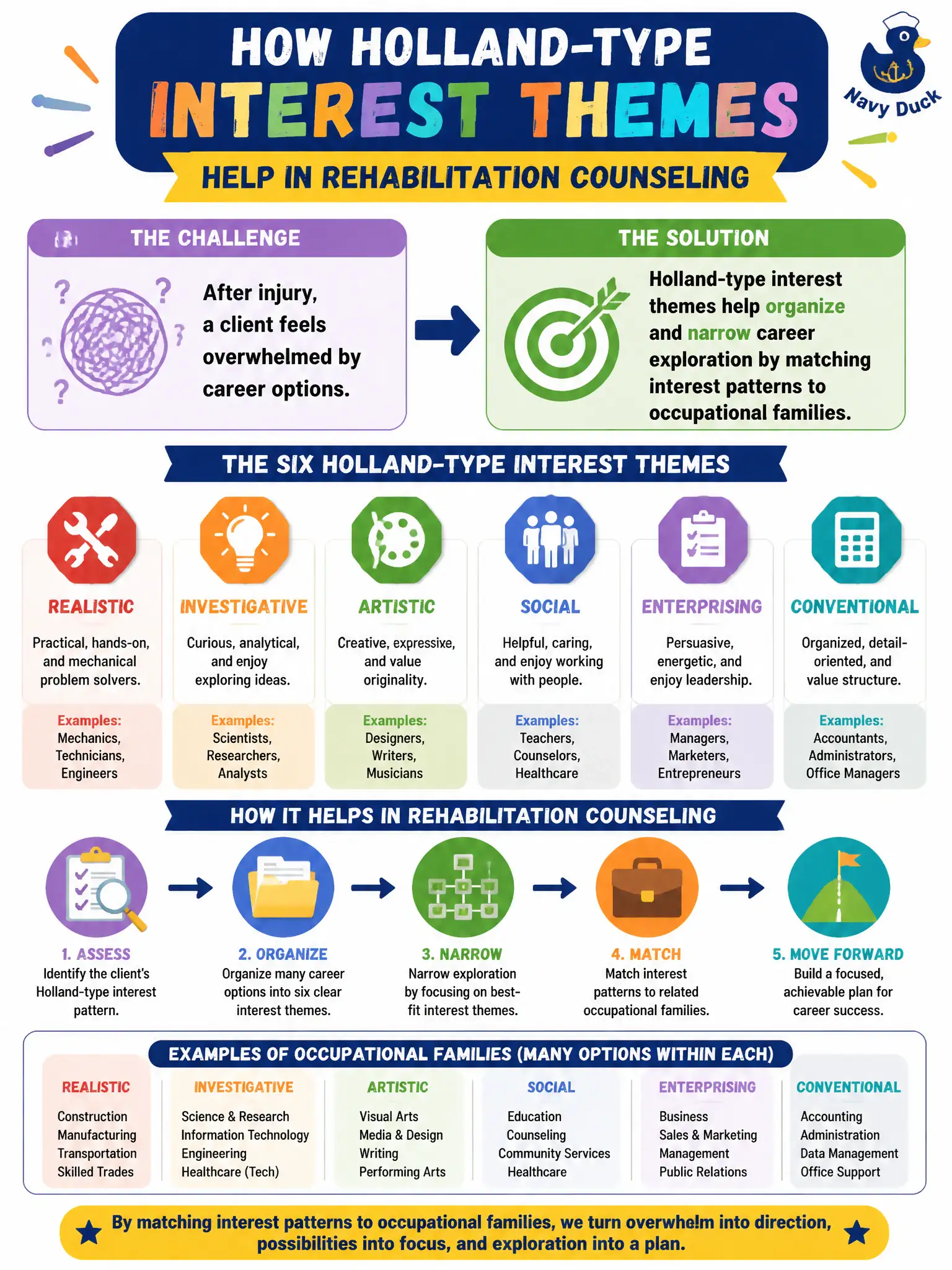
After injury, a client feels overwhelmed by career options. How can Holland-type interest themes help in rehabilitation counseling?
Select an answer to reveal the explanation.
Short Explanation
Interest themes are like sorting a messy closet by color — suddenly you can see outfits. Holland-type patterns help narrow "everything" into workable career families after injury. They're a map aid, not a medical substitute or a job guarantee.
Full Explanation
Holland-type interest themes help organize and narrow career exploration after disability onset by matching interest patterns to occupational families. In rehabilitation counseling they are a structuring aid for informed choice when options feel overwhelming—not a substitute for medical, functional, or labor-market assessment. Replacing all medical and functional assessment with a single three-letter code fails because interests do not measure residual capacity, contraindications, or essential physical demands. Guaranteeing a hire in the first RIASEC category printed by software fails because interest similarity is not a job offer and ignores openings, credentials, and accommodations. Declaring interest themes outdated and forbidden after disability onset fails because interests often remain useful navigation tools even when the occupational expression of those interests must change. Exam caveat: post-injury interests can shift; reassess rather than freezing a pre-injury code as destiny. Operational check: use interest themes to generate a short list of occupational families, then filter that list through residual function and local labor market evidence before writing objectives into the plan.