
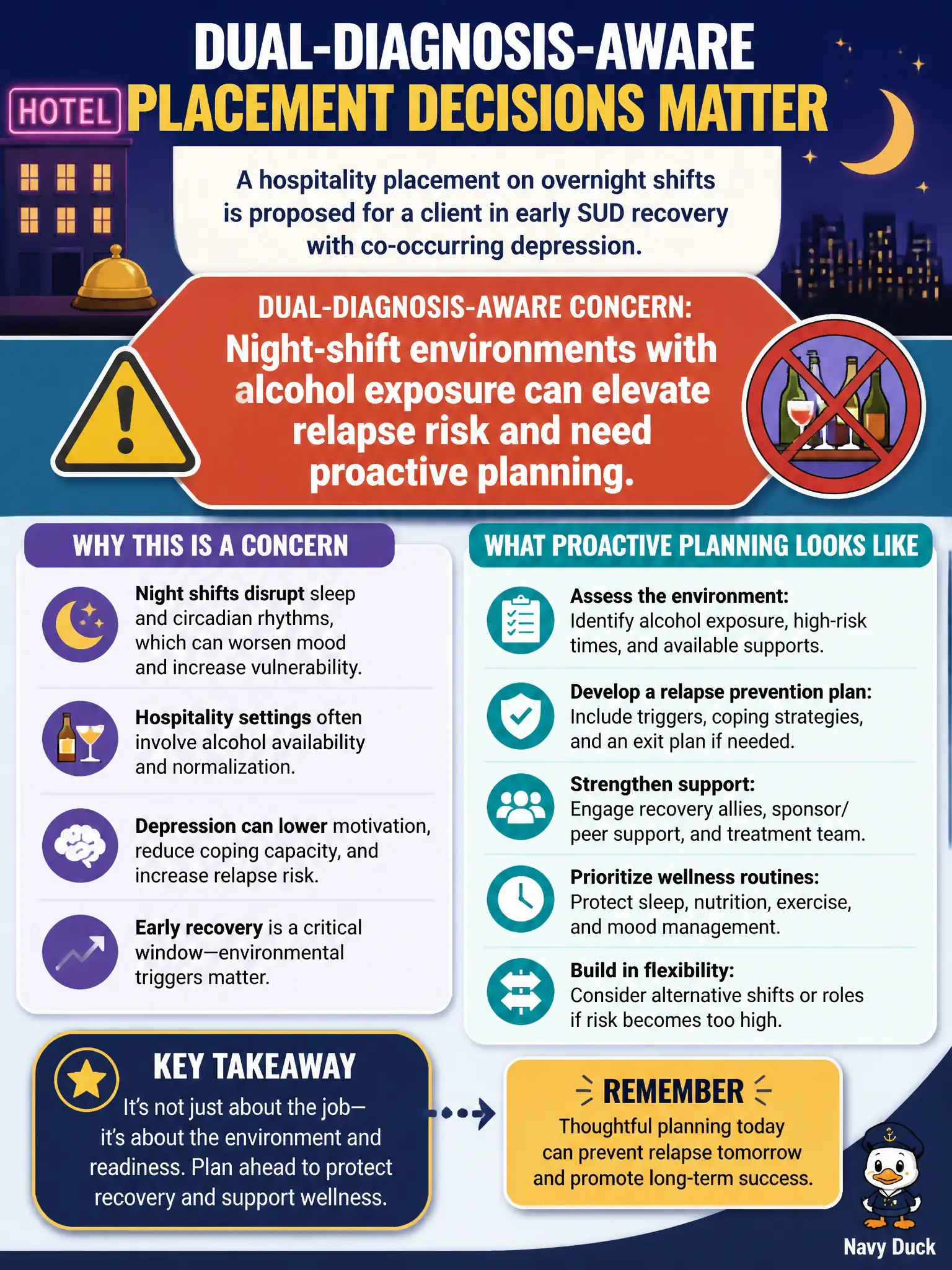
A hospitality placement on overnight shifts is proposed for a client in early SUD recovery with co-occurring depression. What dual-diagnosis-aware concern should guide the counselor?
Select an answer to reveal the explanation.
Short Explanation
Late-night hospitality can put recovery on a thin wire — bars, fatigue, and old cues. Dual-diagnosis-aware placement looks at schedule and setting, not just whether the résumé looks pretty. Ignoring that risk invites a retention crash.
Full Explanation
Dual-diagnosis-aware placement reviews schedule and environment, not résumé cosmetics alone. Overnight hospitality work for a client in early SUD recovery with co-occurring depression can elevate relapse risk through fatigue, alcohol cues, and limited daytime supports, so proactive planning is required before endorsing the shift pattern. Claiming overnight hospitality always eliminates relapse risk fails because night environments with alcohol exposure often increase—not decrease—risk for many people in early recovery. Ruling out all competitive employment because of depression history fails because depression is not an automatic bar to work when supports and fitting conditions exist. Treating schedule and environment as irrelevant if résumé formatting is strong fails because contextual triggers can undermine recovery regardless of document quality. Exam caveat: some clients in stable recovery can succeed on nights with strong supports; the point is risk assessment and planning, not a universal ban on hospitality. Operational check: before accepting a night hospitality offer, inventory alcohol exposure points, sleep/depression interactions, available recovery supports during those hours, and a written contingency plan; renegotiate schedule if risks outweigh supports.