
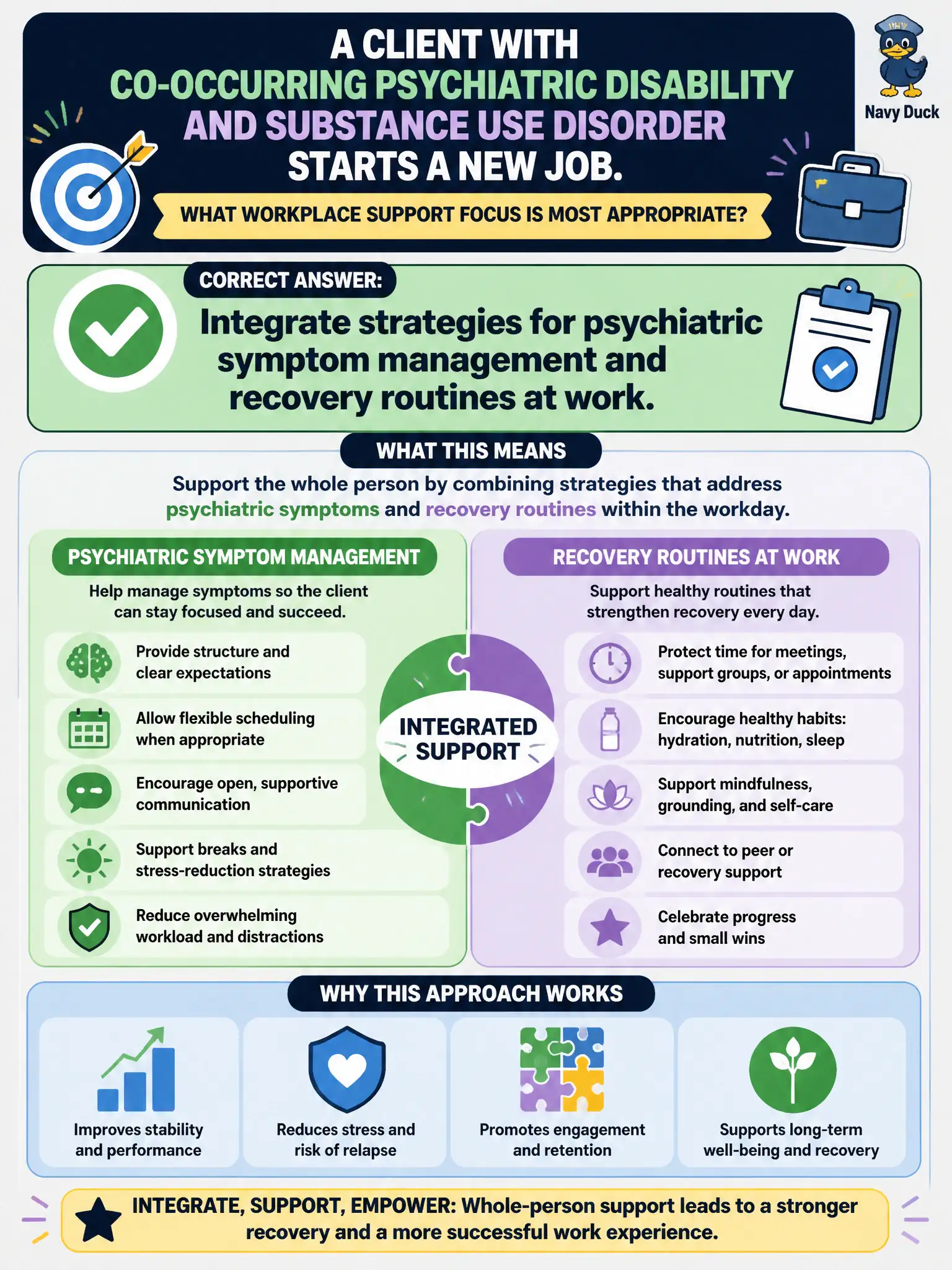
A client with co-occurring psychiatric disability and substance use disorder starts a new job. What workplace support focus is most appropriate?
Select an answer to reveal the explanation.
Short Explanation
Dual diagnosis doesn't clock out at the workplace door. Plans that braid symptom strategies with recovery routines keep the job from becoming the relapse trigger. Pretending work and recovery are strangers is how people lose both.
Full Explanation
For a client with co-occurring psychiatric disability and substance use disorder starting a new job, workplace support should integrate psychiatric symptom-management strategies with recovery routines rather than treating work and recovery as separate silos. Dual-diagnosis-aware retention planning in public VR links medication or coping schedules, recovery meetings or supports, trigger awareness, and job-task coaching into one coherent plan. Addressing only job tasks while treating recovery routines as unrelated fails because relapse risk and symptom flare can erase hard-won placement gains. Requiring the employer to provide psychotherapy during paid shifts as the sole support fails because employers are not clinical providers; clinical care belongs with appropriate health partners while workplace supports remain job-focused. Hiding all dual-diagnosis information from the service plan to avoid complexity fails because the rehabilitation team cannot coordinate supports it pretends do not exist (while still protecting privacy from unnecessary employer disclosure). Exam caveat: what the employer learns should follow disclosure counseling and functional need—not full diagnostic dumping—yet the VR/service plan itself must address both conditions. Operational check: before the first full week of work, list specific on-the-job coping steps, recovery-support timing compatible with the shift, early warning signs, and who the client contacts if symptoms or cravings escalate.