
A refugee client with a disability seeks employment through public VR. Which placement focus best matches specialized population needs?
Select an answer to reveal the explanation.
Short Explanation
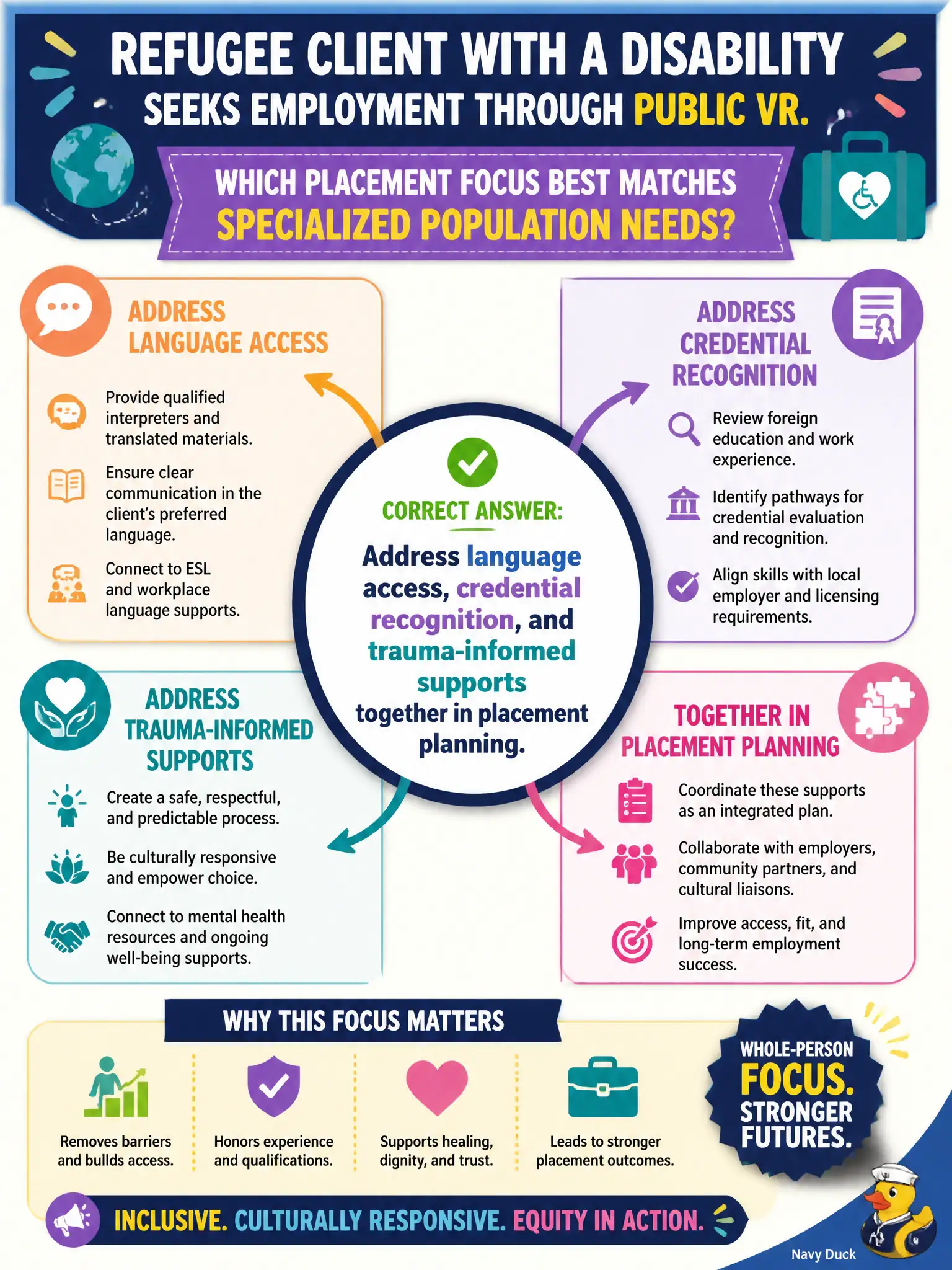
Refugee plus disability isn't one checkbox — it's overlapping needs. Language access, figuring out credentials, and trauma-aware support all belong in the placement plan. Pretending any piece "doesn't matter" leaves holes.
Full Explanation
Refugee clients with disabilities often present overlapping barriers: language access, foreign credential recognition, and trauma-related support needs. Placement planning in state VR and community partners should address those domains together rather than treating the case as a single checkbox. Assuming foreign credentials transfer automatically without verification or bridging fails because licensing boards and employers may require evaluation, coursework, or alternative pathways. Ignoring language access while pushing English-only rapid placement fails because incomprehensible job instructions and interviews recreate exclusion. Treating trauma-informed supports as optional “soft” extras fails because untreated trauma responses can undermine attendance, interviews, and workplace coping even when skills exist. Exam caveat: counselors provide rehabilitation and systems navigation at counseling depth—they coordinate credential evaluators, interpreters, and trauma-capable providers rather than practicing outside scope as immigration attorneys or trauma therapists when referral is needed. Operational check: before finalizing the placement plan, document language access arrangements, a credential-verification or bridging step, and a trauma-informed support or referral element, then confirm the client understands each piece.