
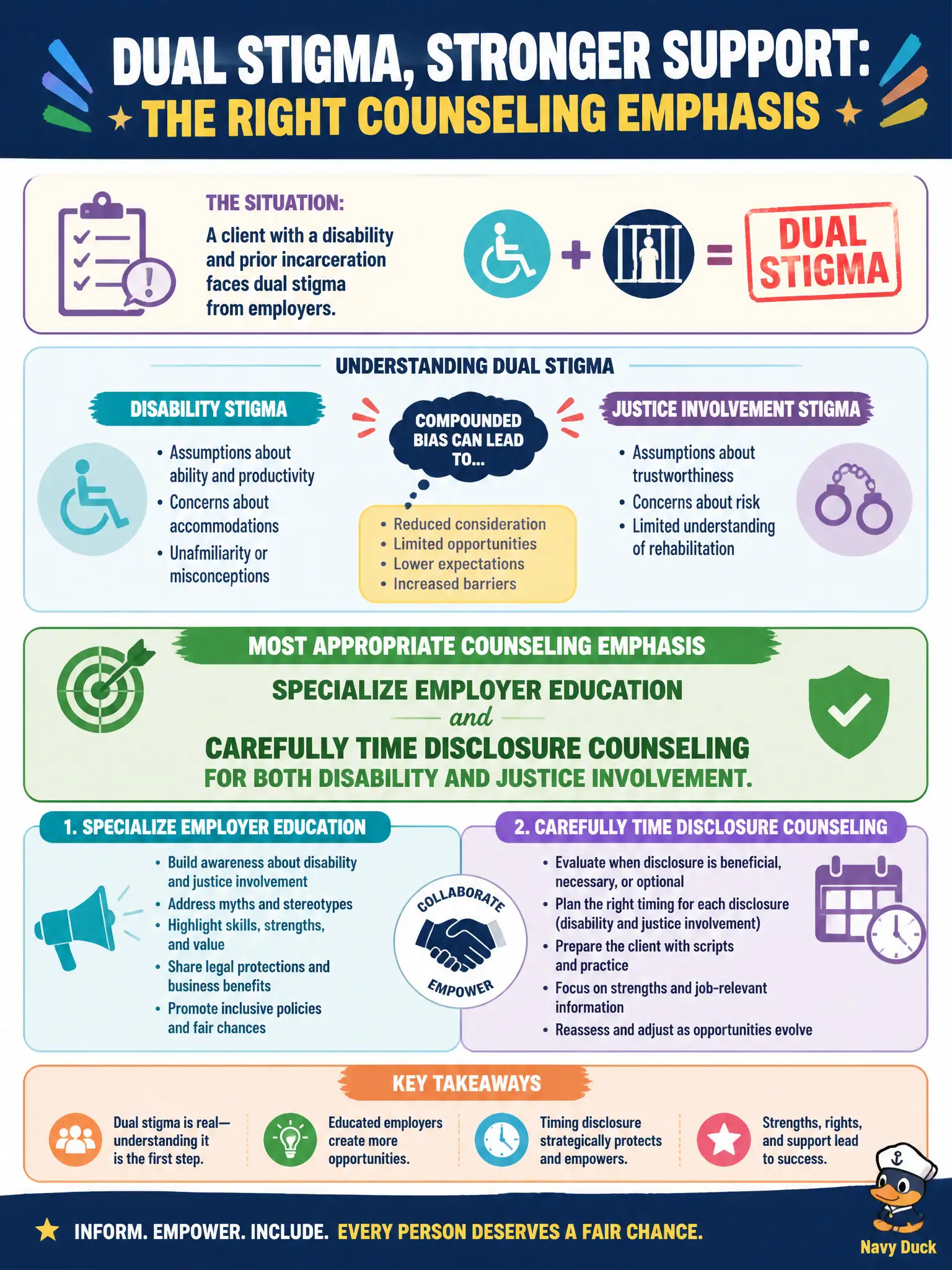
A client with a disability and prior incarceration faces dual stigma from employers. Which counseling emphasis is most appropriate?
Select an answer to reveal the explanation.
Short Explanation
Two stigmas stack like weights on a barbell — you don't pretend they're light. Smart placement educates employers and helps the client decide when and how to disclose. Blanket denial or dumping everything on call one aren't strategies.
Full Explanation
Dual stigma from disability and prior incarceration calls for specialized employer education and carefully timed, collaborative disclosure counseling for both domains. Rehabilitation counselors help clients decide what to share, when, and how, while preparing employers to evaluate skills fairly. Forbidding employer contact until the client denies both disability and criminal history in every interview fails because blanket denial can collide with lawful questions, background checks, and ethical honesty—and it avoids needed education work. Disclosing every medical and justice detail on the first cold call without client collaboration fails because oversharing can invite illegal medical inquiries and unnecessary stigma before fit is established. Ignoring stigma and relying only on mass online applications fails because automated filters and unexplained gaps often end candidacies without a chance for contextual employer education. Exam caveat: disclosure strategies must respect applicable fair-chance and disability nondiscrimination rules in the jurisdiction; counseling supports informed choice within legal boundaries, not coaching of unlawful concealment. Operational check: role-play at least two disclosure scripts (minimal functional needs vs. fuller context), identify which employers receive education contacts first, and record the client’s preferred timing before outreach begins.