
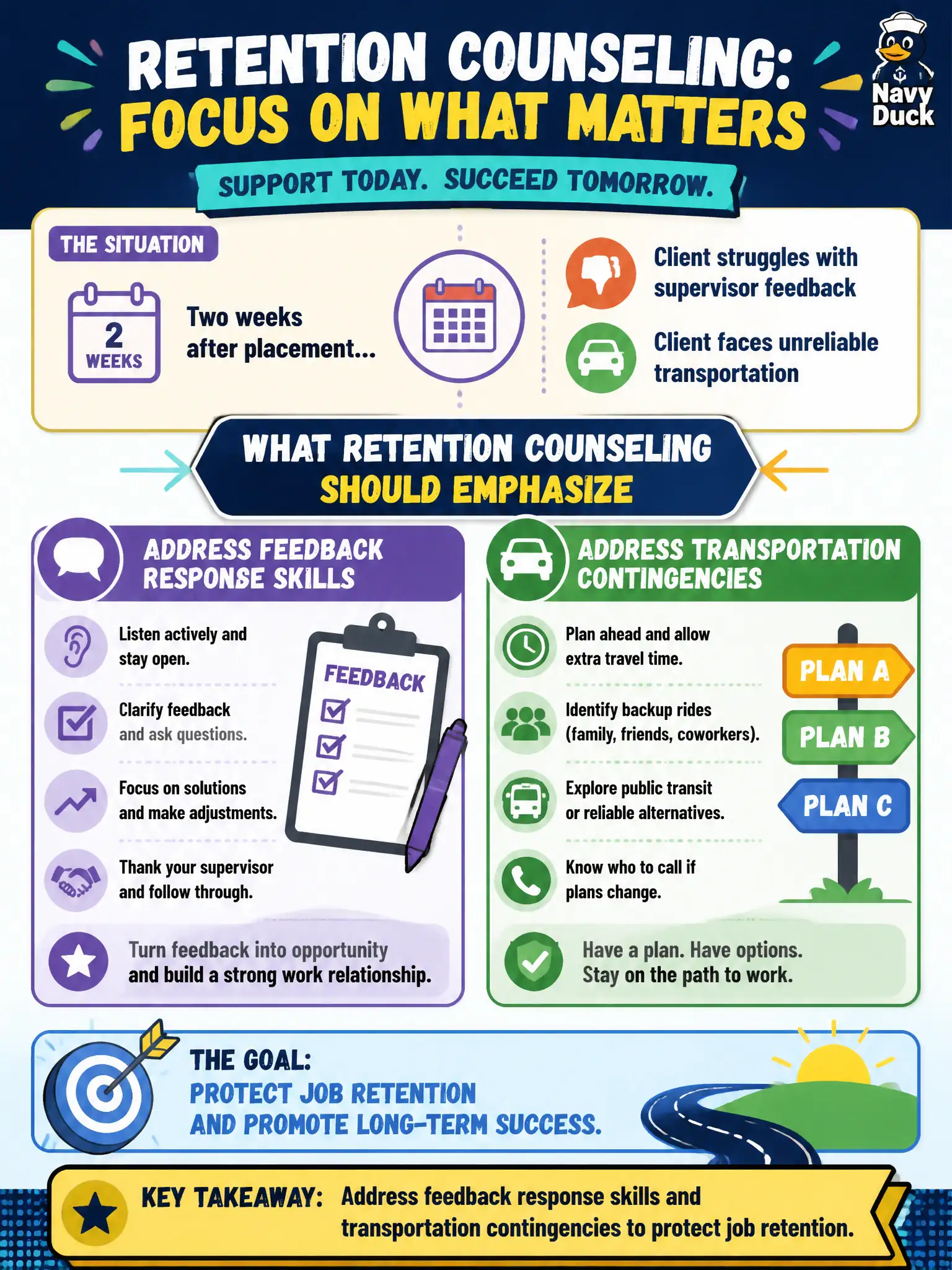
Two weeks after placement, a client struggles with supervisor feedback and unreliable transportation. What should retention counseling emphasize?
Select an answer to reveal the explanation.
Short Explanation
Getting hired is halftime, not the final whistle. Retention work coaches how to take feedback and keeps the ride-to-work plan from collapsing. Closing the file the day the offer lands leaves the client hanging.
Full Explanation
Two weeks after placement, retention counseling—not case closure—addresses the issues that threaten the job. Struggles with supervisor feedback and unreliable transportation are classic early-retention risks; counseling should build feedback-response skills and transportation contingencies so the hire survives beyond the honeymoon period. Closing the case immediately because placement “ends” counselor involvement fails because CRC practice treats placement as the start of retention support, especially in public VR. Ignoring supervisor feedback to rewrite the original résumé fails because the live performance conversation, not the résumé, is the current threat. Advising quitting without exploring workplace supports or schedule adjustments fails because premature exit forfeits accommodation and natural-support options that could stabilize the job. Exam caveat: retention intensity should match risk; not every smooth placement needs the same dose, but early warning signs like feedback conflict and transit instability warrant prompt contact. Operational check: within 48 hours of the concern, schedule a three-way or staged problem-solving contact covering specific feedback examples, a practiced response plan, and at least two backup transit options for the next pay period.