
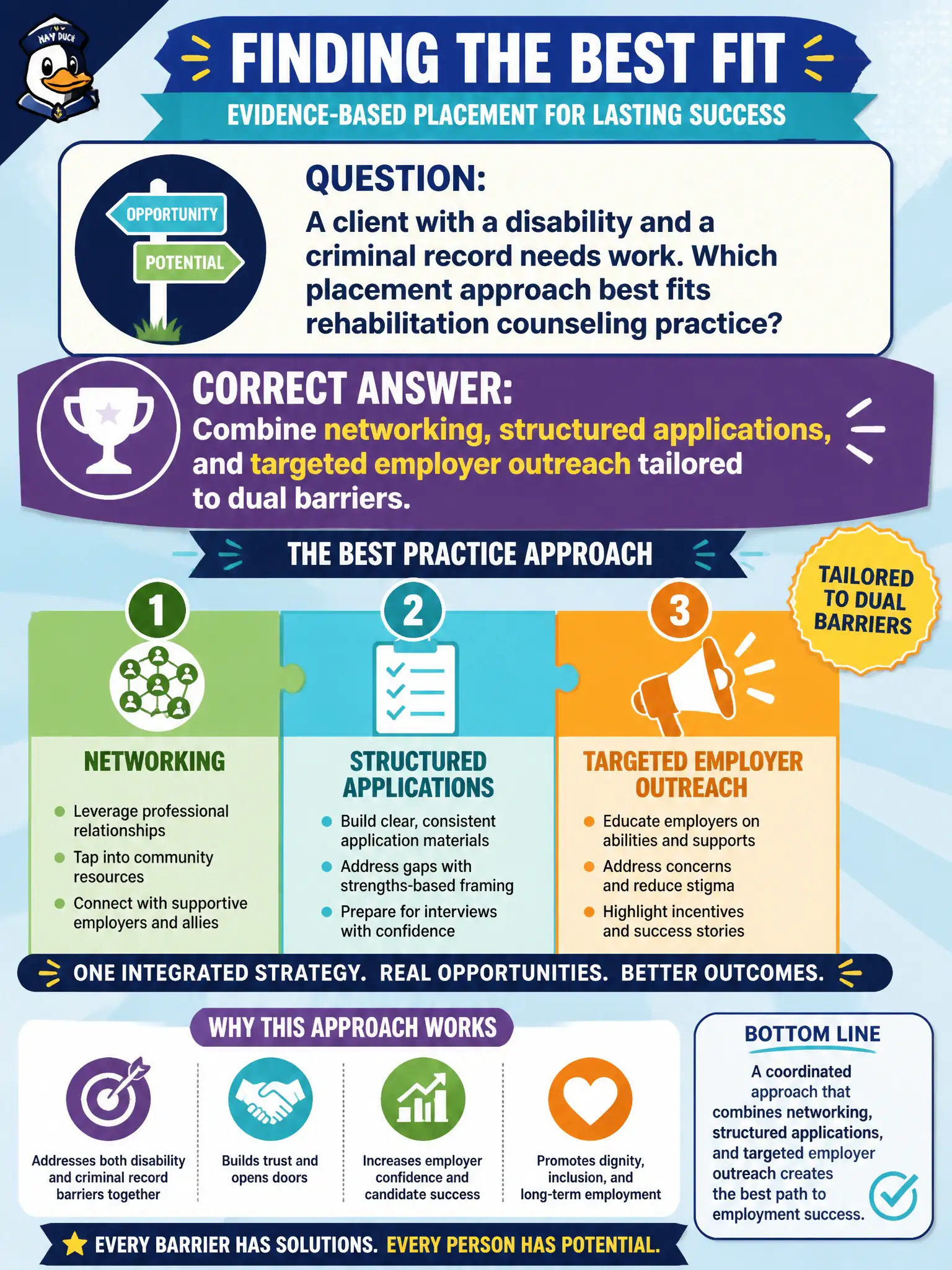
A client with a disability and a criminal record needs work. Which placement approach best fits rehabilitation counseling practice?
Select an answer to reveal the explanation.
Short Explanation
Tough barriers rarely fall to one trick — you need a toolbox. Mixing networking, solid applications, and targeted employer talks covers more ground than sitting on one channel. Dual stigma calls for multi-path placement, not waiting forever for a perfect clean slate.
Full Explanation
Clients facing both disability and criminal-record barriers rarely succeed with a single placement channel. Rehabilitation counseling practice combines networking, structured applications, and targeted employer outreach tailored to dual stigma and dual disclosure decisions. That multi-method approach fits public VR and community rehabilitation settings where employers need education and candidates need multiple doors open. Relying solely on generic online applications while avoiding employer outreach fails because automated screens often filter justice involvement or unexplained gaps without a human conversation. Using only friend networking while prohibiting formal applications fails because informal ties alone rarely scale to stable competitive openings and may leave documentation gaps. Delaying all job search until every conviction is expunged fails because many people are legally eligible to work before expungement is complete, and waiting can deepen unemployment scarring. Exam caveat: timing and content of justice-related and disability-related disclosure are client-directed counseling issues constrained by law and application honesty rules—combination strategies do not mean oversharing. Operational check: build a weekly placement plan with at least one networked contact, one structured application set, and one targeted employer education/outreach action, then review which channel produces interviews for this dual-barrier profile.