
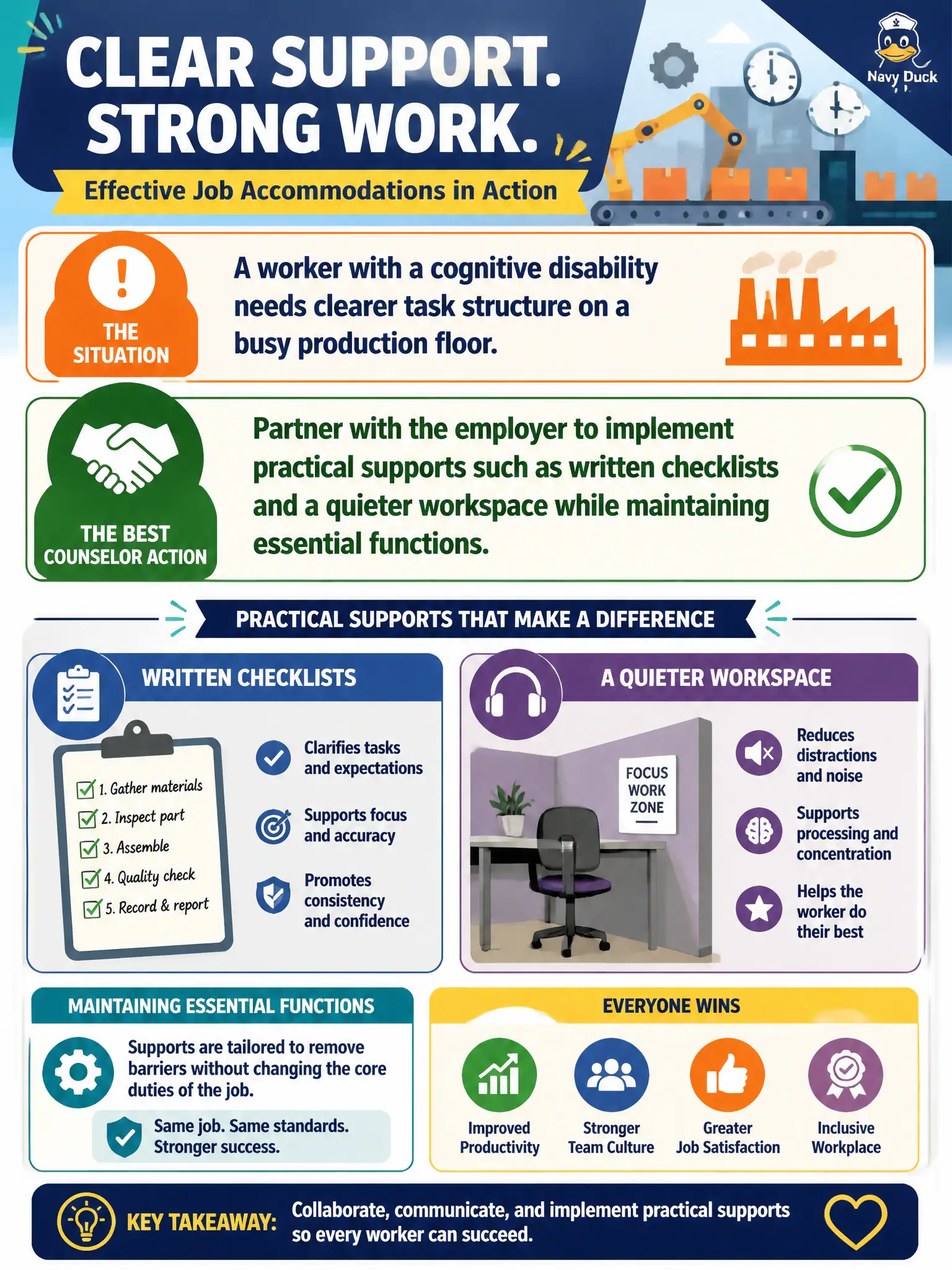
A worker with a cognitive disability needs clearer task structure on a busy production floor. Which counselor action best assists the employer with job accommodations?
Select an answer to reveal the explanation.
Short Explanation
Cognitive supports do not have to be exotic. Written checklists and a quieter corner can turn chaos into a doable job. Help the employer install those tools and keep the real essential functions intact.
Full Explanation
When a worker with a cognitive disability needs clearer task structure on a busy production floor, the counselor best assists by partnering with the employer to implement practical supports such as written checklists and a quieter workspace while maintaining essential functions. Accommodation preserves the competitive job rather than abandoning it. Recommending removal of all quality standards so the worker cannot fail fails because essential quality outcomes usually remain; supports change how standards are met. Advising that cognitive disabilities cannot be accommodated in production roles fails by absolute thinking contradicted by many successful supported placements. Substituting a charity volunteer role instead of addressing the competitive job fails because it demotes the employment goal without trying reasonable supports. Exam caveat: if essential paced quality cannot be met even with supports, role customization or another target may follow—but only after good-faith accommodation trials. Operational check: introduce a written checklist and a reduced-distraction station for a defined trial period, measure error rates against essential standards, and adjust with the supervisor before changing the vocational objective.