
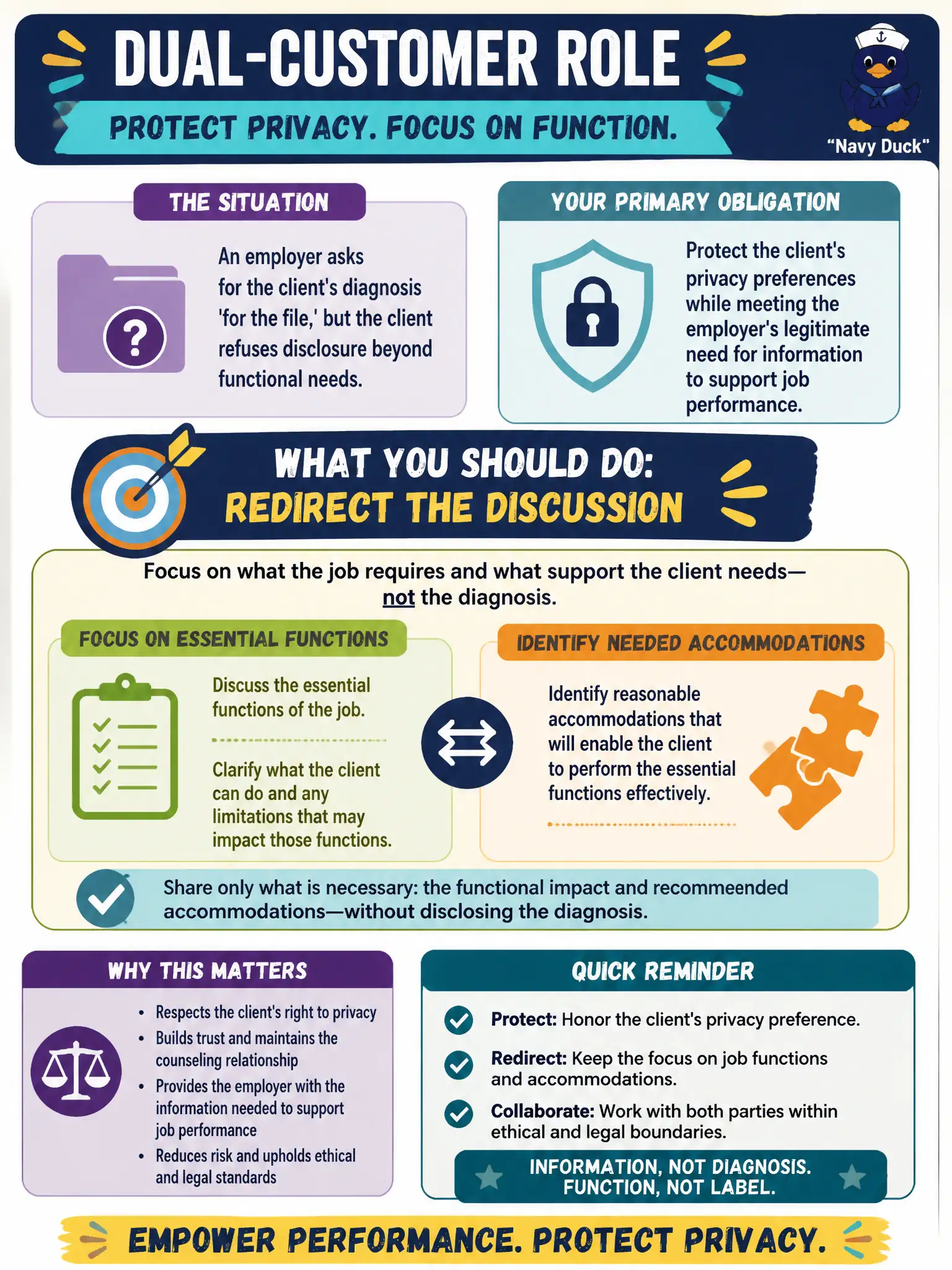
An employer asks for the client's diagnosis 'for the file,' but the client refuses disclosure beyond functional needs. In the dual-customer role, what should the counselor do?
Select an answer to reveal the explanation.
Short Explanation
Employers need to know how the work gets done—not the client's private diagnosis label. Keep the focus on essential functions and accommodations, honor the client's disclosure choice, and still be a useful partner. Privacy and partnership can share the same table.
Full Explanation
In the dual-customer role, when an employer asks for the client’s diagnosis “for the file” and the client refuses disclosure beyond functional needs, the counselor should redirect discussion to essential functions and needed accommodations while protecting the client’s privacy preference on diagnosis disclosure. Functional need—not label—drives workplace change. Sending the full medical record to keep the vacancy open fails because it violates privacy ethics and often exceeds what employers may lawfully seek. Refusing all further contact with the employer because dual-customer work is unethical fails; dual-customer practice remains ethical when boundaries are held. Promising the employer a diagnosis label after the client starts work fails because it trades future privacy betrayal for short-term calm. Exam caveat: limited medical inquiry rules and disability disclosure laws vary by context; counselors uphold client preference within legal requirements and involve HR when employers demand more than functional information. Operational check: prepare a one-page functional accommodation summary without diagnosis codes, review it with the client, and use that document in employer talks instead of records dumps.