
A client with autism is unsure which department environment will fit sensory and routine needs. Which work-based learning approach best supports discovery?
Select an answer to reveal the explanation.
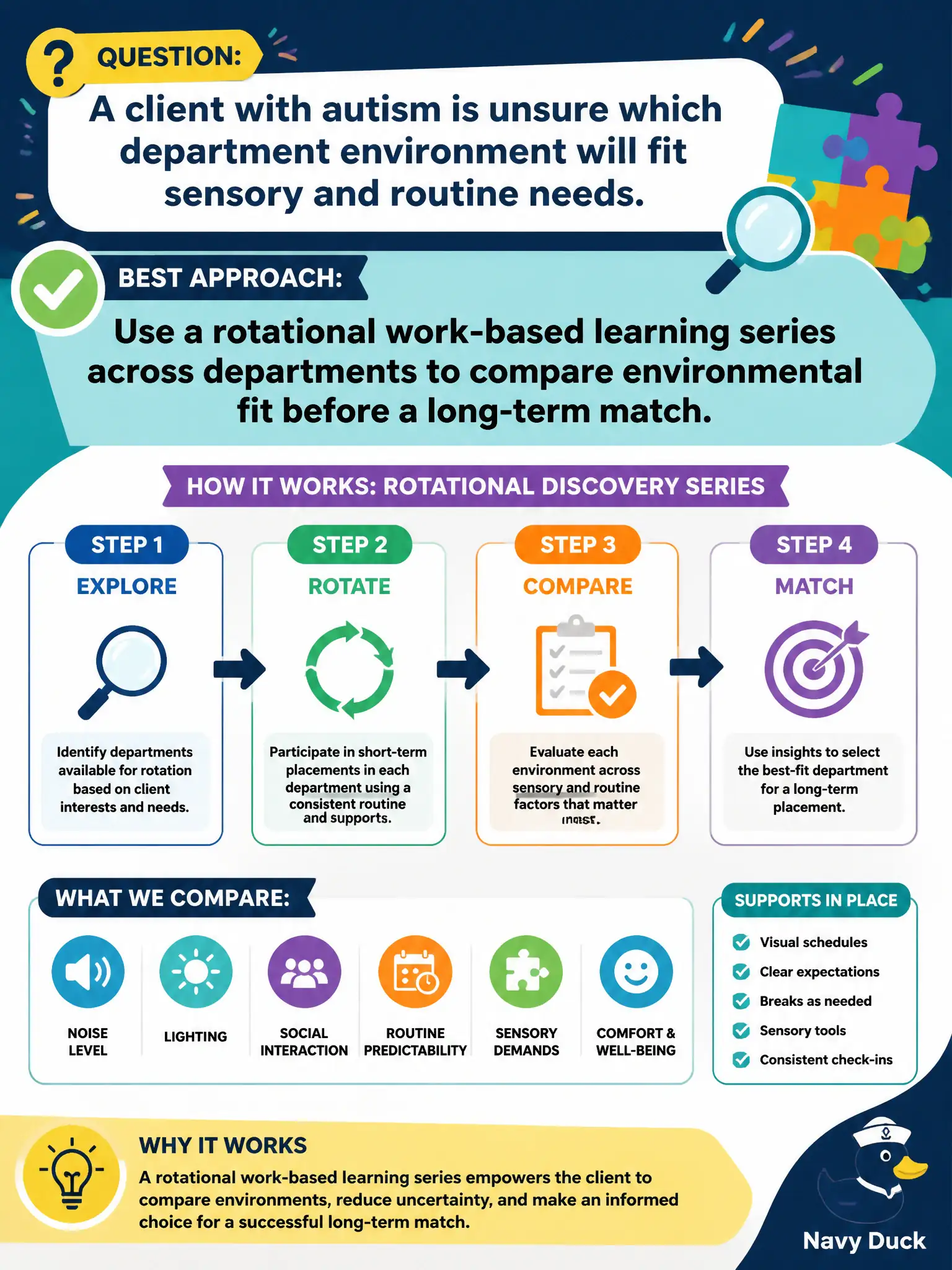
Short Explanation
Fit is something you feel on the floor, not just on a checklist. A short rotation across departments lets the client—and the team—see which sensory load and routine actually work. Sample first; settle second.
Full Explanation
For a client with autism who is unsure which department environment will fit sensory and routine needs, a rotational work-based learning series across departments supports discovery by comparing environmental fit before a long-term match. Sampling real civic and private workplace settings beats guessing from paperwork alone. Placing permanently in the first open vacancy without sampling fails because a poor sensory, lighting, or routine match drives rapid job loss and damages employer trust. Relying only on a paper interest inventory and skipping workplace exposure fails because inventories do not measure noise, pacing, social density, or unpredictability. Limiting exposure to simulated classroom tasks and avoiding employer sites fails because classroom analogs miss authentic environmental demands that determine retention. Exam caveat: rotations need clear learning goals, accommodations during each trial, and consent about evaluation criteria—they are structured assessment, not free labor without training value. Operational check: schedule short rotations in two or three departments with sensory and routine rating sheets completed by client and supervisor, then use comparative data to choose the long-term target.