
A supervisor reports 'poor performance' after a worker with a disability misses multi-step verbal instructions. What retention partnership step should the counselor prioritize?
Select an answer to reveal the explanation.
Short Explanation
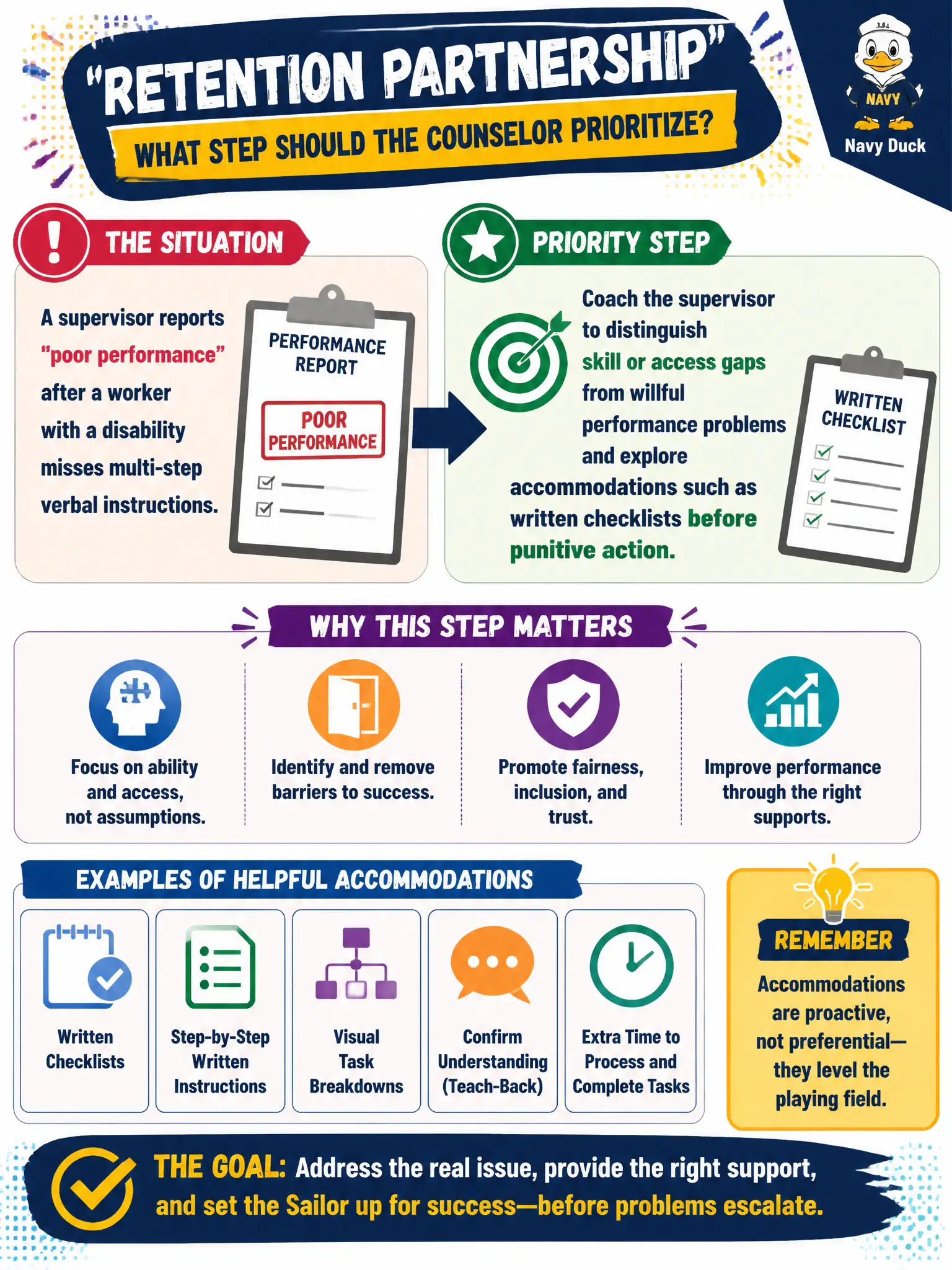
Missed verbal steps might be an access problem, not a motivation problem. Before swinging the performance hammer, coach the supervisor to try tools like written checklists. Fix the barrier first; then judge the work fairly.
Full Explanation
When a supervisor reports “poor performance” after a worker with a disability misses multi-step verbal instructions, the counselor should coach distinguishing skill or access gaps from willful performance problems and explore accommodations such as written checklists before punitive action. Retention partnerships translate disability knowledge into supervisor practice. Advising immediate termination to protect metrics fails because it skips the interactive analysis that often fixes the issue at low cost. Requiring the worker to disclose the full medical diagnosis to the entire team fails because teammates need task supports, not private medical detail. Telling the supervisor that disability always excuses missed deadlines with no further review fails because accommodation is not a blank excuse; essential functions still matter after supports are in place. Exam caveat: some performance issues remain conduct problems after reasonable supports; the sequence is assess access/skill, accommodate, then apply consistent standards. Operational check: observe or reconstruct the instruction method, trial a written checklist or demonstration accommodation for two weeks, and only then revisit discipline if essential outcomes still fail without a further accommodation need.