
A community rehabilitation program wants employers to see partnership value in business terms. Which outcome metric best frames hard-to-fill roles?
Select an answer to reveal the explanation.
Short Explanation
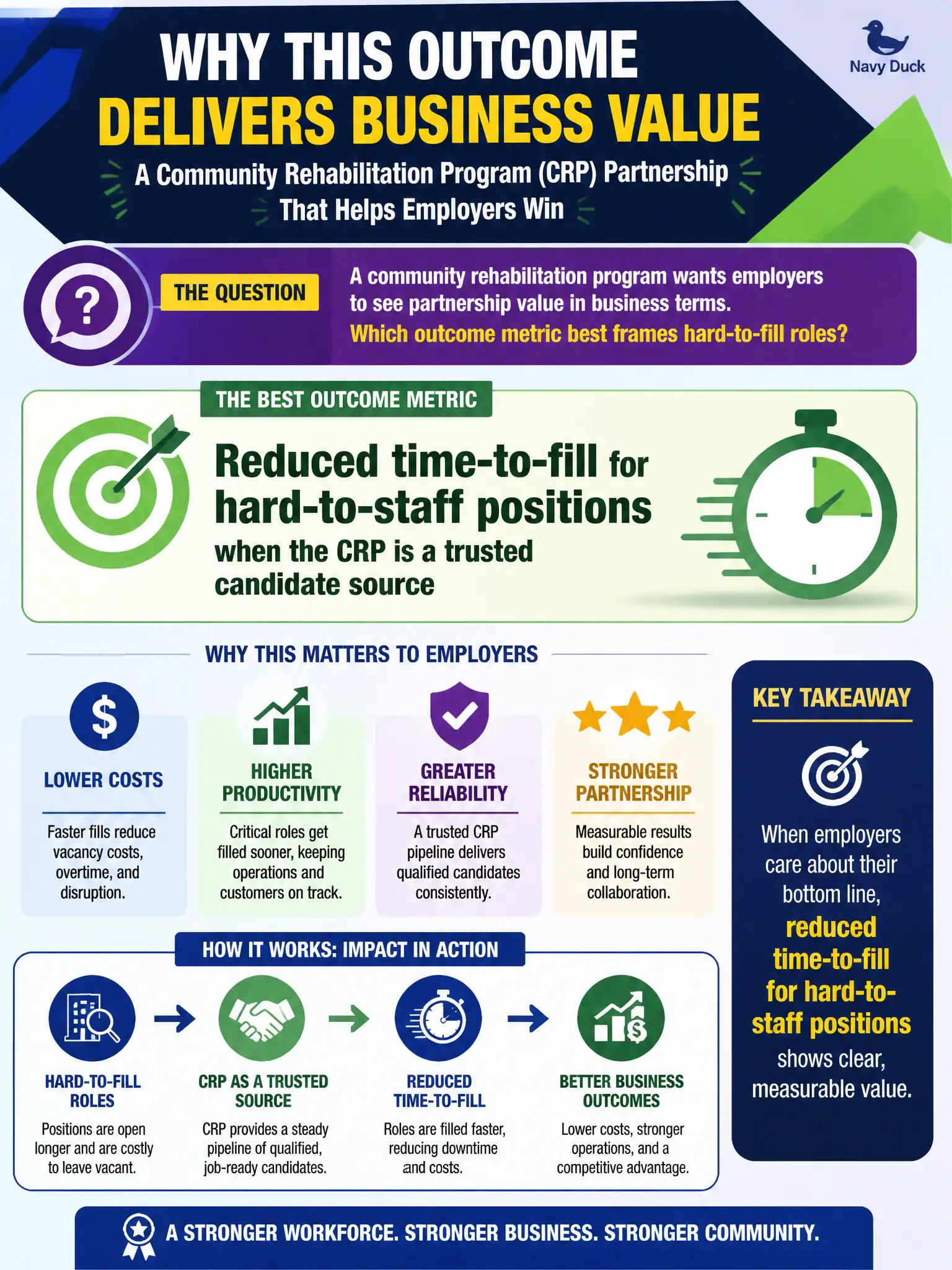
Employers speak fluent 'time-to-fill,' not 'we hung posters.' When the CRP becomes the go-to source for tough roles, vacancies close faster—and that is the partnership story that sticks. Lead with the business win, then the mission.
Full Explanation
Community rehabilitation programs that want employers to see partnership value in business terms should highlight outcomes such as reduced time-to-fill for hard-to-staff positions when the CRP is a trusted candidate source. That metric speaks operations language plant managers and city department heads recognize when overtime and vacancy pressure are high. Counting disability awareness posters in the break room fails because posters are activity measures, not hiring results that reduce overtime or vacancies. Tracking average length of counselor case notes per referral fails because internal documentation volume is irrelevant to employer staffing pain. Counting diagnostic labels shared with hiring managers each quarter fails because diagnosis dumping is neither a business KPI nor appropriate privacy practice. Exam caveat: time-to-fill improvements should be honest and contextualized—CRPs should not claim causality they cannot support—and confidentiality still limits what candidate details appear in success stories shared with employers. Operational check: with employer partners, baseline current time-to-fill for targeted roles, track referrals-to-hires over a quarter, and report the staffing result without sharing unnecessary medical labels.