
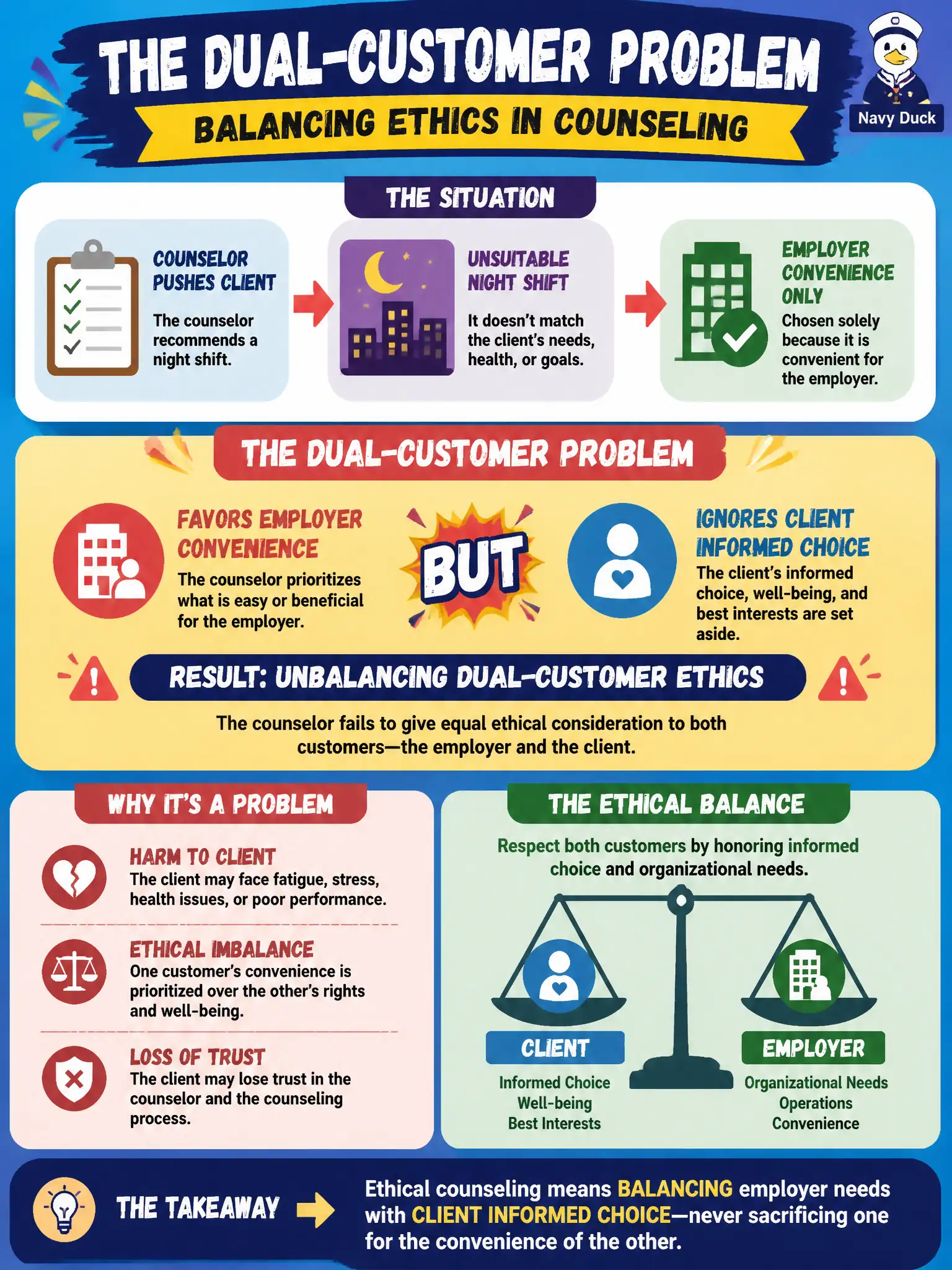
A counselor pushes a client into an unsuitable night shift solely because it is convenient for the employer, overriding the client’s informed choice. What dual-customer problem does this create?
Select an answer to reveal the explanation.
Short Explanation
Dual customer isn’t code for "employer wins, client loses." Convenient for the plant but wrong for the person breaks the balance. Informed choice still sits at the table—even when the manager wants the night shift filled tonight.
Full Explanation
Pushing a client into an unsuitable night shift solely for employer convenience while overriding informed choice creates a dual-customer ethics problem: employer convenience is favored while the job seeker’s autonomy is ignored. Rehabilitation counselors must negotiate schedules that consider both staffing needs and client constraints such as disability management, caregiving, transportation, or recovery routines. Claiming the push perfectly balances both customers by silencing the job seeker fails because silence and coercion are not balance. Asserting employers should never be consulted about schedule needs fails because employers are legitimate customers whose operations and coverage requirements matter. Treating informed choice as irrelevant once any employer expresses preference fails because CRC ethics and public VR principles protect client participation in major decisions. Exam caveat: counselors can present options, tradeoffs, and consequences; they should not coerce acceptance of harmful shifts merely to preserve an employer relationship. Operational check: if a proposed shift conflicts with documented health or recovery needs, pause placement, counsel on risks and alternatives, and record the client’s informed decision before accepting the offer.