
When designing work-based learning with an employer, which internship design is most appropriate?
Select an answer to reveal the explanation.
Short Explanation
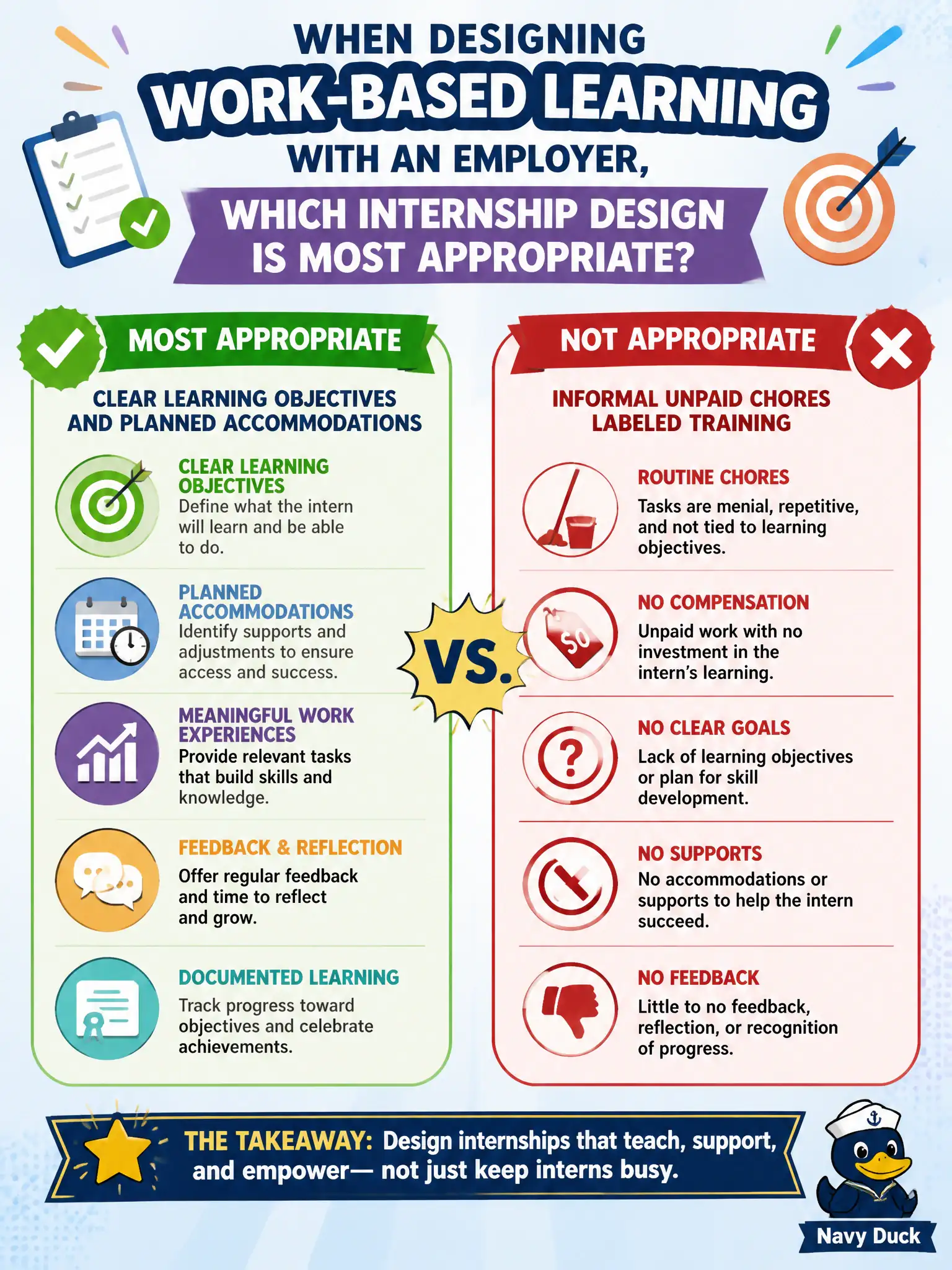
Real internships have learning goals and the supports to meet them—not endless unpaid busywork wearing a "training" name tag. Quality WBL respects the learner and the law’s spirit. Accommodations belong in the plan from day one.
Full Explanation
Work-based learning designed with an employer should include clear learning objectives and planned accommodations rather than informal unpaid chores labeled as training. Structure protects the learner, clarifies essential skills to be gained, and keeps the dual-customer relationship ethical for public VR partners. Unstructured unpaid chores with no learning goals or accommodations fail because they exploit labor without skill development or accessibility planning. Hidden camera evaluation without any training plan or consent fails ethically and as a design for learning; surveillance is not pedagogy. Permanent unpaid labor with no path to wage employment fails because genuine work-based learning aims toward competitive paid work, not endless free labor under a training label. Exam caveat: unpaid experiences may be lawful in limited educational contexts, but counselors should scrutinize duration, supervision quality, learning value, and conversion to paid work—especially for clients with disabilities who are vulnerable to exploitation. Operational check: before start, write learning objectives, list accommodations, define a supervisor feedback schedule, and state whether and when a paid role will be considered.