
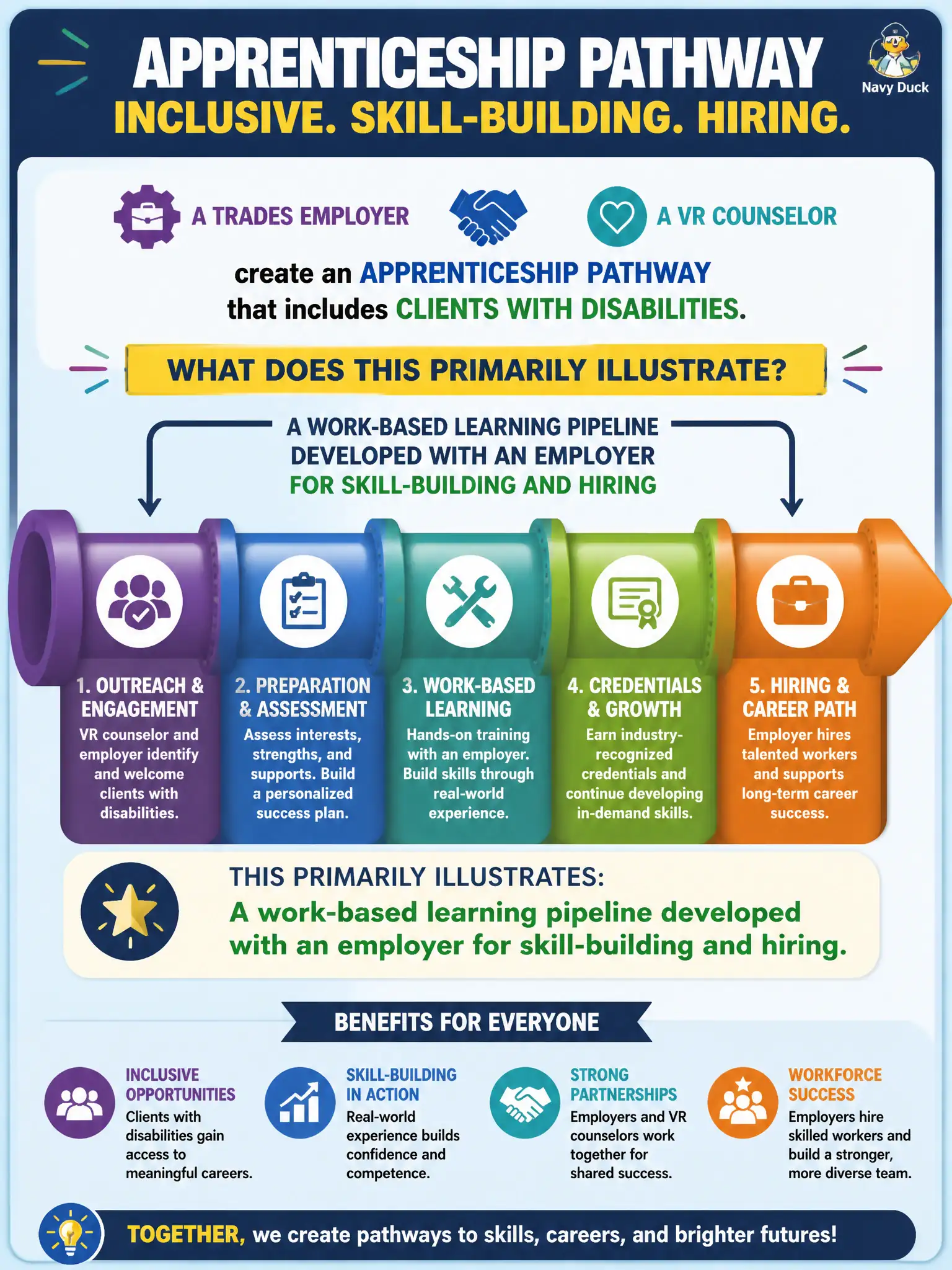
A trades employer and a VR counselor create an apprenticeship pathway that includes clients with disabilities. What does this primarily illustrate?
Select an answer to reveal the explanation.
Short Explanation
Apprenticeships are the on-ramp—learn the trade on the job with a real employer. Building that pipeline with disability inclusion in mind is classic work-based learning. It’s more than a flyer; it’s a hiring path with training wheels that actually roll.
Full Explanation
When a trades employer and a VR counselor create an apprenticeship pathway that includes clients with disabilities, the collaboration primarily illustrates a work-based learning pipeline developed with an employer for skill-building and hiring. Such pipelines convert relationship capital into structured skill gain and eventual competitive placement in civic and industrial trades. Banning any structured training in favor of sink-or-swim hiring only fails because many trade roles require supervised learning before full productivity. Replacing all paid work with unpaid family chores labeled careers fails because household tasks are not employer-based work-based learning leading to wages. Ending employer contact after a single informational brochure drop fails because pathways require ongoing curriculum, supervision, accommodation planning, and hiring checkpoints. Exam caveat: apprenticeships must still meet wage, safety, and equal-opportunity expectations; including disability is not a license for unpaid exploitation. Operational check: document learning objectives, supervision structure, accommodation plan, wage progression, and a hiring decision point before launching the pathway with the employer.