
During employer training, which clarification about reasonable accommodation is most accurate?
Select an answer to reveal the explanation.
Short Explanation
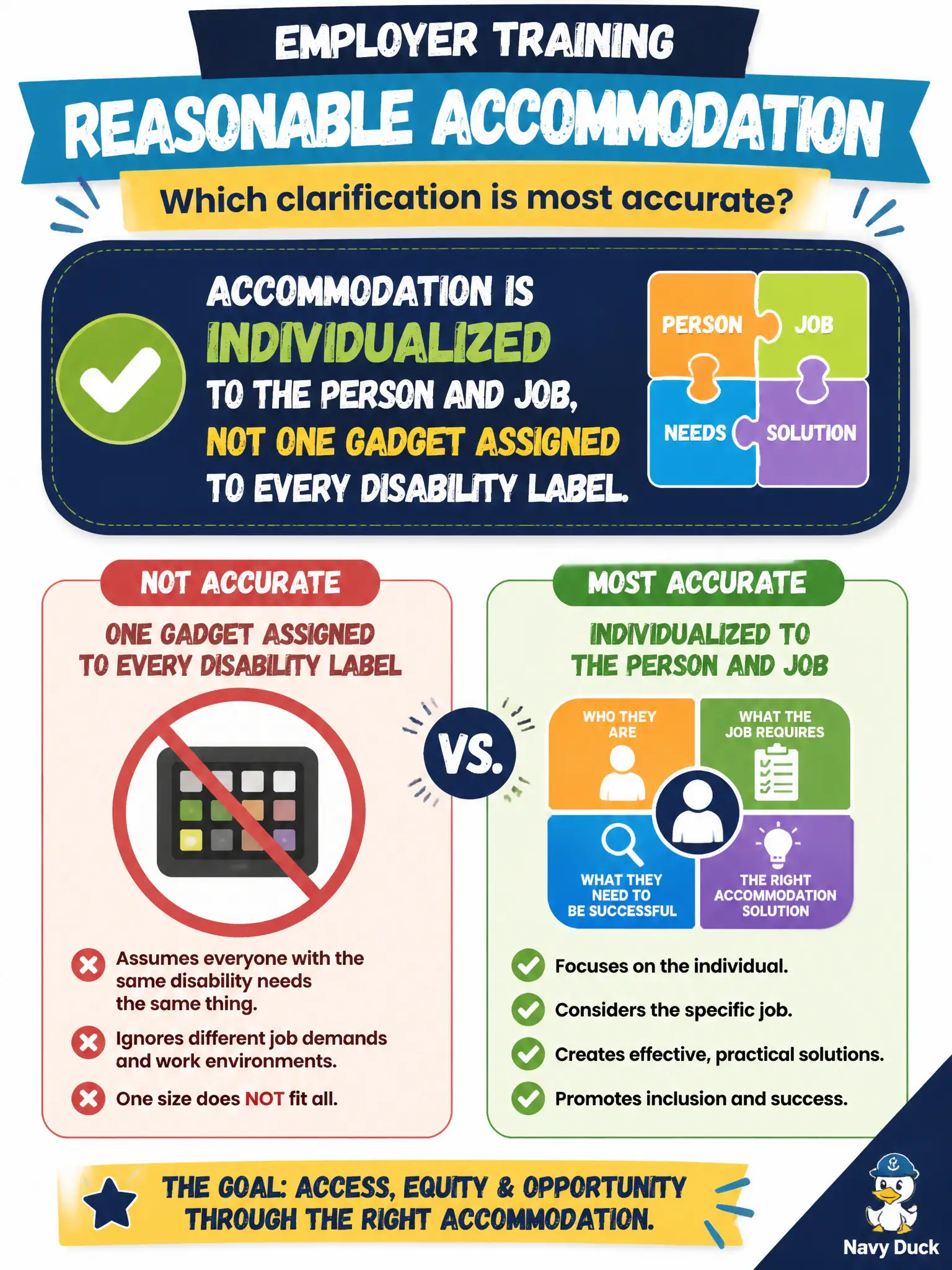
There’s no magic one-size gadget that fits every disability label like a store SKU. Accommodation is tailored to this person doing this job. Train employers to think custom fit, not catalog stereotype.
Full Explanation
Reasonable accommodation is individualized to the person and the job; it is not one gadget assigned to every disability label. Effective employer training in rehabilitation counseling emphasizes interactive assessment of essential functions and functional barriers over stereotype-driven purchasing. Requiring one device type for every employee who shares any diagnosis fails because functional needs differ widely within diagnostic categories and waste resources when mismatched. Claiming accommodation always means identical equipment regardless of essential functions fails because the job’s actual demands—not catalog popularity—drive the solution. Stereotyped solutions based only on disability category that replace interactive dialogue fail because they skip the person-specific barrier analysis that makes accommodations effective and defensible. Exam caveat: some standardized tools help many workers (e.g., common magnification software), but standardization does not replace individuality when needs differ across roles. Operational check: for any accommodation request, document the specific essential-function barrier, the employee’s identified limitation, and why the proposed tool or change addresses that pair—not merely the diagnosis name on a form.