
An employer says, "Once we hire someone with a disability, we can never terminate them." How should the counselor respond?
Select an answer to reveal the explanation.
Short Explanation
Hiring someone with a disability isn’t a forever shield against fair performance rules. Accommodate what needs accommodating—then hold the same standards. Myth-busting keeps employers open to hiring without fearing a no-exit trap.
Full Explanation
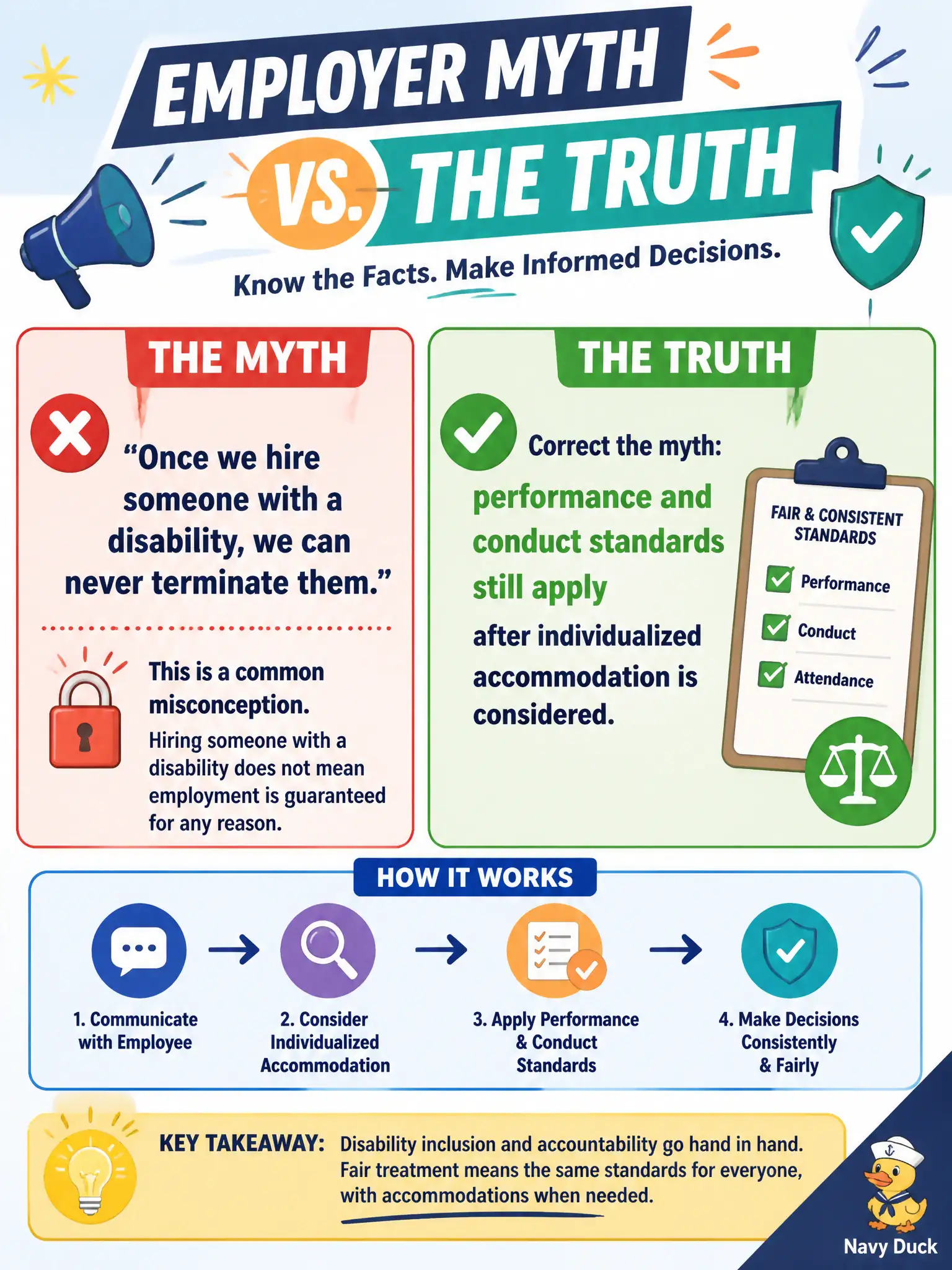
A common employer myth is that once someone with a disability is hired, termination becomes impossible. Rehabilitation counselors should correct that myth clearly: performance and conduct standards still apply after individualized accommodation has been considered through an interactive process. Agreeing that termination is always illegal after any disability hire fails because it misstates employment obligations and undermines trust when real performance issues arise later. Advising employers to ignore performance problems indefinitely fails because unaddressed deficits harm operations and can set the worker up for sudden, poorly documented adverse action. Telling employers never to document performance for workers with disabilities fails because fair, consistent documentation supports coaching and protects both parties. Exam caveat: counselors are not employment litigators; they explain the general principle, urge timely accommodation exploration, and recommend HR or legal consultation for specific adverse-action decisions. Operational check: when performance concerns appear, ask whether essential functions were clear, whether accommodation needs were explored, and whether coaching and documentation match what similarly situated employees receive before any termination conversation.