
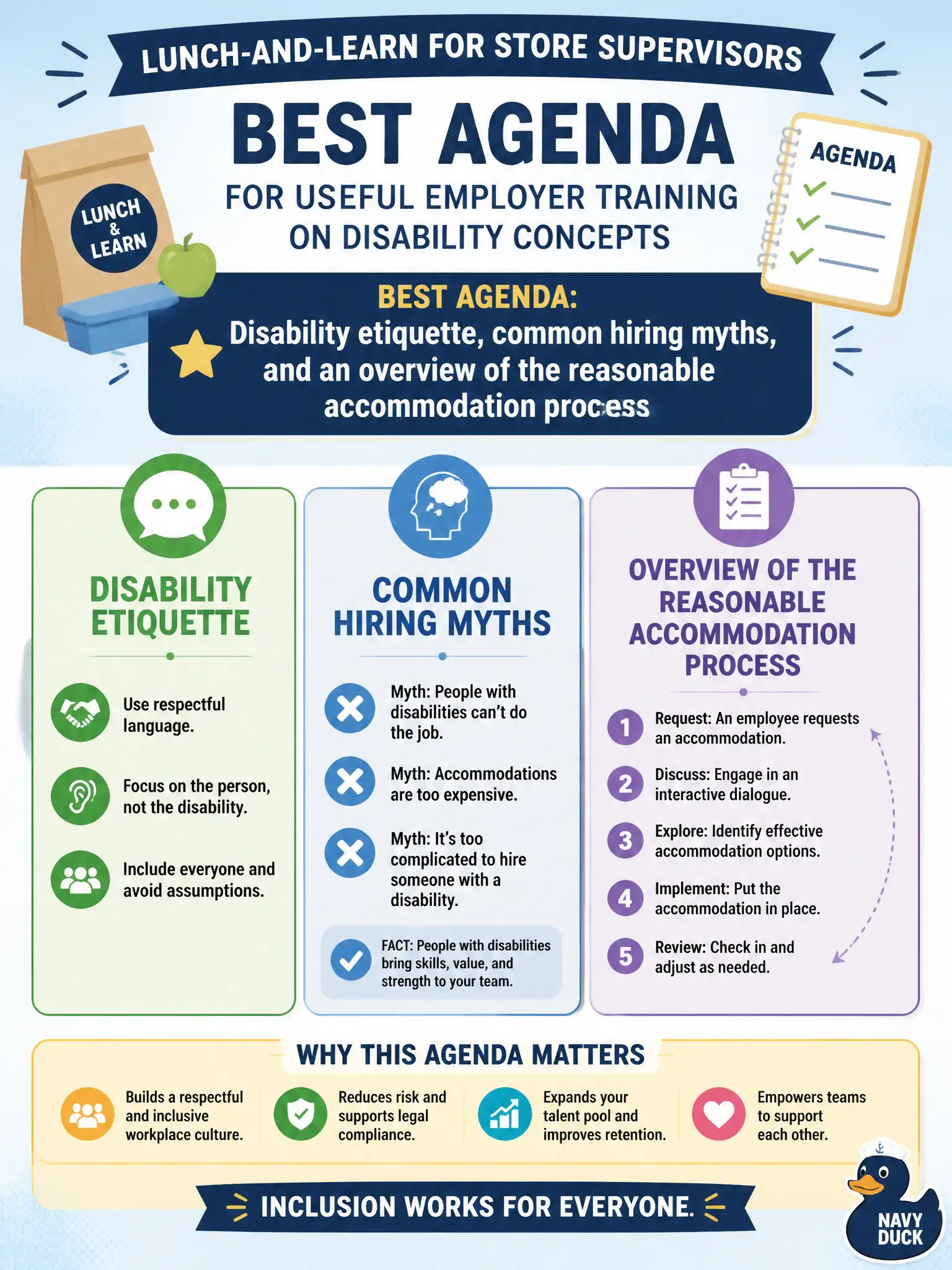
A rehabilitation counselor offers a lunch-and-learn for store supervisors. Which agenda best provides useful employer training on disability concepts?
Select an answer to reveal the explanation.
Short Explanation
Supervisors need the friendly how-to: etiquette, myth-busting, and how accommodation requests actually work. That’s employer education that prevents awkward—and illegal—missteps. Keep it practical, not a medical grand rounds.
Full Explanation
Employer training that helps store supervisors should cover disability etiquette, common hiring myths, and an overview of the reasonable accommodation process. That agenda builds practical competence for front-line retail and civic supervisors without turning the session into a clinical case conference about named clients. Sharing only confidential client diagnoses with names attached fails because it breaches privacy, teaches stereotyping, and models illegal medical inquiry habits. Advanced surgical technique training unrelated to hiring or supervision fails because clinical procedure content does not improve interviewing behavior, etiquette, or accommodation response. Skipping laws and etiquette to focus only on holiday party themes fails because entertainment does not address the employment barriers supervisors actually create or remove on the sales floor. Exam caveat: training is general workforce education—not a forum for discussing specific clients without authorization—and should avoid practicing law while still giving accurate high-level process steps. Operational check: after the lunch-and-learn, collect a brief supervisor check that they can name one etiquette practice, one hiring myth corrected, and the first step when a worker requests an accommodation.