
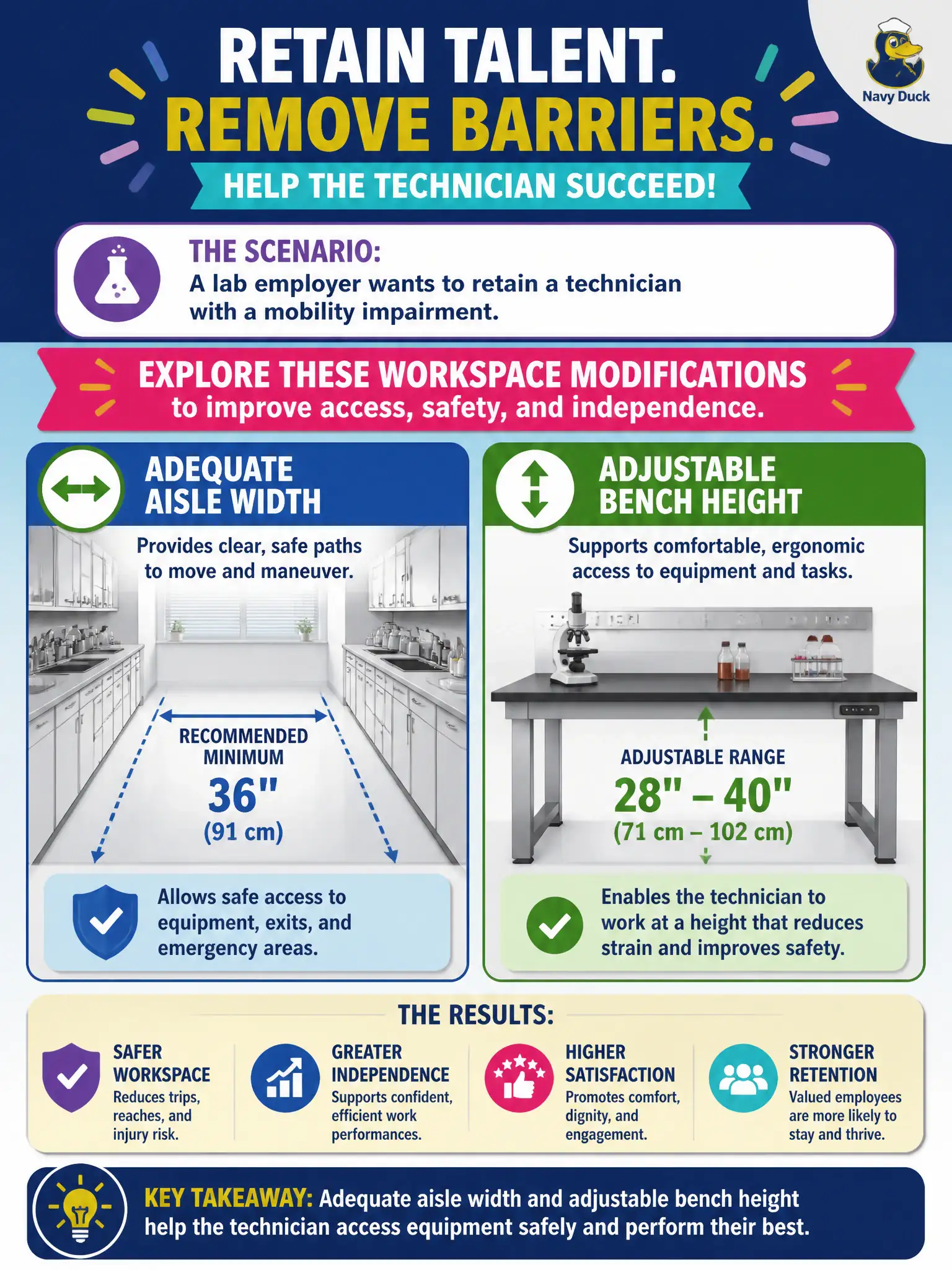
A lab employer wants to retain a technician with a mobility impairment. Which workspace modifications should the counselor help explore?
Select an answer to reveal the explanation.
Short Explanation
If the wheelchair can’t reach the bench, the job isn’t accessible—no matter how skilled the tech is. Aisle width and adjustable height are classic workspace fixes. Help the employer see the room as equipment, not destiny.
Full Explanation
Retaining a lab technician with a mobility impairment often depends on workspace modifications such as adequate aisle width and adjustable bench height so equipment remains safely accessible. Those environmental changes are classic business-engagement accommodation supports that keep skilled workers contributing in hospital, municipal, and private labs. Narrower aisles and fixed low benches that block mobility devices fail because they create barriers rather than remove them and can convert a retainable employee into an unnecessary separation. Removing all lighting to reduce visual clutter fails because lighting is a safety and performance requirement in lab settings, not an accommodation for mobility access. Eliminating safety protocols because accommodations replace OSHA rules fails by concept: accommodations operate within safety frameworks; they do not nullify chemical, biohazard, or equipment safeguards. Exam caveat: modifications must still allow essential lab quality and safety procedures; if a specific task cannot be made accessible, task redistribution or alternate duty may be explored through the interactive process. Operational check: walk the lab with the worker and supervisor, measure aisle and reach barriers, and document specific bench or aisle changes plus any task swaps needed before facilities work orders.