
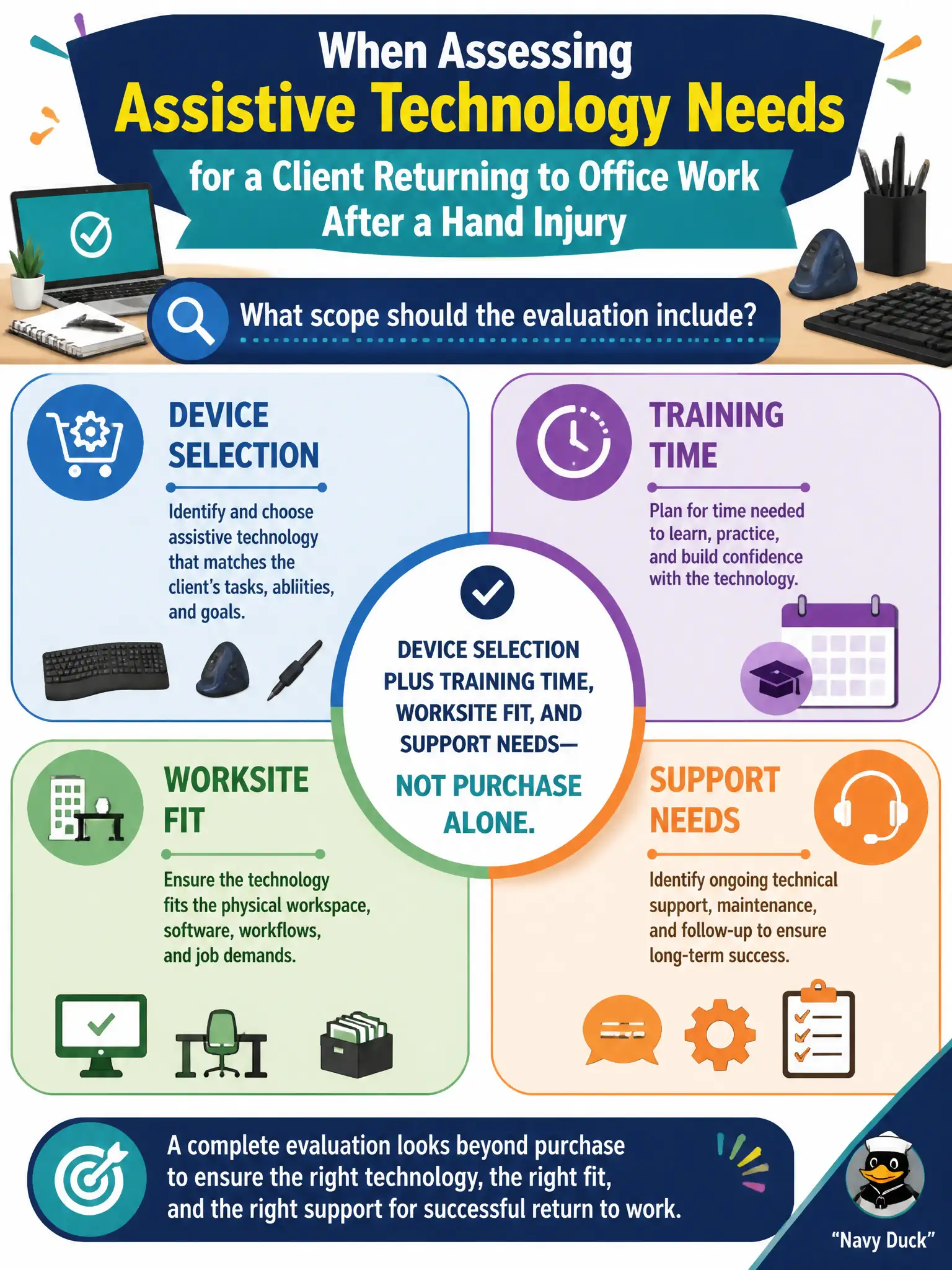
When assessing assistive technology needs for a client returning to office work after a hand injury, what scope should the evaluation include?
Select an answer to reveal the explanation.
Short Explanation
Buying a fancy tool without learning time is like dropping a piano in the living room and expecting a concert. AT assessment covers the device, training, fit at the desk, and support — not just the shopping cart. Otherwise the gear gathers dust.
Full Explanation
Assistive technology assessment for return-to-office work after hand injury must look beyond the purchase price of a device. Effective AT evaluation covers device selection, training time, worksite fit (desk layout, software environment, workflow), and ongoing support needs so the tool actually enables essential job functions in the civic workplace. Purchase-cost-only thinking fails because an unused or poorly fitted device does not restore productivity; training treated as an optional employer courtesy leaves the worker stranded. Hardware selection alone fails because software configuration, accessibility settings, and user training often determine whether the hardware helps or frustrates. A one-time catalog order without worksite fit or support assessment fails because office networks, security policies, and task sequences can block devices that looked fine in a catalog. Exam caveat: funding source (VR, insurance, employer) may constrain options, but the assessment scope still includes fit and training—not sticker price alone. Operational check: before authorizing AT, document the functional gap, the candidate device, a training plan, a worksite compatibility check (including IT if networked), and a support contact if problems arise in the first weeks on the job.