
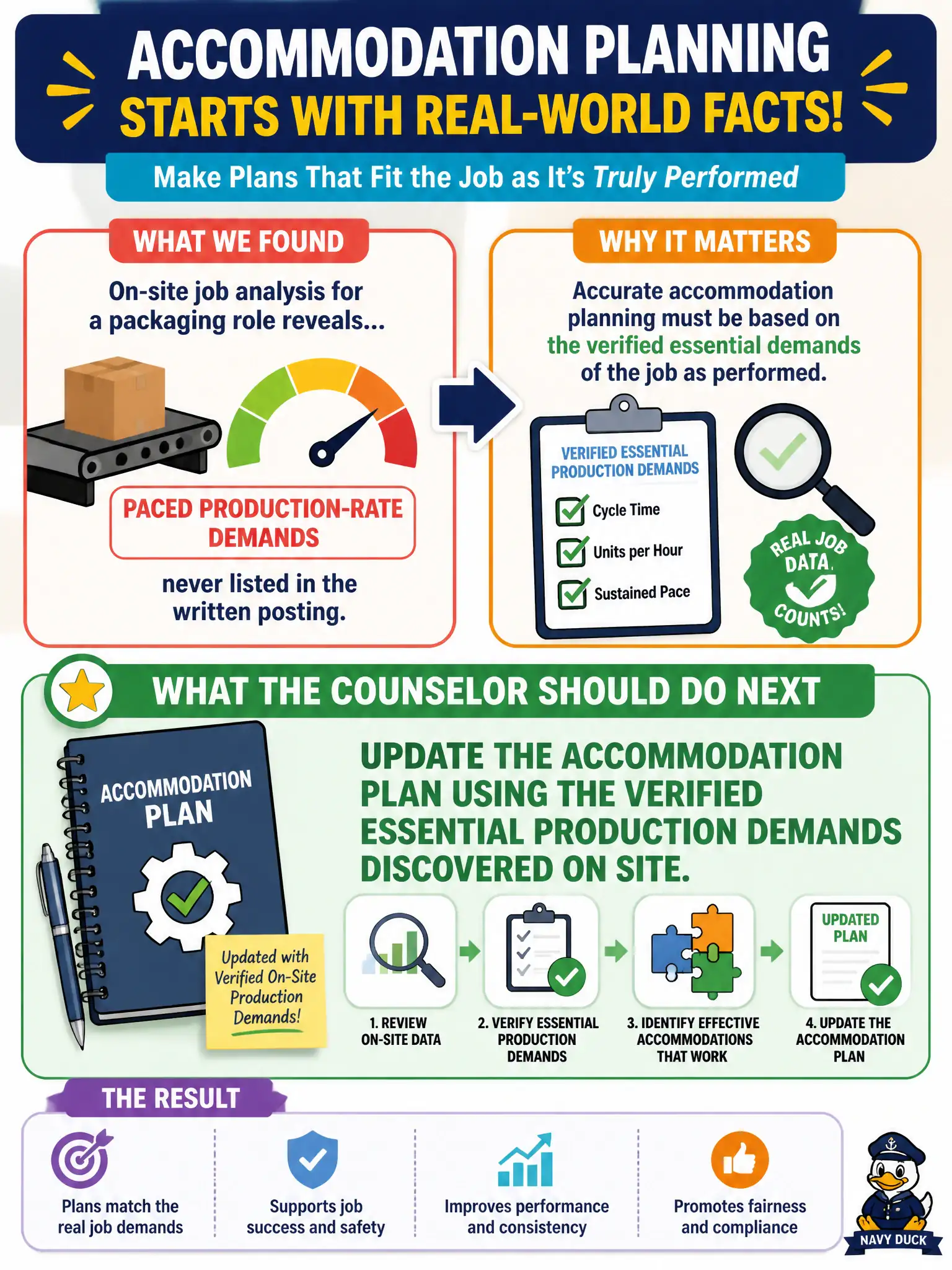
On-site job analysis for a packaging role reveals paced production-rate demands never listed in the written posting. What should the counselor do next for accommodation planning?
Select an answer to reveal the explanation.
Short Explanation
The job posting is the brochure; the shop floor is the truth. When paced production shows up in person but not on paper, the accommodation plan has to catch up. Good analysis updates the plan, it doesn't pretend the rate isn't there.
Full Explanation
On-site job analysis often reveals essential production demands that written postings omit, and accommodation planning must follow the verified job—not the brochure. When paced rate requirements appear on the packaging floor, the counselor updates the accommodation plan to address those essential demands with feasible modifications, restructuring ideas, or assistive supports while preserving the core work product. Ignoring observed rate demands because the posting is the only “legal” source fails by concept: essential functions are determined from the actual job, and postings can understate physical or pace requirements. Advising the client to quit exploration because any production standard permanently bars accommodation fails because standards invite interactive problem-solving, not automatic exclusion. Replacing job analysis with a single interest survey before employer dialogue fails because interests do not identify essential tasks, pace, or accommodation levers at the worksite. Exam caveat: documenting observed demands does not by itself create a legal finding of essentiality in every dispute, but for rehabilitation planning it is the operational basis for negotiation and informed choice. Operational check: after the site visit, revise the essential-function list with verified rate/pace items, list candidate accommodations tied to each demand, and confirm with the employer which demands are truly essential before finalizing the plan.