
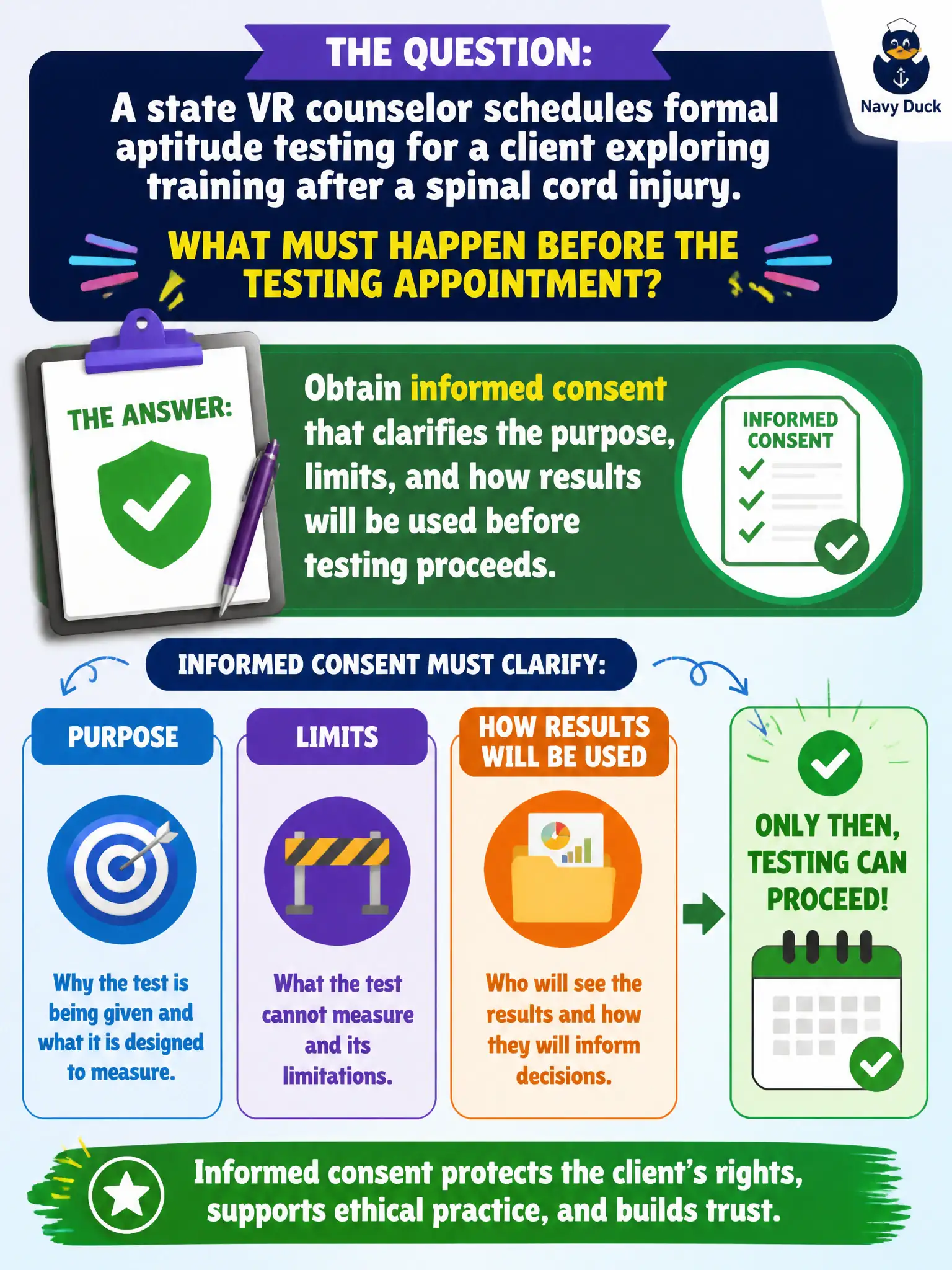
A state VR counselor schedules formal aptitude testing for a client exploring training after a spinal cord injury. What must happen before the testing appointment?
Select an answer to reveal the explanation.
Short Explanation
Think of formal testing like borrowing someone's car — you ask permission and explain where you're going first. Aptitude batteries need informed consent covering purpose, limits, and use of scores before anyone sits down with the booklet. Skipping that step is not "efficiency"; it's an ethics miss.
Full Explanation
Formal aptitude testing in public vocational rehabilitation is an assessment procedure that can shape training and placement decisions, so informed consent is a prerequisite rather than an afterthought. Before the appointment, the counselor must explain the purpose of the battery, the limits of what scores can and cannot support, and how results will be used in rehabilitation planning. That conversation protects client autonomy, aligns with CRCC ethics expectations for assessment practice, and keeps the helping relationship honest. Mailing raw percentile reports to an employer before counseling interpretation fails because it treats scores as commodities for job matching instead of information the client has a right to understand and contextualize. Skipping consent on the claim that formal tests are mandatory for every eligibility determination fails because testing procedures still require explanation and voluntary participation; eligibility rules do not erase assessment ethics. Naming only the brand of the battery while withholding purpose and limits fails because brand recognition is not informed consent—clients need meaning, boundaries, and use cases, not marketing labels. Exam caveat: consent language should match the client's communication needs and literacy, and guardianship or supported decision-making arrangements may alter who signs, but the duty to explain purpose and use remains. Operational check: before any formal testing date, confirm a documented consent discussion covering purpose, limits, and planned use of results appears in the case record and that the client (or authorized decision-maker) can restate those points in their own words.