
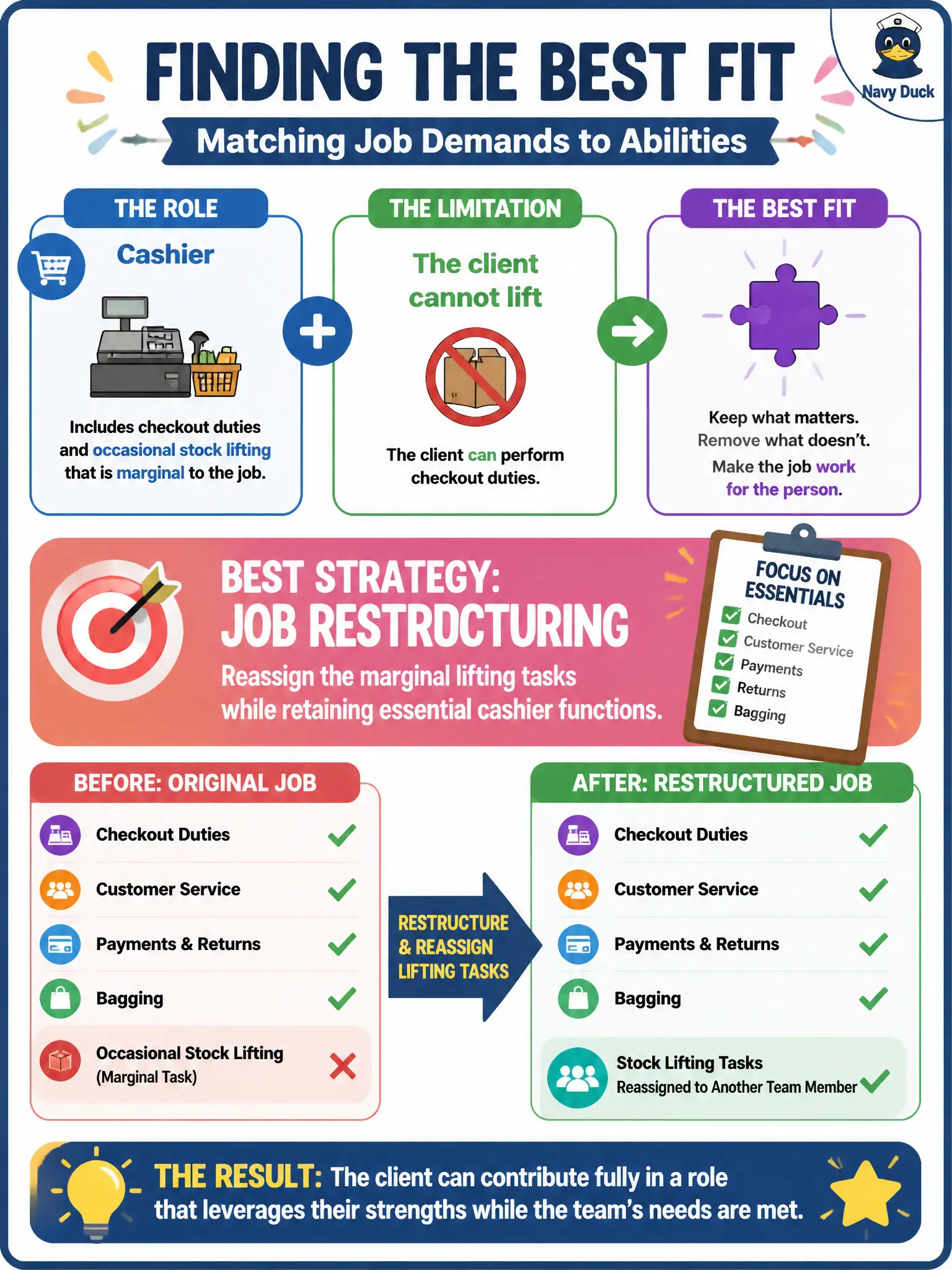
A cashier role includes occasional stock lifting that is marginal to the job. The client cannot lift but can perform checkout duties. Which strategy best fits?
Select an answer to reveal the explanation.
Short Explanation
If the side chore is the problem, move the side chore — do not fire the whole job. Restructuring hands marginal lifting to someone else so essential cashier work stays with the client. That is classic modification logic.
Full Explanation
When occasional stock lifting is marginal to a cashier role and the client can perform checkout but not lifting, job restructuring that reassigns marginal lifting while retaining essential cashier functions is the appropriate strategy. Eliminating the whole job or forcing unsafe lifting are extremes; unpaid volunteering is not a required substitute. ADA-informed civic employment practice distinguishes essential from marginal tasks.
Eliminating the entire cashier position because any lifting exists in the building overreacts to a marginal task. Requiring all lifting without modification ignores restructuring and accommodation. Transferring only to unpaid volunteer roles permanently is unnecessary when essential functions remain doable.
Documenting essential versus marginal duties also strengthens the interactive process if disputes arise later.
Exam caveat: restructure marginal functions; keep essential functions—do not discard the whole job for marginal lifting.
Operational check: confirm lifting is marginal via job analysis; propose reassignment of stock lifts; document the restructure agreement with the employer; place into cashier essentials. Re-verify length and fidelity of the written plan at the next supervisory case review so civic accountability stays visible.