
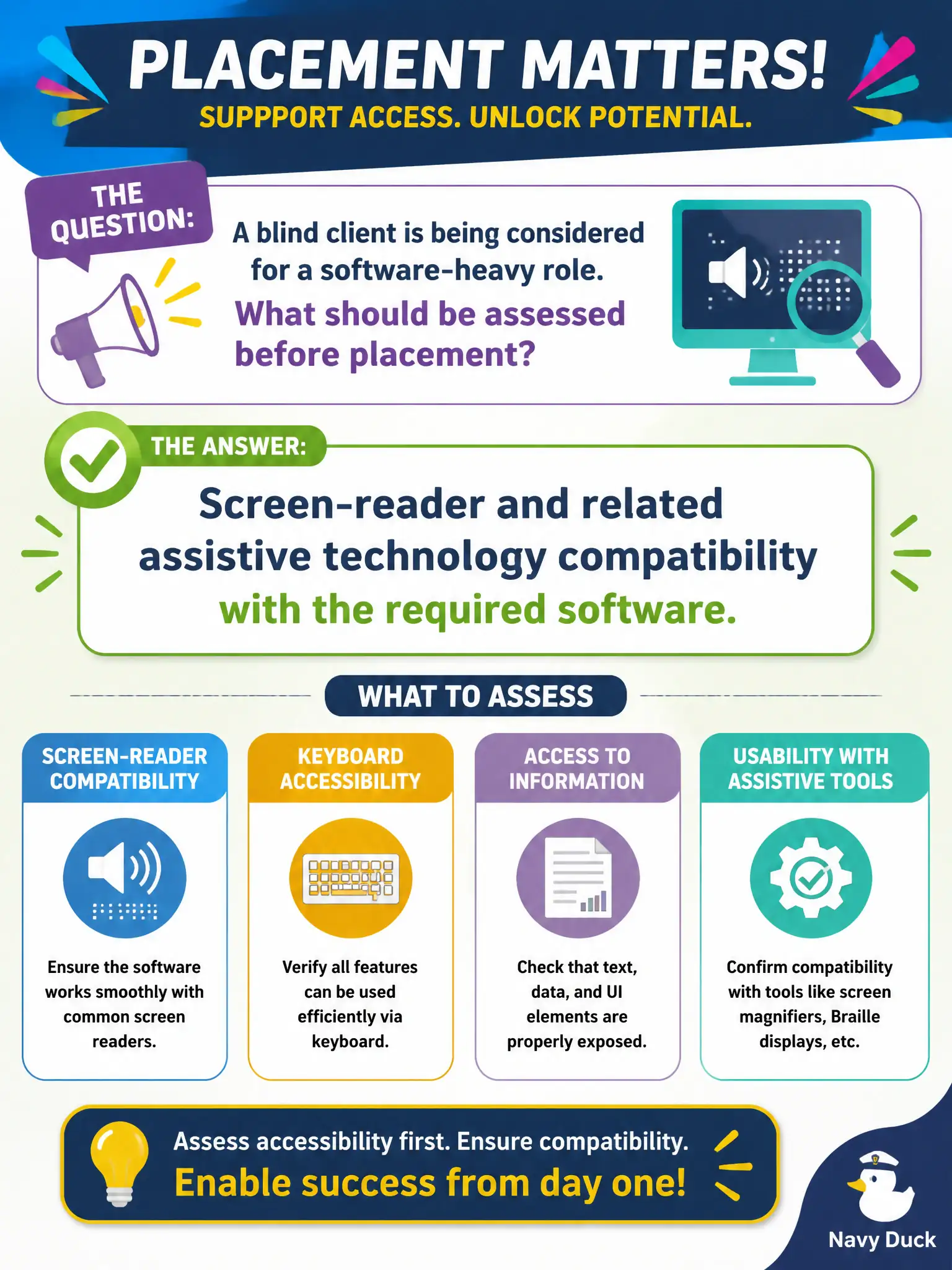
A blind client is being considered for a software-heavy role. What should be assessed before placement?
Select an answer to reveal the explanation.
Short Explanation
Sending someone into a locked app without a key is a setup, not a placement. Screen-reader compatibility has to be checked against the actual software stack. AT assessment before the start date prevents a preventable crash.
Full Explanation
Before placing a blind client in a software-heavy role, assess screen-reader and related assistive technology compatibility with the required software. Access technology fit is a placement prerequisite; verbal IQ or coworker memo preferences do not answer accessibility. Public VR AT assessment prevents failed placements caused by incompatible applications.
Asking whether the client can memorize every keyboard shortcut without any technology sets an unfair, unnecessary barrier. Focusing on whether coworkers prefer paper memos sidesteps the software access question. Using only verbal IQ while ignoring technology access misses the actual job interface.
Incompatible enterprise software is a foreseeable placement failure mode; AT trials belong in the timeline before start dates.
Exam caveat: blind client + software role → verify AT/screen-reader compatibility before placement.
Operational check: inventory required applications; test with the client’s screen reader/AT; remediate or select alternate tools; only then proceed with placement timelines. Re-verify length and fidelity of the written plan at the next supervisory case review so civic accountability stays visible. Confirm the rationale in the case record so auditors and supervisors can see the clinical logic.