
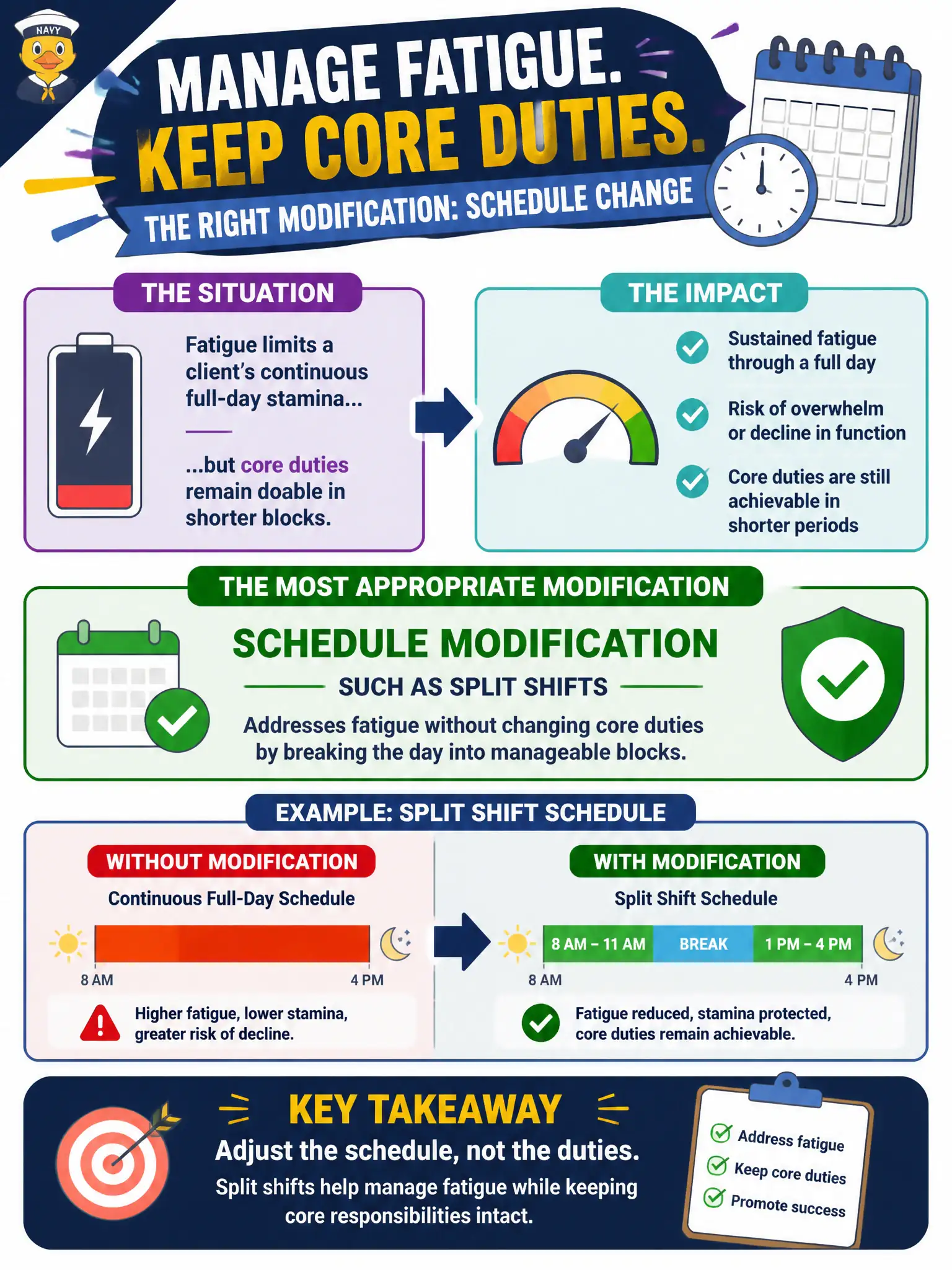
Fatigue limits a client's continuous full-day stamina, but core duties remain doable in shorter blocks. Which modification is most appropriate?
Select an answer to reveal the explanation.
Short Explanation
Sometimes the playlist is fine — you just need intermission. Split shifts or other schedule tweaks can handle fatigue without rewriting the whole job description. Change the clock, not the core craft, when duties themselves still fit.
Full Explanation
When fatigue limits continuous full-day stamina but core duties remain doable in shorter blocks, schedule modification such as split shifts addresses fatigue without changing core duties. That is a classic reasonable modification pathway. Public employers and CRPs often can adjust timing when essential functions stay intact.
Removing all essential job functions so no productive work remains is not a viable modification. Mandatory overtime to build stamina through exhaustion worsens fatigue and safety risk. Immediate termination because fatigue always precludes employment ignores schedule-based solutions.
Split shifts and flexible scheduling are standard fatigue accommodations when production goals can be met in discontinuous blocks.
Exam caveat: fatigue with preserved core duties → schedule modification (e.g., split shifts), not duty deletion, overtime punishment, or automatic termination.
Operational check: propose split shifts or reduced continuous blocks; verify essential functions remain covered; trial the schedule; monitor fatigue and productivity. Re-verify length and fidelity of the written plan at the next supervisory case review so civic accountability stays visible. Confirm the rationale in the case record so auditors and supervisors can see the clinical logic.