
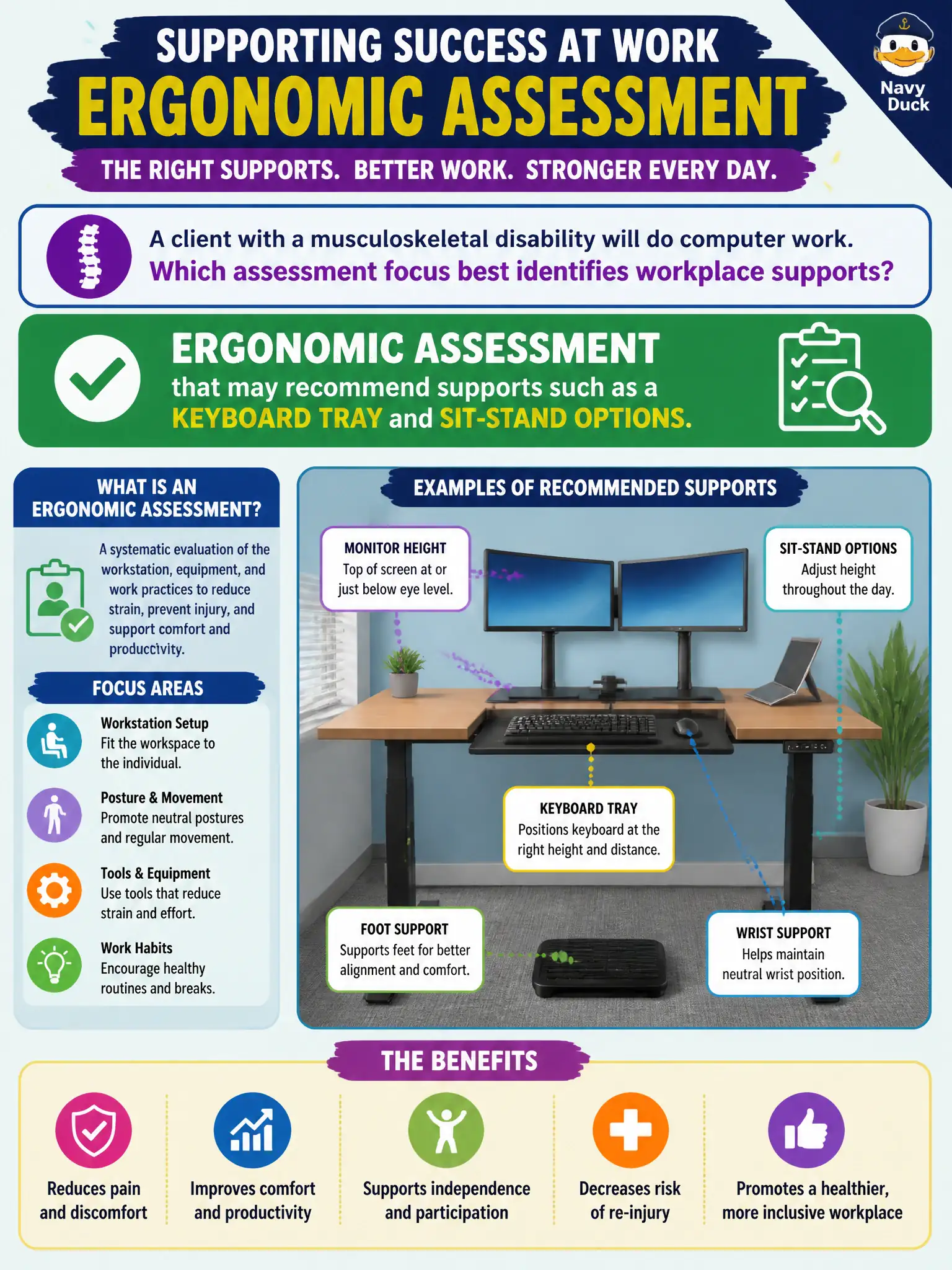
A client with a musculoskeletal disability will do computer work. Which assessment focus best identifies workplace supports?
Select an answer to reveal the explanation.
Short Explanation
If the desk fights the body, no pep talk fixes the strain. Ergonomic assessment looks at chairs, keyboards, and sit-stand options so the workstation meets the person halfway. That is accommodation homework, not fluff.
Full Explanation
For computer work with a musculoskeletal disability, ergonomic assessment that may recommend supports such as a keyboard tray and sit-stand options best identifies workplace supports. Interest or personality inventories alone do not evaluate workstation setup. Labor market wage tables likewise skip physical configuration. Community workplace assessments should include ergonomics when MSK and computer tasks meet.
An interest inventory alone without reviewing the workstation misses the support question. A pure personality inventory as the only accommodation tool answers the wrong question. Wage tables without examining physical setup inform pay, not ergonomic need.
Ergonomic changes are often low-cost preventive accommodations that preserve employment for MSK clients in public desk roles.
Exam caveat: MSK + computer work → ergonomic assessment for supports, not interest/personality/wage tools alone.
Operational check: arrange ergonomic evaluation of the workstation; implement recommended supports; follow up on pain/fatigue after changes. Re-verify length and fidelity of the written plan at the next supervisory case review so civic accountability stays visible. Confirm the rationale in the case record so auditors and supervisors can see the clinical logic.