
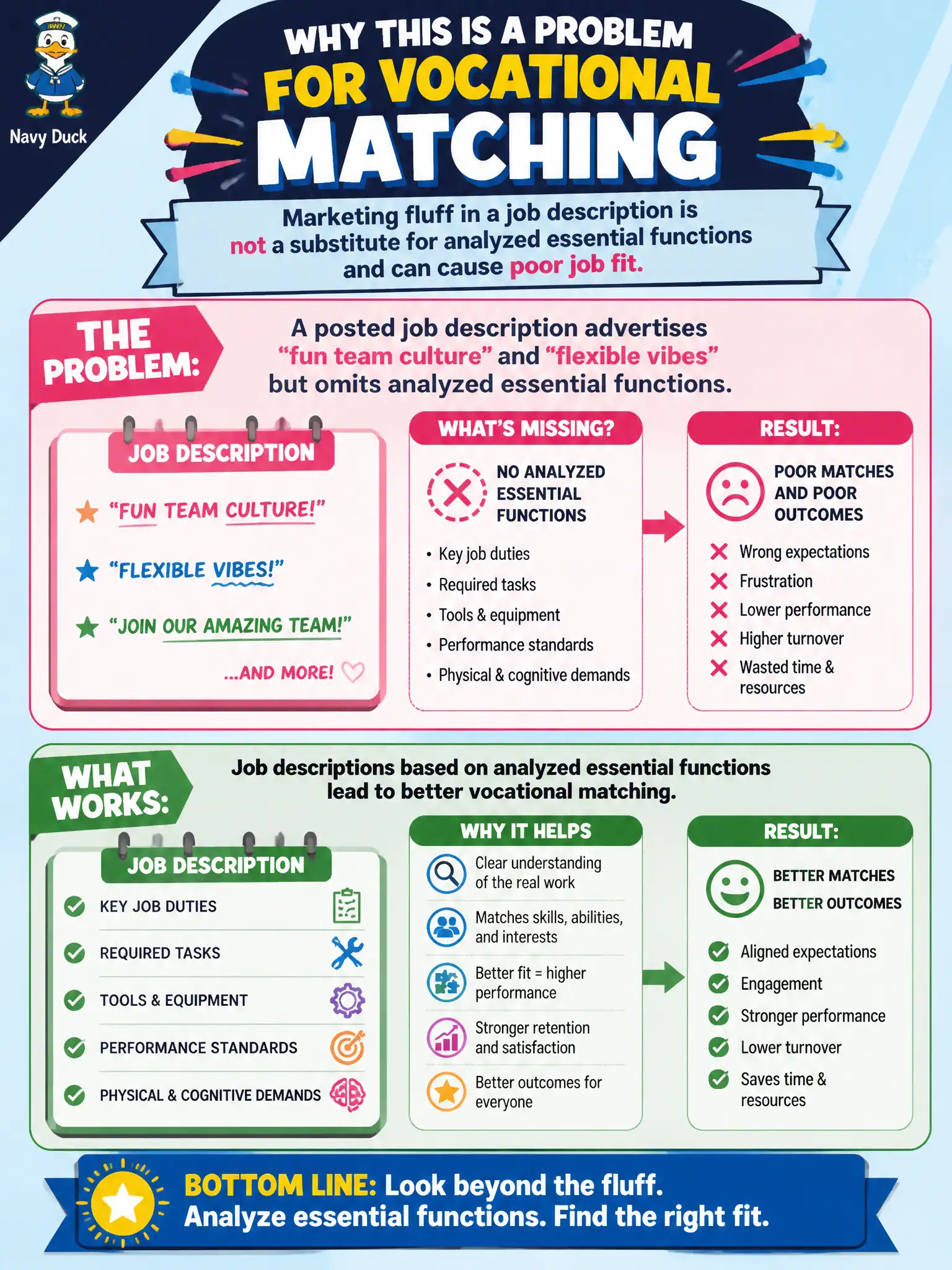
A posted job description advertises a "fun team culture" and "flexible vibes" but omits analyzed essential functions. Why is that a problem for vocational matching?
Select an answer to reveal the explanation.
Short Explanation
"Fun vibes" will not tell you if the job requires lifting 50 pounds or sitting eight hours. Marketing copy sells the brand; job analysis sells the truth about demands. Mixing them up is how people get mismatched and disappointed.
Full Explanation
A posting that advertises ‘fun team culture’ and ‘flexible vibes’ but omits analyzed essential functions is a problem because marketing fluff is not a substitute for essential-function analysis and can cause poor job fit. Vocational matching needs task and demand clarity. Culture language may matter socially but cannot replace job analysis for disability-informed placement.
Claiming culture language always replaces essential-function analysis under disability law is false. Saying job descriptions never matter if wages are acceptable ignores fit and accommodation planning. Letting only the hiring manager’s personality guide placement decisions abandons structured matching.
Counselors should translate fluffy postings into task lists via employer interview or observation before endorsing fit.
Exam caveat: essential functions analysis > marketing language for vocational matching and accommodations.
Operational check: request or perform job analysis beyond the fluff posting; verify essential functions before recommending the role; document demand-capacity fit. Re-verify length and fidelity of the written plan at the next supervisory case review so civic accountability stays visible.