
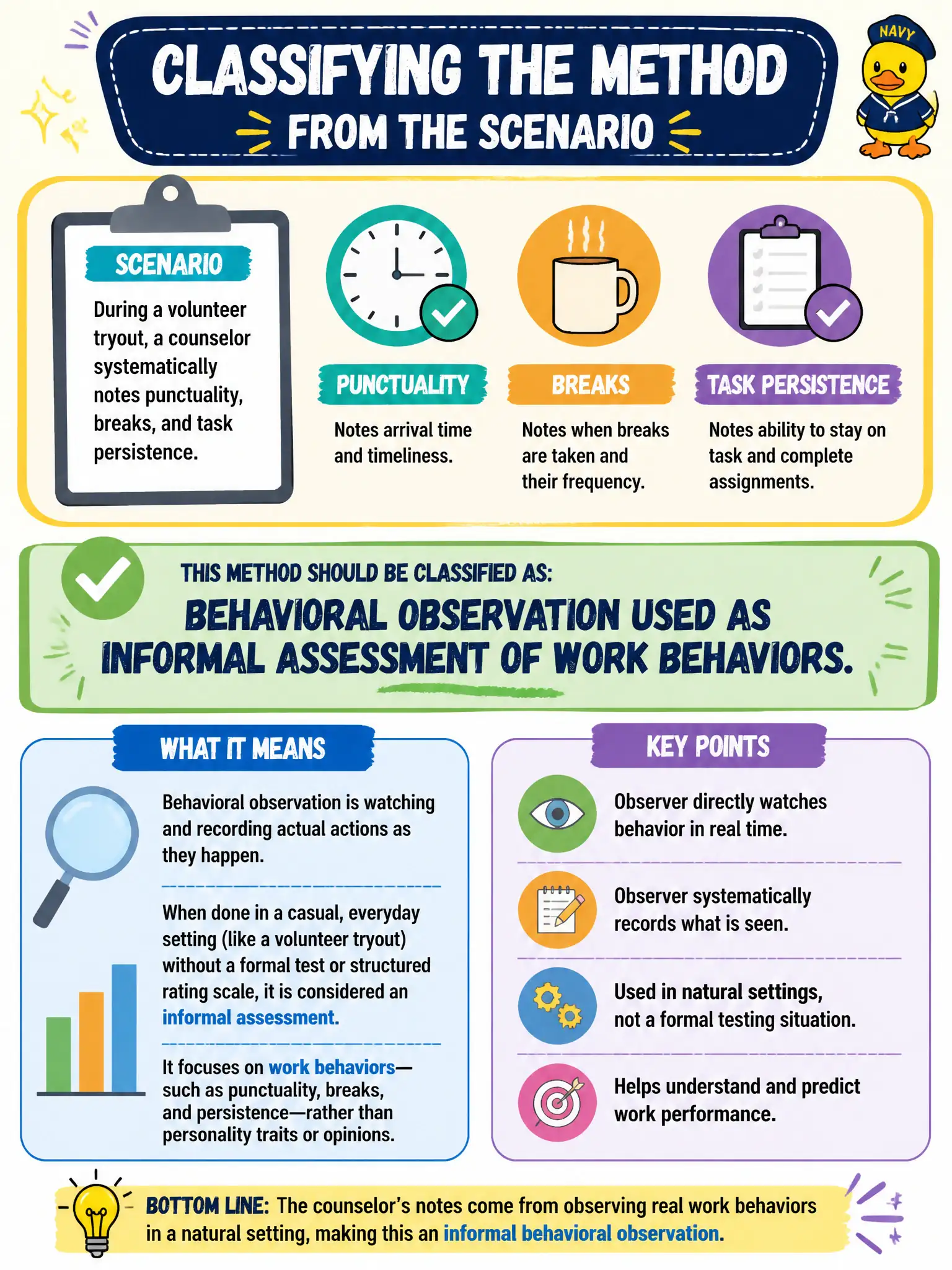
During a volunteer tryout, a counselor systematically notes punctuality, breaks, and task persistence. How should this method be classified?
Select an answer to reveal the explanation.
Short Explanation
Showing up on time and sticking with a task is like keeping a beat in a band — you hear it by watching, not by reading a score. Noting punctuality and persistence during a tryout is informal behavioral observation. It is real assessment data, just not a normed paper test.
Full Explanation
Systematically noting punctuality, breaks, and task persistence during a volunteer tryout is behavioral observation used as informal assessment of work behaviors. It is not a normed aptitude battery, a medical exam, or a wage study. Community tryouts give CRCs direct samples of vocational behaviors that standardized tests may miss.
Calling the method a formal standardized aptitude battery with national norms misclassifies informal observation. Labeling it an unauthorized medical examination requiring physician credentials confuses behavioral work sampling with medical practice. Treating it as labor market analysis of regional wage trends swaps assessment of the person for analysis of the market.
Reliable informal observation uses consistent definitions of punctuality and persistence so notes are comparable across days and usable in team meetings.
Exam caveat: classify methods correctly—structured worksite notes on punctuality/persistence are behavioral observation/informal assessment.
Operational check: use a simple observation checklist for attendance, breaks, and persistence; share findings with the client; integrate with other assessment data for IPE decisions. Re-verify length and fidelity of the written plan at the next supervisory case review so civic accountability stays visible.