
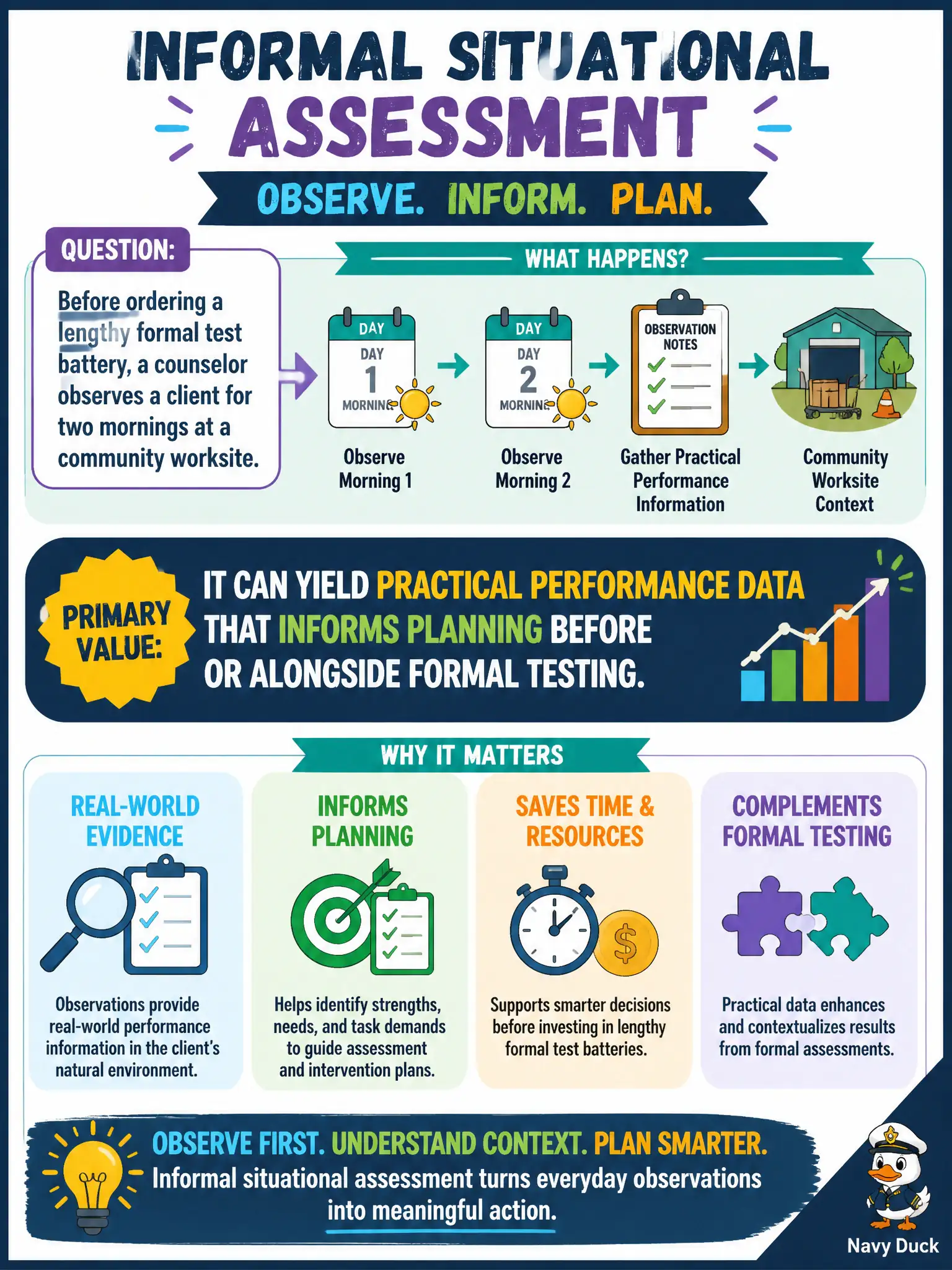
Before ordering a lengthy formal test battery, a counselor observes a client for two mornings at a community worksite. What is the primary value of this informal situational assessment?
Select an answer to reveal the explanation.
Short Explanation
Watching someone actually stock shelves tells you more than a pamphlet about stocking shelves. A short worksite tryout is like a test drive — useful data without waiting for the full lab report. Informal situational assessment often clarifies stamina, pace, and social fit early in planning.
Full Explanation
Observing a client for two mornings at a community worksite before a lengthy formal battery yields practical performance data that informs planning before or alongside formal testing. Informal situational assessment is valuable ecological evidence—not a permanent replacement for all testing, and not invalid merely because it lacks national norms. County VR counselors use worksite observation to ground later formal referrals.
Treating situational observation as a permanent replacement for all formal testing for every client overclaims its scope. Calling it invalid because only standardized scores may guide plans discards useful real-world data. Requiring that only a neuropsychologist conduct any observational planning value creates an unnecessary bottleneck for basic work-behavior observation.
Worksite mornings can reveal stamina, cueing needs, and social behavior that clinic interviews miss, guiding whether neuropsych or aptitude testing is still warranted.
Exam caveat: informal situational assessment informs planning; it complements rather than universally replaces formal testing.
Operational check: structure observation with clear behavioral targets; record findings; decide which formal tests are still needed; fold both data sources into the plan.