
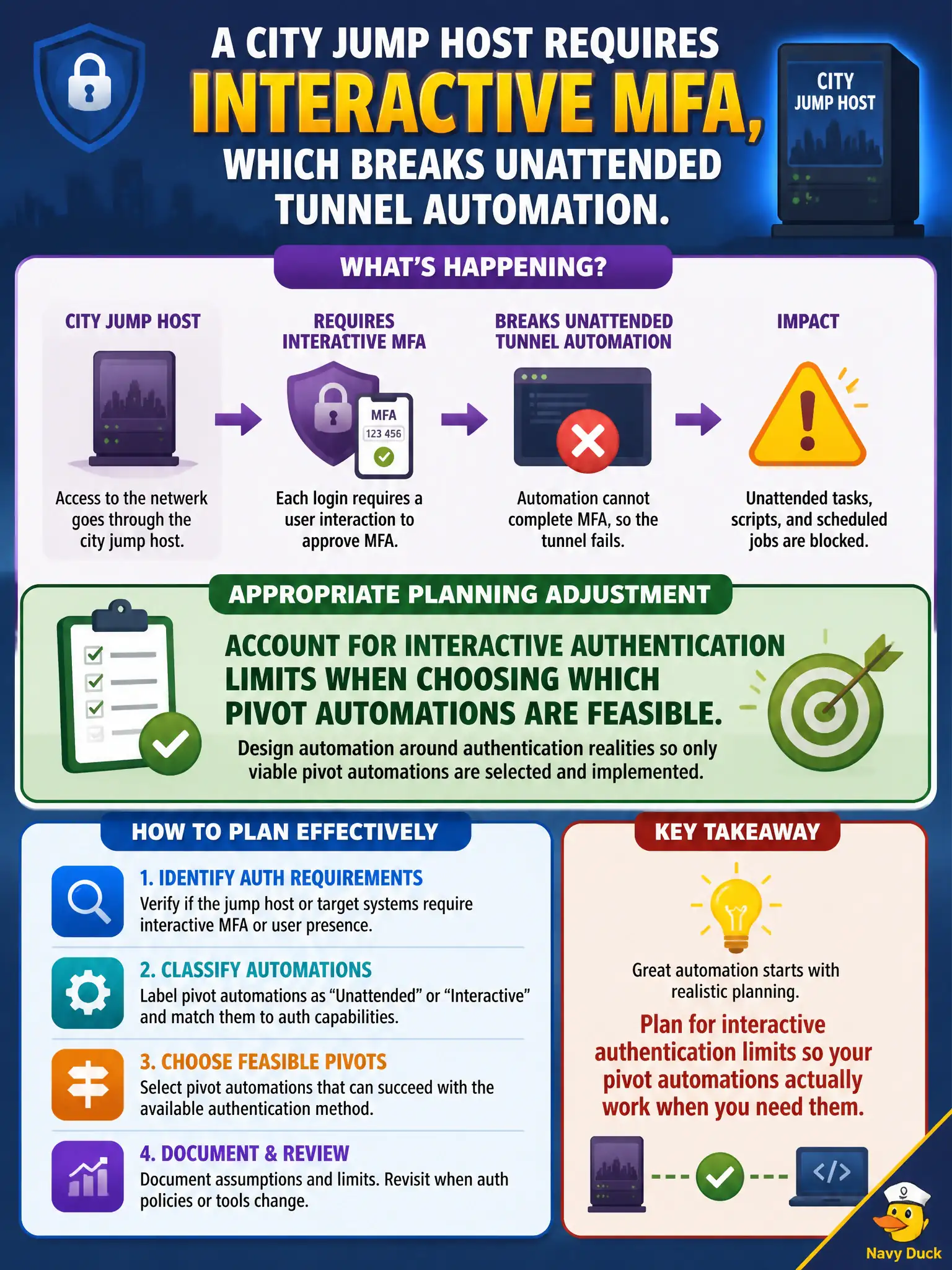
A city jump host requires interactive MFA, which breaks unattended tunnel automation. What planning adjustment is appropriate?
Select an answer to reveal the explanation.
Short Explanation
If the jump box wants a human to tap MFA, your unattended tunnel script just hit a locked door with manners. Plan around interactive auth instead of trying to outlaw MFA for convenience. Some pivots need a person in the loop—that is a schedule fact, not a failure.
Full Explanation
When a city jump host requires interactive MFA that breaks unattended tunnel automation, the appropriate adjustment is to account for interactive authentication limits when choosing which pivot automations are feasible. Bypassing MFA by sharing one-time codes in a public channel destroys the control and mishandles secrets. Assuming MFA never applies to jump hosts used in tests is wishful and usually false in mature municipal access designs. Disabling MFA citywide for the assessment is an extreme change rarely justified and not a tester’s unilateral call. Exam caveat: plan human-in-the-loop steps where MFA blocks headless tooling. Operational check: schedule interactive sessions for MFA-gated jumps, limit automation to post-auth channels that remain within policy, and document MFA friction as an operational constraint—not as something to dismantle. In municipal operations, record the rationale in the engagement notes so future testers and city defenders understand which approach was chosen and which failure modes the rejected options would create for civic services. Re-validate the same judgment after the next change window so the control still holds under the city’s current tooling, identity posture, and RoE amendments.