
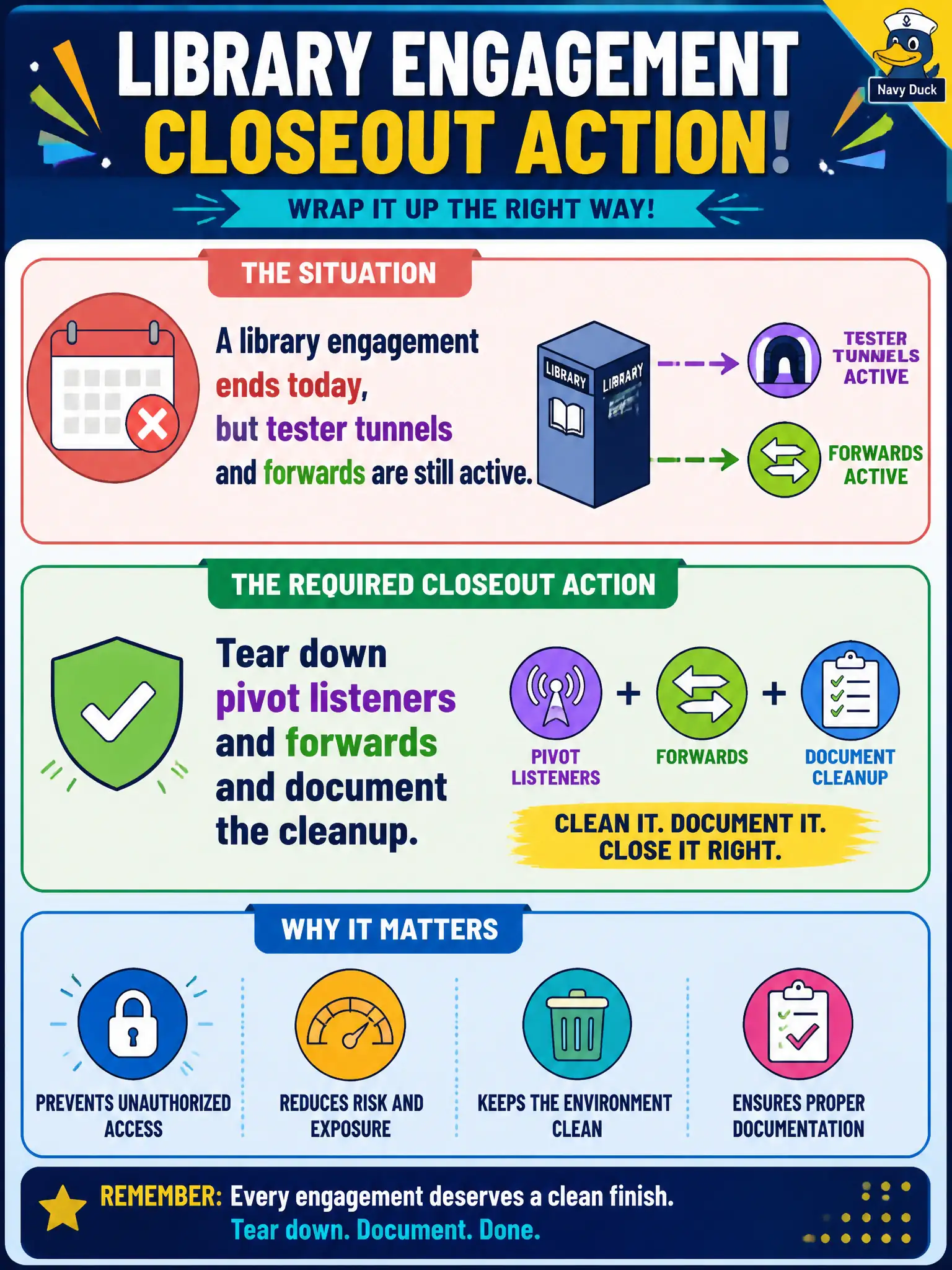
A library engagement ends today, but tester tunnels and forwards are still active. What closeout action is required?
Select an answer to reveal the explanation.
Short Explanation
When the library closes for the night, you do not leave the side doors propped open. Engagement end means taking down your forwards and tunnels and writing that you did it. Cleanup is part of the job, not optional décor.
Full Explanation
If a library engagement ends today while tester tunnels and forwards are still active, closeout requires tearing down pivot listeners and forwards and documenting the cleanup. Leaving tunnels running as a complimentary monitoring service extends access past authorization. Transferring tunnel control to an unnamed personal VPS is data-handling and scope malpractice. Removing tunnels only after a second signed letter invents process delay; end-of-engagement already obligates cleanup unless RoE says otherwise. Exam caveat: channel teardown is part of professional completion criteria. Operational check: checklist every listener/forward/proxy, verify sockets are closed, capture cleanup evidence for the library sponsor, and confirm with the SOC that unexpected reverse paths have stopped. In municipal operations, record the rationale in the engagement notes so future testers and city defenders understand which approach was chosen and which failure modes the rejected options would create for civic services. Re-validate the same judgment after the next change window so the control still holds under the city’s current tooling, identity posture, and RoE amendments. Keep secret material and session artifacts in the approved vaulted workflow rather than chat paste or unprotected tickets used by mixed municipal teams.