
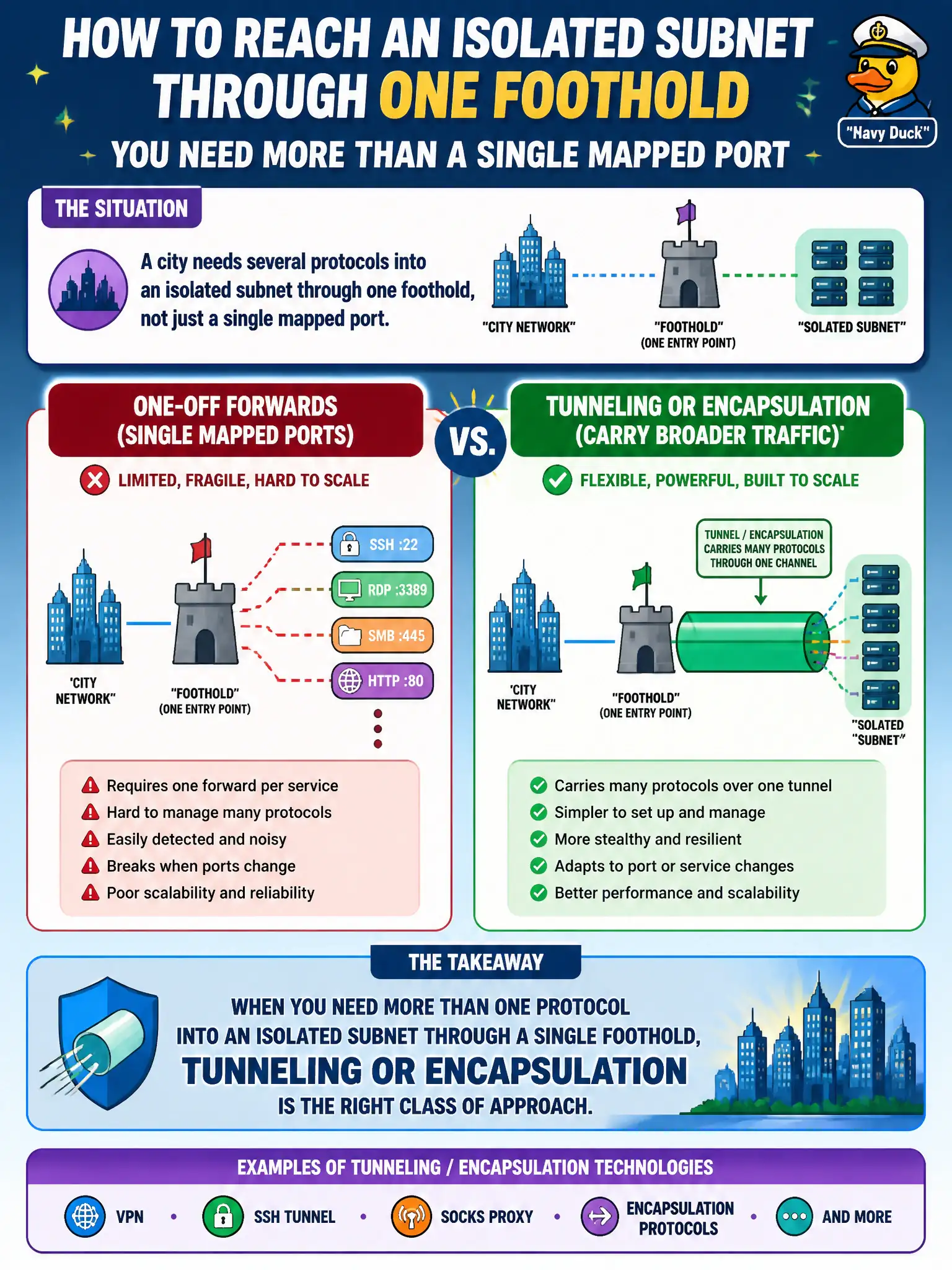
A city needs several protocols into an isolated subnet through one foothold, not just a single mapped port. What class of approach is generally more suitable than one-off forwards alone?
Select an answer to reveal the explanation.
Short Explanation
One dedicated forward is like drilling a single straw through the wall—great for one drink, awkward for a whole buffet. When you need many protocols through the same foothold, a tunnel is more like a temporary hallway that can carry different kinds of traffic. You still stay disciplined about scope; you just stop living one straw at a time.
Full Explanation
When a city needs several protocols into an isolated subnet through one foothold—not just a single mapped port—tunneling or encapsulation that can carry broader traffic through the foothold is generally more suitable than one-off forwards alone. Repeatedly rebooting the foothold to reset ARP caches does not create multi-protocol reachability and risks instability on civic hosts. Disabling all host-based firewalls citywide for the test week is an unauthorized, high-blast-radius change. Emailing each protocol’s packets to the subnet gateway is not a real networking method and mocks the problem. Exam caveat: prefer conceptual tunnel/encapsulation when the requirement is flexible multi-protocol access under RoE. Operational check: confirm which protocols are in scope, choose an approved tunnel class that rides allowed paths, limit exposure to needed destinations, and document channels for later cleanup with the city SOC. In municipal operations, record the rationale in the engagement notes so future testers and city defenders understand which approach was chosen and which failure modes the rejected options would create for civic services. Re-validate the same judgment after the next change window so the control still holds under the city’s current tooling, identity posture, and RoE amendments.