
A water utility asks whether UDP services can be ignored because TCP scans looked quiet. What should the tester explain?
Select an answer to reveal the explanation.
Short Explanation
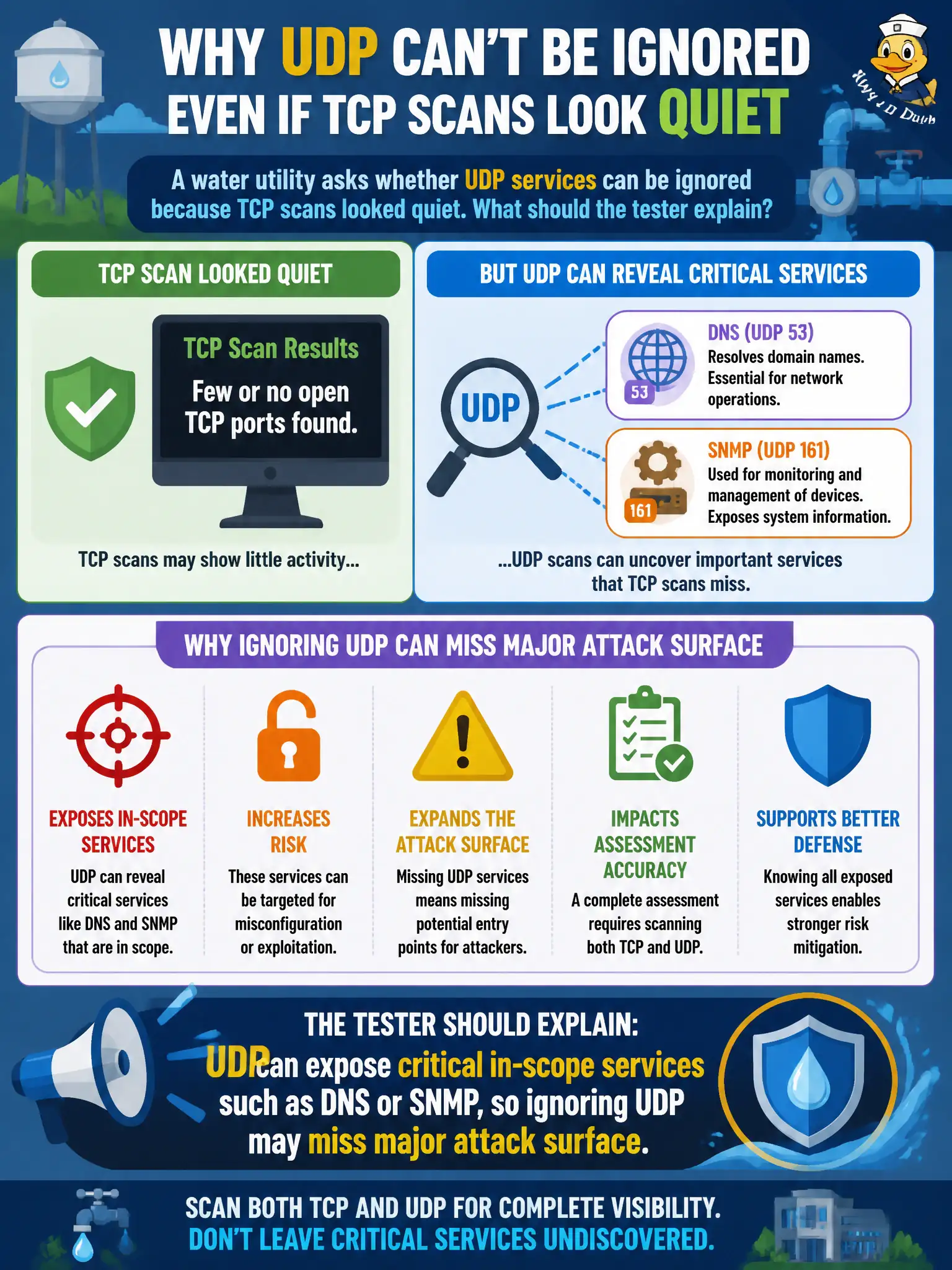
TCP silence does not mean the neighborhood is empty — some important houses only answer the UDP doorbell. DNS, SNMP, and friends still matter when they are in scope. Skipping UDP is how big surfaces stay invisible.
Full Explanation
UDP cannot be ignored merely because TCP scans looked quiet on a water-utility network. UDP can expose critical in-scope services such as DNS or SNMP, so skipping it may miss major attack surface. UDP is not obsolete on modern civic networks, and TCP-only enumeration does not always satisfy professional standards when UDP is in scope. UDP scanning is not illegal when authorized in scope. Quiet TCP results do not guarantee UDP listeners are filtered or irrelevant. Exam caveat: UDP scanning is slower and noisier—tune timing and target lists under RoE rather than omitting the protocol entirely. Operational check: identify high-value UDP services in scope, scan them with appropriate timing, document open/open|filtered results carefully, and follow up on SNMP/DNS findings that affect utility operations. Document the rationale in the municipal engagement notes so later civic responders know which boundary was honored and which failure modes the rejected options would create for public services. Document the rationale in the municipal engagement notes so later civic responders know which boundary was honored and which failure modes the rejected options would create for public services. Document the rationale in the municipal engagement notes so later civic responders know which boundary was honored and which failure modes the rejected options would create for public services.