
A transit blue team sees NSE-class scripts run during a test and asks what those scripts are for. Which answer best describes their role?
Select an answer to reveal the explanation.
Short Explanation
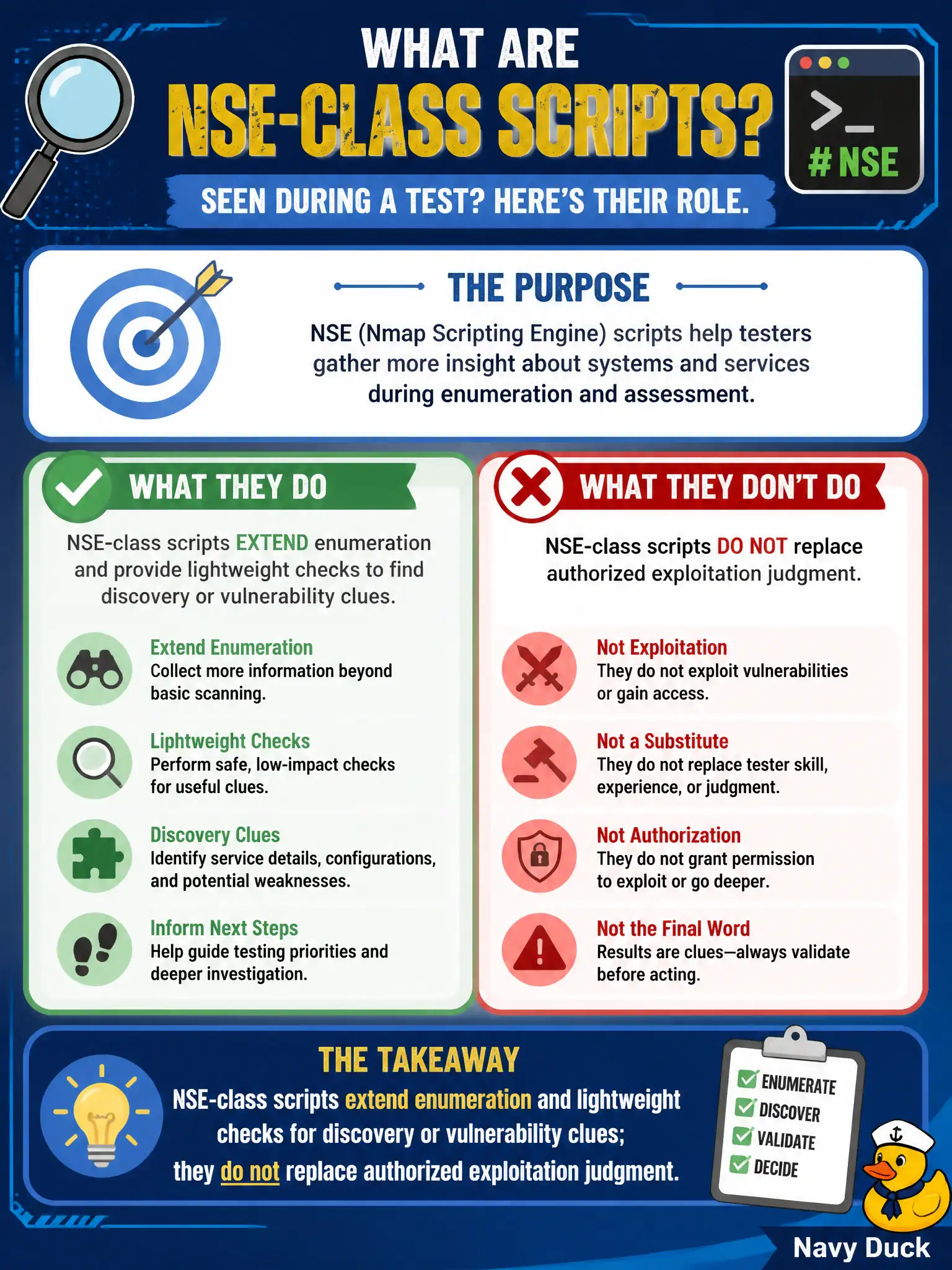
Think of NSE-class scripts as specialized flashlights and tape measures, not skeleton keys. They help you see services and weakness clues more clearly. Pulling the trigger on real impact still needs human judgment and permission.
Full Explanation
NSE-class scripts extend enumeration and lightweight checks for discovery or vulnerability clues during a transit test; they do not replace authorized exploitation judgment. They do not automatically grant domain admin. They should not be maxed out solely to generate denial-of-service conditions. Scripts are not 'passive by definition' and do not replace rules of engagement. Exam caveat: some scripts are intrusive—review categories and RoE before enabling aggressive packs near citizen-facing services. Operational check: enable only script classes justified by scope and timing, monitor service health with the blue team, treat script output as leads for manual validation, and record which scripts ran against which transit hosts. Document the rationale in the municipal engagement notes so later civic responders know which boundary was honored and which failure modes the rejected options would create for public services. Document the rationale in the municipal engagement notes so later civic responders know which boundary was honored and which failure modes the rejected options would create for public services. Document the rationale in the municipal engagement notes so later civic responders know which boundary was honored and which failure modes the rejected options would create for public services.