
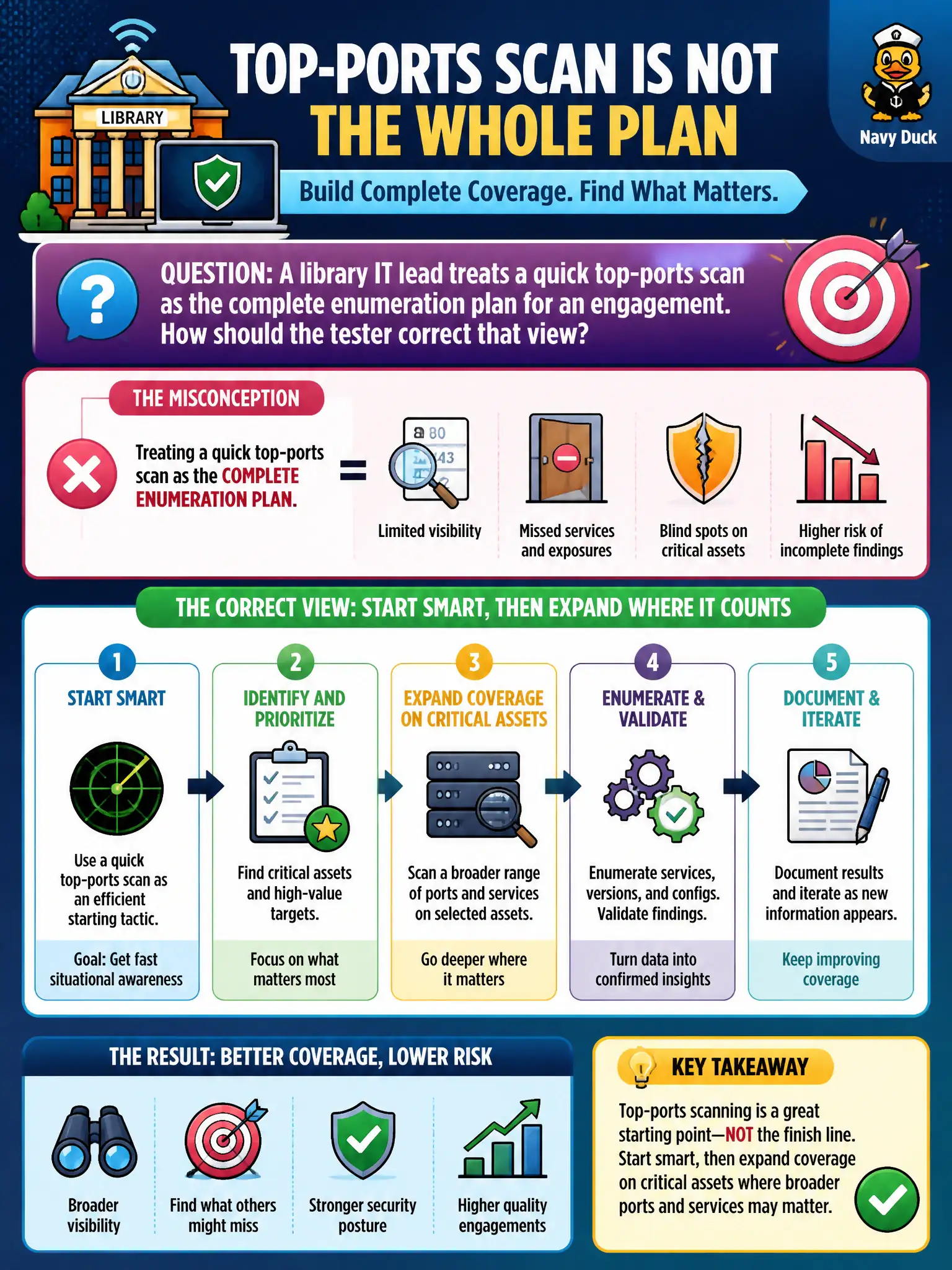
A library IT lead treats a quick top-ports scan as the complete enumeration plan for an engagement. How should the tester correct that view?
Select an answer to reveal the explanation.
Short Explanation
Top-ports is the express lane, not the whole highway map. It gets you moving fast on common services, but critical boxes may still hide important listeners on less common ports. Start smart, then widen where it counts.
Full Explanation
A quick top-ports scan is an efficient starting tactic for a library engagement, not a complete enumeration plan. Expand coverage on critical assets where broader or full-port sweeps may reveal uncommon administrative services. Declaring the engagement finished when a default top-ports profile shows no high-severity CVEs leaves blind spots. Refusing all top-ports scans because only 65535-port sweeps are 'professional' ignores time-boxing and noise management. Replacing port enumeration with password spraying is not how rare services are responsibly discovered. Exam caveat: CPTS-style work often begins broad-shallow then goes deep on priority targets. Operational check: after top-ports discovery, identify crown-jewel library systems and schedule wider port coverage or UDP checks there within RoE timing limits, documenting why those assets received deeper enumeration. Document the rationale in the municipal engagement notes so later civic responders know which boundary was honored and which failure modes the rejected options would create for public services. Document the rationale in the municipal engagement notes so later civic responders know which boundary was honored and which failure modes the rejected options would create for public services.