
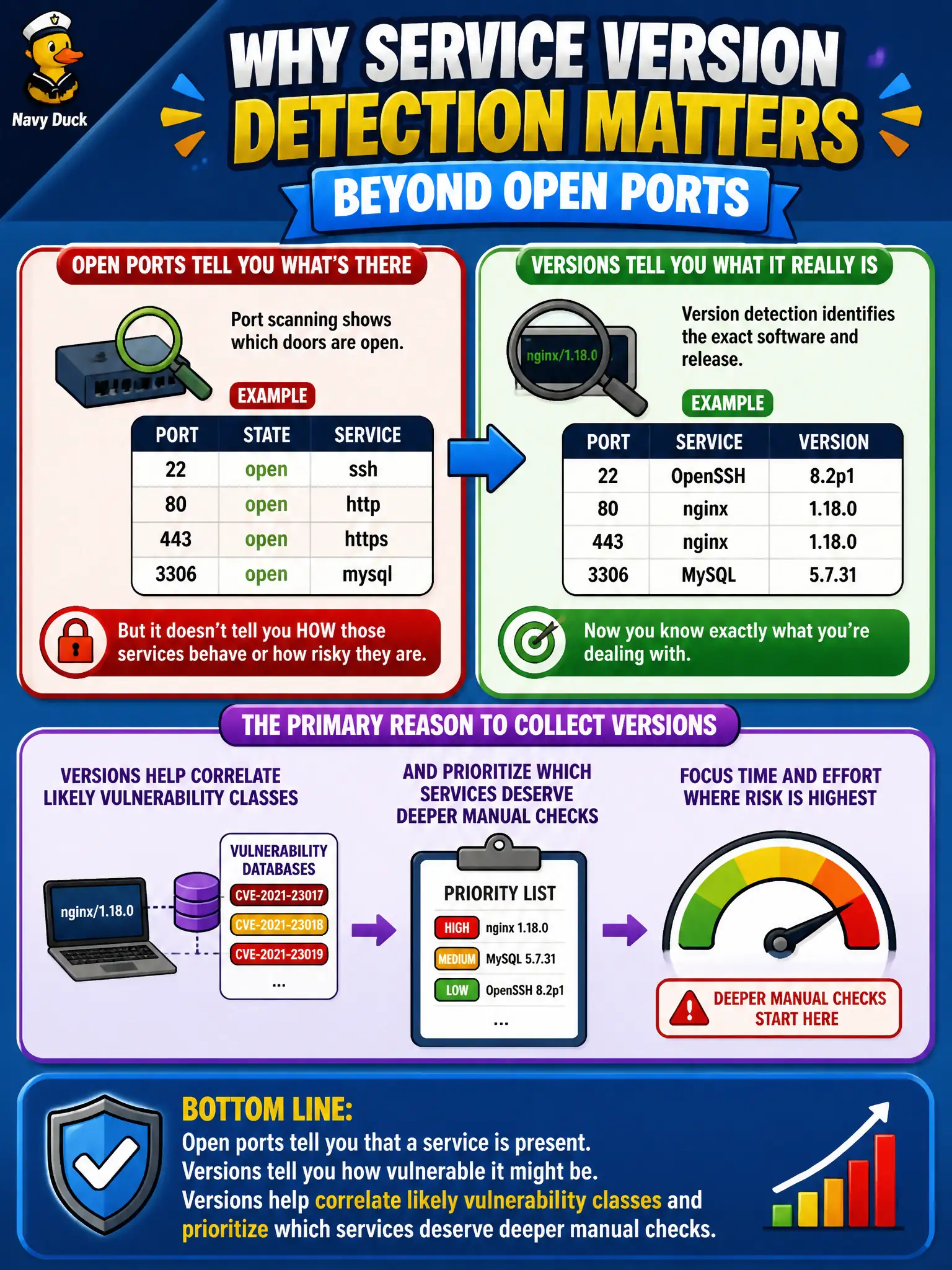
A municipal admin asks why service version detection matters after open ports are already listed. What is the primary reason to collect versions?
Select an answer to reveal the explanation.
Short Explanation
An open port is a locked door with a model number on it. The version tells you which keys and quirks are worth checking next. Curiosity alone is not the point — prioritization is.
Full Explanation
After open ports are listed, service version detection matters because versions help correlate likely vulnerability classes and prioritize which services deserve deeper manual checks on municipal hosts. Versions do not replace vulnerability research or prove exploitability by themselves—banners can be wrong or incomplete. Version detection is not mere screenshot decoration. Moving straight to privilege escalation on unrelated hosts skips the planning value versions provide. Exam caveat: some services hide or fake banners; combine version clues with behavior, packet detail, and authenticated checks when RoE allows. Operational check: capture product and version strings for in-scope listeners, map them to known issue classes, and queue manual validation on high-value civic services before any exploit attempt. Document the rationale in the municipal engagement notes so later civic responders know which boundary was honored and which failure modes the rejected options would create for public services. Document the rationale in the municipal engagement notes so later civic responders know which boundary was honored and which failure modes the rejected options would create for public services.