
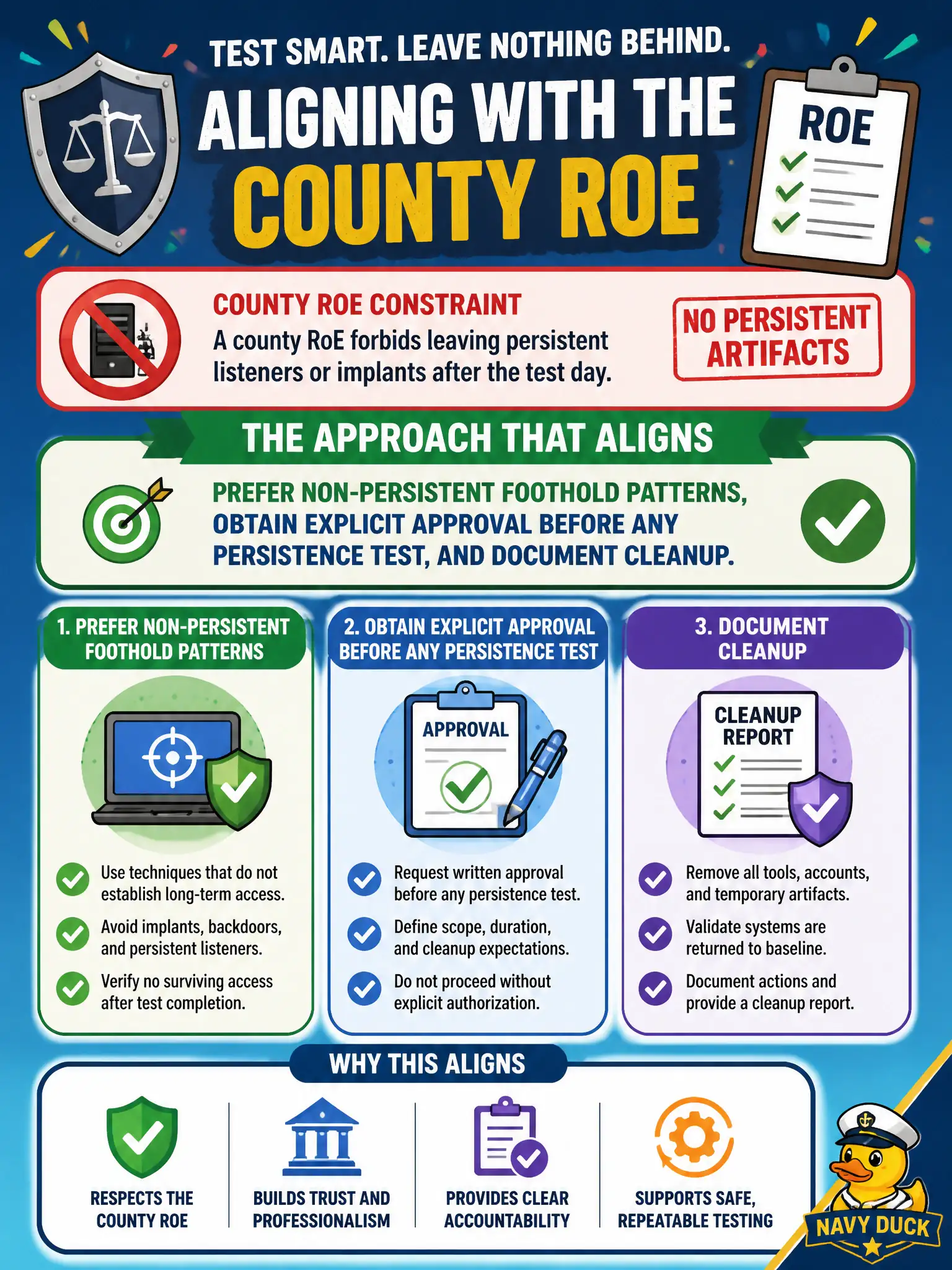
A county RoE forbids leaving persistent listeners or implants after the test day. Which approach aligns with that constraint?
Select an answer to reveal the explanation.
Short Explanation
If the county says no overnight guests, do not hide a cot in the server room. Keep access temporary, ask before testing persistence, and clean up on the way out.
Full Explanation
When county RoE forbids leaving persistent listeners or implants after the test day, prefer non-persistent foothold patterns, obtain explicit approval before any persistence test, and document cleanup. Installing boot-time persistence on every foothold for convenience and omitting it from notes violates RoE and ethics. Leaving listeners running indefinitely as free SOC monitoring is not authorized. Hiding persistence in firmware so cleanup scripts miss it is malicious and out of scope for this practice bank. Exam caveat: if persistence testing is later approved, isolate it to specific hosts with written change control. Operational check: use session-scoped access, inventory any scheduled tasks or services created, remove them before exit, and provide the county a cleanup attestation appendix. Document the rationale in the municipal engagement notes so later civic responders know which boundary was honored and which failure modes the rejected options would create for public services. Document the rationale in the municipal engagement notes so later civic responders know which boundary was honored and which failure modes the rejected options would create for public services. Document the rationale in the municipal engagement notes so later civic responders know which boundary was honored and which failure modes the rejected options would create for public services.