
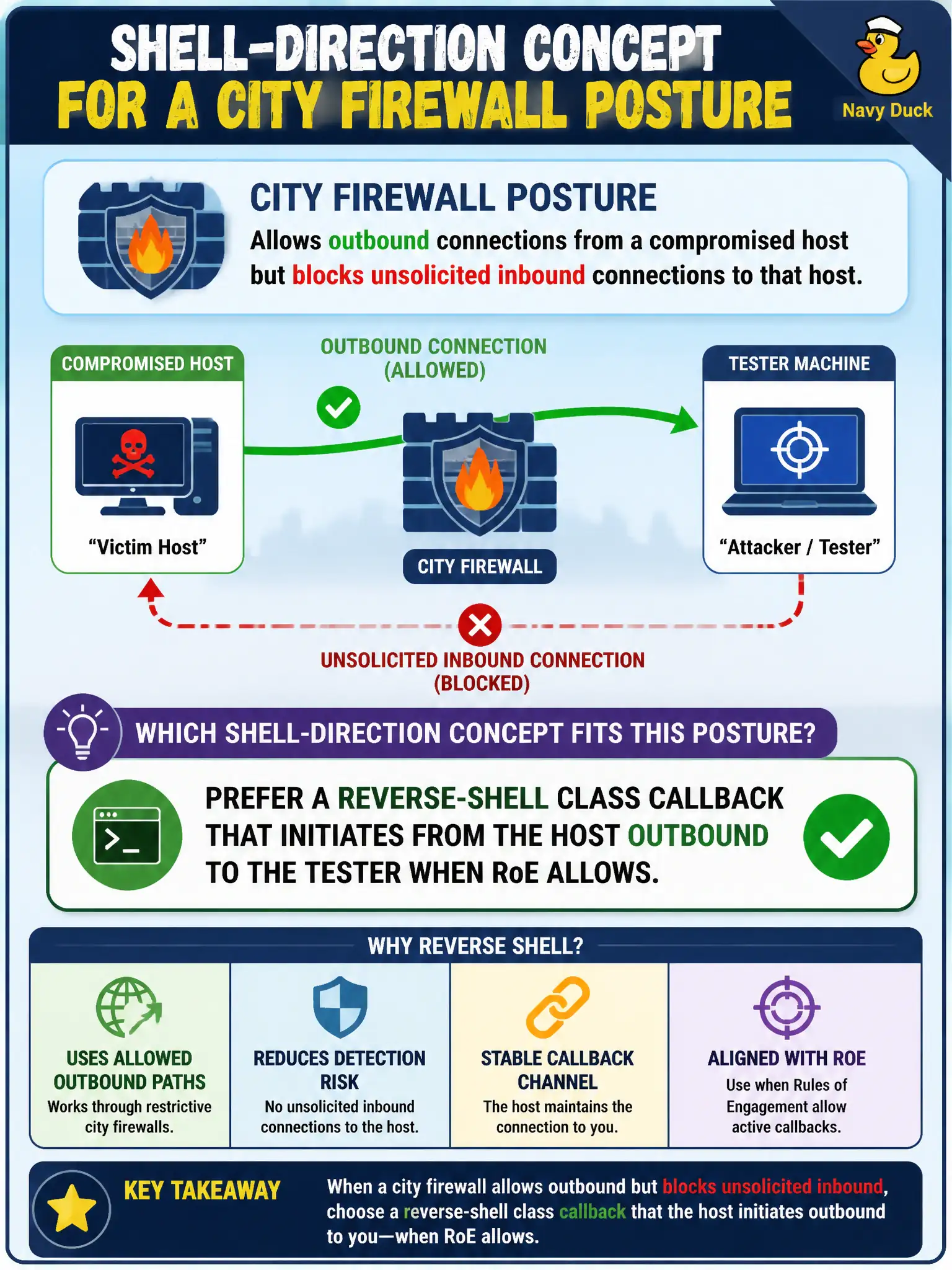
A city firewall allows outbound connections from a compromised host but blocks unsolicited inbound connections to that host. Which shell-direction concept fits that posture?
Select an answer to reveal the explanation.
Short Explanation
If the door only swings outward, have the host call you—do not stand outside knocking on a locked inbound port. That reverse-callback idea matches the firewall story.
Full Explanation
If a city firewall allows outbound connections from a compromised host but blocks unsolicited inbound connections, prefer a reverse-shell class callback that initiates from the host outbound to the tester when RoE allows. Binding a listener on the host and waiting for inbound connections the firewall will drop fights the network posture. Disabling the city firewall without approval is unauthorized and dangerous. Physical console access is not the only remote shell option when outbound callbacks are permitted. Exam caveat: discuss callback destinations, ports, and encryption expectations in RoE before use; this is conceptual guidance, not a payload recipe. Operational check: confirm outbound allow rules with the city, choose an approved callback channel, monitor for stability, and ensure the shell is terminated and cleaned up after testing. Document the rationale in the municipal engagement notes so later civic responders know which boundary was honored and which failure modes the rejected options would create for public services. Document the rationale in the municipal engagement notes so later civic responders know which boundary was honored and which failure modes the rejected options would create for public services.