
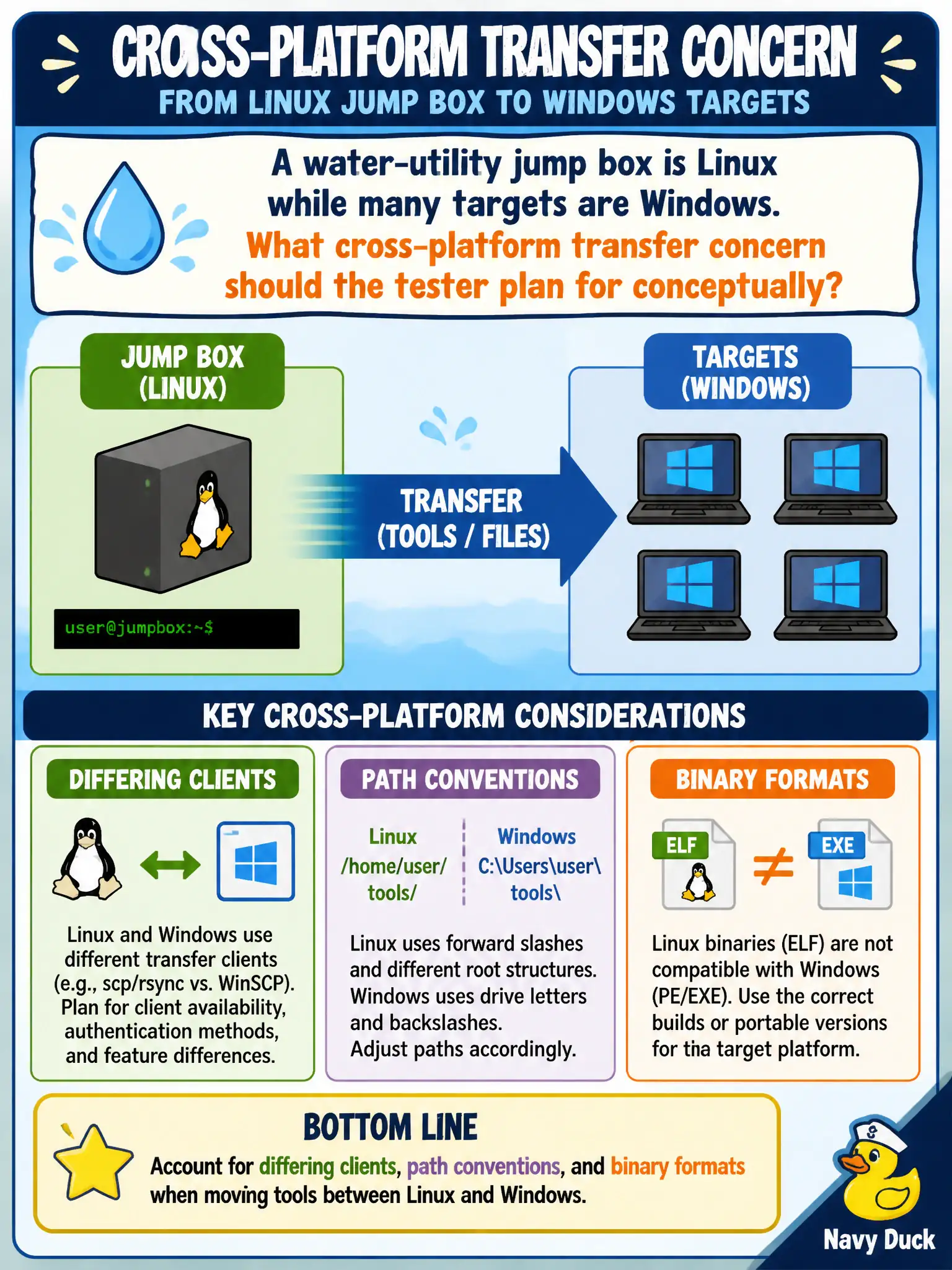
A water-utility jump box is Linux while many targets are Windows. What cross-platform transfer concern should the tester plan for conceptually?
Select an answer to reveal the explanation.
Short Explanation
A Linux jump box and a Windows target speak neighboring dialects. Pack the right binaries and path style or the delivery arrives as gibberish.
Full Explanation
With a water-utility jump box on Linux and many Windows targets, plan for differing clients, path conventions, and binary formats when moving tools between platforms. Linux and Windows do not always share identical shells, so planning is needed. Converting every Windows host to Linux mid-test is absurd and unauthorized. Operating systems do not magically reinterpret arbitrary binaries correctly. Exam caveat: keep separate tool builds and checksums for each platform and architecture used in the utility environment. Operational check: stage platform-appropriate toolsets on the jump box, verify architecture (x86/x64/ARM) before transfer, use correct path separators and line endings in scripts, and test execution in a non-critical authorized host first. Document the rationale in the municipal engagement notes so later civic responders know which boundary was honored and which failure modes the rejected options would create for public services. Document the rationale in the municipal engagement notes so later civic responders know which boundary was honored and which failure modes the rejected options would create for public services. Document the rationale in the municipal engagement notes so later civic responders know which boundary was honored and which failure modes the rejected options would create for public services.