
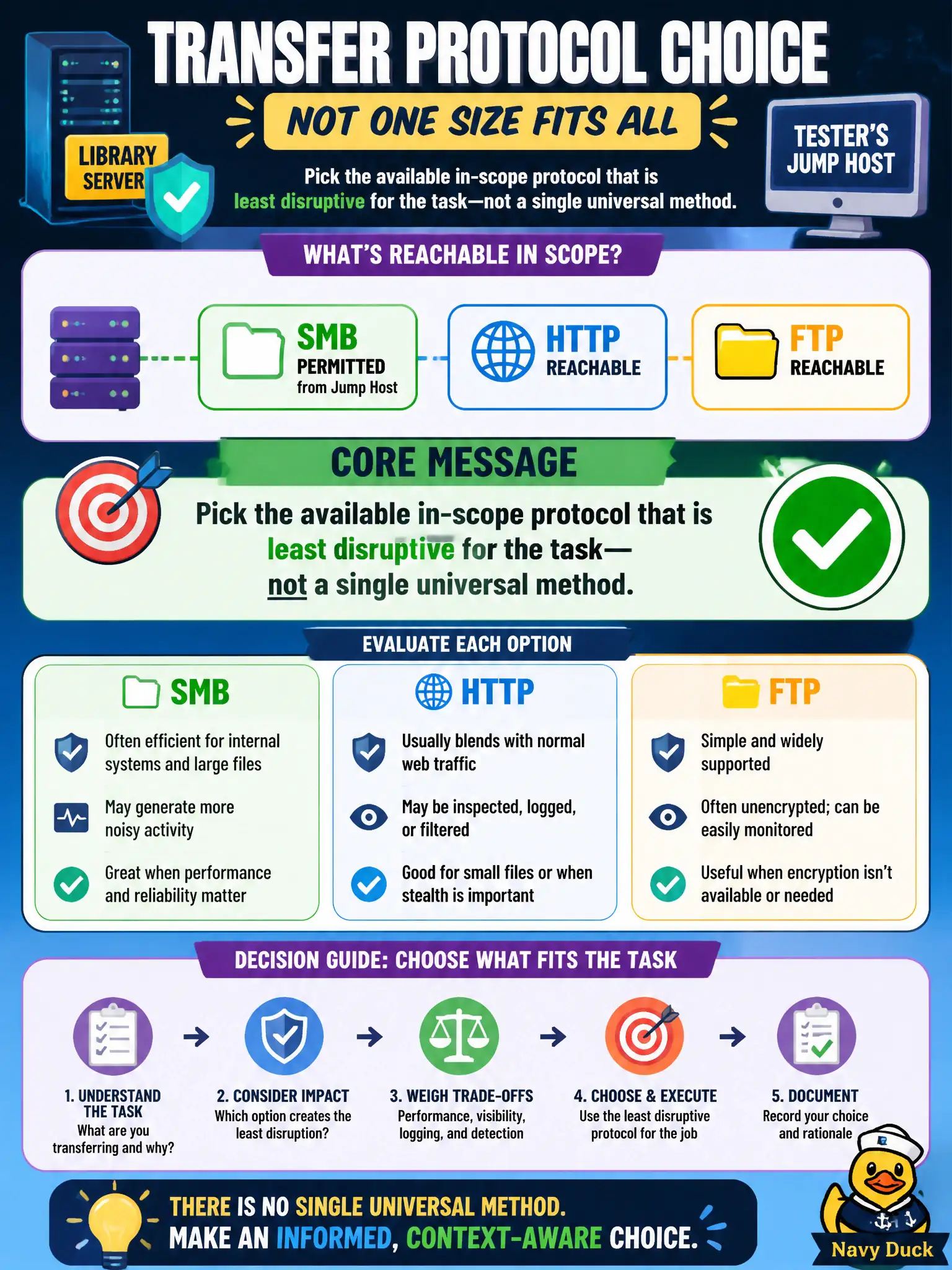
A library server permits SMB from the tester's jump host, and HTTP and FTP are also reachable in scope. How should transfer protocol choice be framed?
Select an answer to reveal the explanation.
Short Explanation
Protocols are just different trucks. Grab the one that is already allowed, gets the job done, and does not tear up the street.
Full Explanation
When a library server permits SMB from the jump host and HTTP/FTP are also reachable in scope, frame transfer protocol choice as picking the available in-scope protocol that is least disruptive for the task—not a single universal method. Always using FTP because it is oldest is not a safety rule. Always using the noisiest protocol to generate detection samples regardless of need can violate RoE and harm services. Disabling SMB first so only HTTP remains is an unauthorized production change. Exam caveat: consider encryption, logging, and operational sensitivity of library services when choosing. Operational check: evaluate allowed protocols, select the least disruptive workable channel, transfer minimal content, and note the choice and alternatives in the engagement log. Document the rationale in the municipal engagement notes so later civic responders know which boundary was honored and which failure modes the rejected options would create for public services. Document the rationale in the municipal engagement notes so later civic responders know which boundary was honored and which failure modes the rejected options would create for public services. Document the rationale in the municipal engagement notes so later civic responders know which boundary was honored and which failure modes the rejected options would create for public services.