
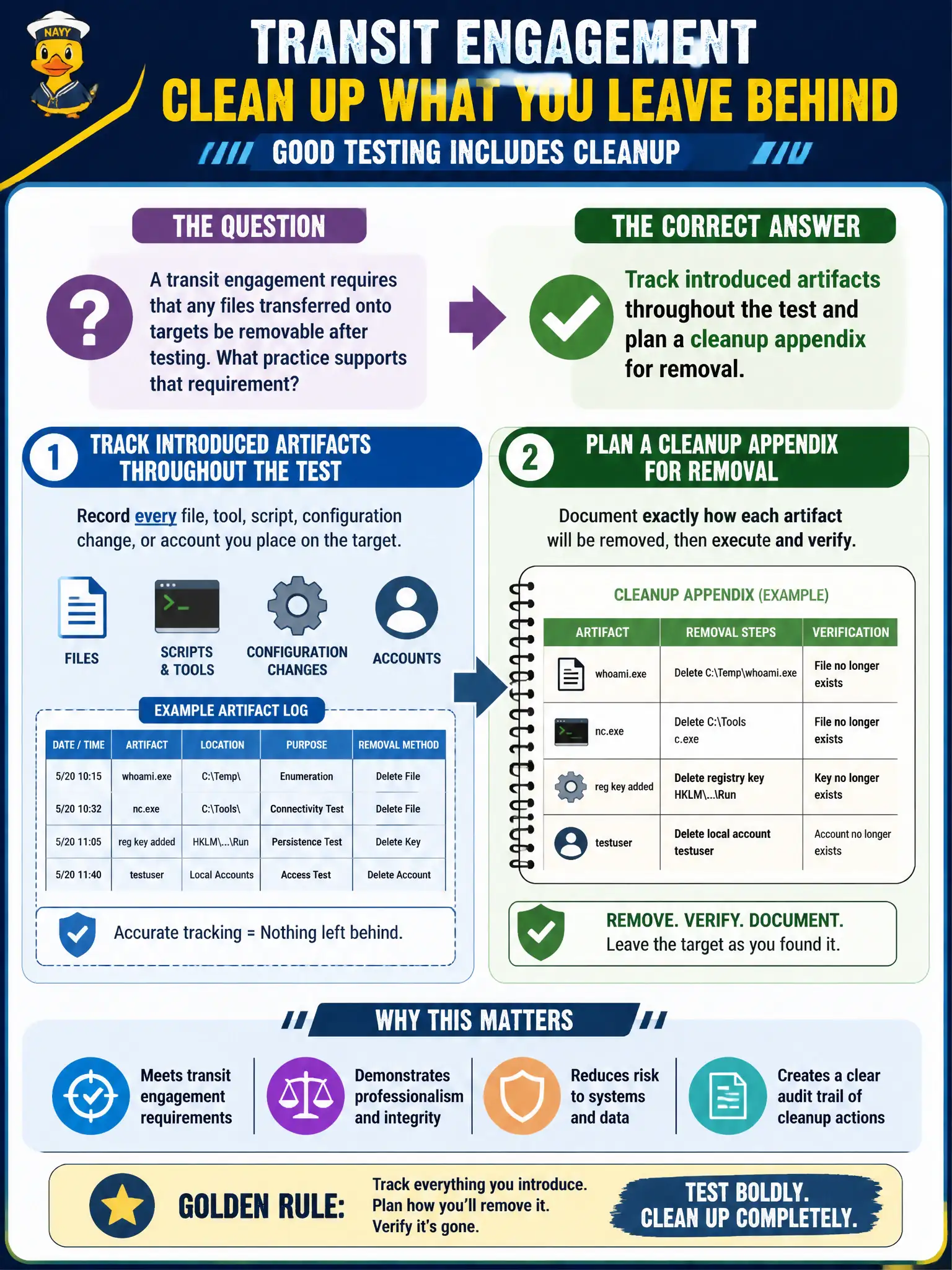
A transit engagement requires that any files transferred onto targets be removable after testing. What practice supports that requirement?
Select an answer to reveal the explanation.
Short Explanation
Treat every dropped file like a borrowed tool with a checkout tag. Write down what you put where so cleanup is a checklist, not a treasure hunt.
Full Explanation
If a transit engagement requires that files transferred onto targets be removable after testing, track introduced artifacts throughout the test and plan a cleanup appendix for removal. Dropping files randomly and relying on the next reboot is unreliable. Leaving utilities permanently so future tests start faster burdens the client and may violate RoE. Hiding tools in alternate data streams and omitting them from notes fails transparency and cleanup. Exam caveat: cleanup evidence belongs in the report so transit IT can verify removal. Operational check: maintain an artifact inventory (host, path, hash, purpose), remove items at end of testing, confirm deletion with the client contact, and list any residuals that could not be removed with compensating guidance. Document the rationale in the municipal engagement notes so later civic responders know which boundary was honored and which failure modes the rejected options would create for public services. Document the rationale in the municipal engagement notes so later civic responders know which boundary was honored and which failure modes the rejected options would create for public services. Document the rationale in the municipal engagement notes so later civic responders know which boundary was honored and which failure modes the rejected options would create for public services.