
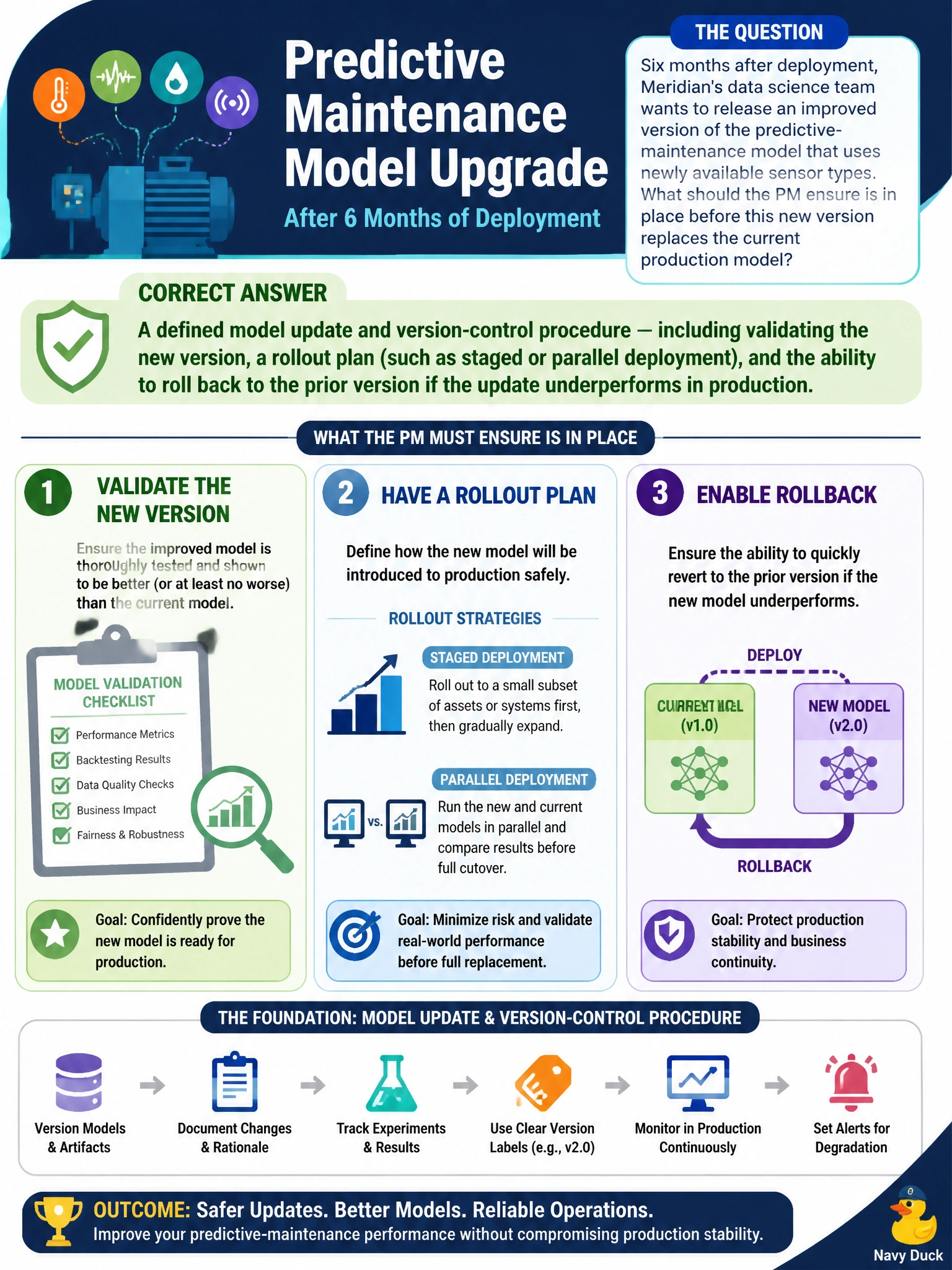
Six months after deployment, Meridian's data science team wants to release an improved version of the predictive-maintenance model that uses newly available sensor types. What should the PM ensure is in place before this new version replaces the current production model?
Select an answer to reveal the explanation.
Short Explanation
Swapping in a new model version without a rollback plan is like changing an aircraft's flight-control software mid-fleet with no way to revert if something goes wrong. You want a staged rollout and an undo button, not a leap of faith.
Full Explanation
CPMAI explicitly calls for procedures for model updates and version control as part of managing AI in production. Before Meridian's improved sensor-aware model replaces the current one, the PM should ensure the new version has been independently validated (not just compared on one accuracy figure), that a rollout plan exists — such as staged deployment to a subset of aircraft or parallel running alongside the existing model — and that a rollback path to the prior version is available if the update underperforms once exposed to full production conditions. Relying solely on a training accuracy comparison repeats the same trap seen elsewhere in this domain: a single technical metric does not guarantee production performance or safety. Immediate full replacement with no transition period or rollback removes the safety net needed if the new version behaves unexpectedly on real fleet data, which is a significant risk for a safety-relevant maintenance system. Discarding records of the previous version eliminates the ability to compare, audit, or revert later, undermining the version-control discipline the task explicitly requires.