
Meridian's loyalty-program fraud-detection model is now live in production, continuously scoring mileage-redemption transactions. What is the PM's responsibility regarding data lifecycle management once the model is deployed?
Select an answer to reveal the explanation.
Short Explanation
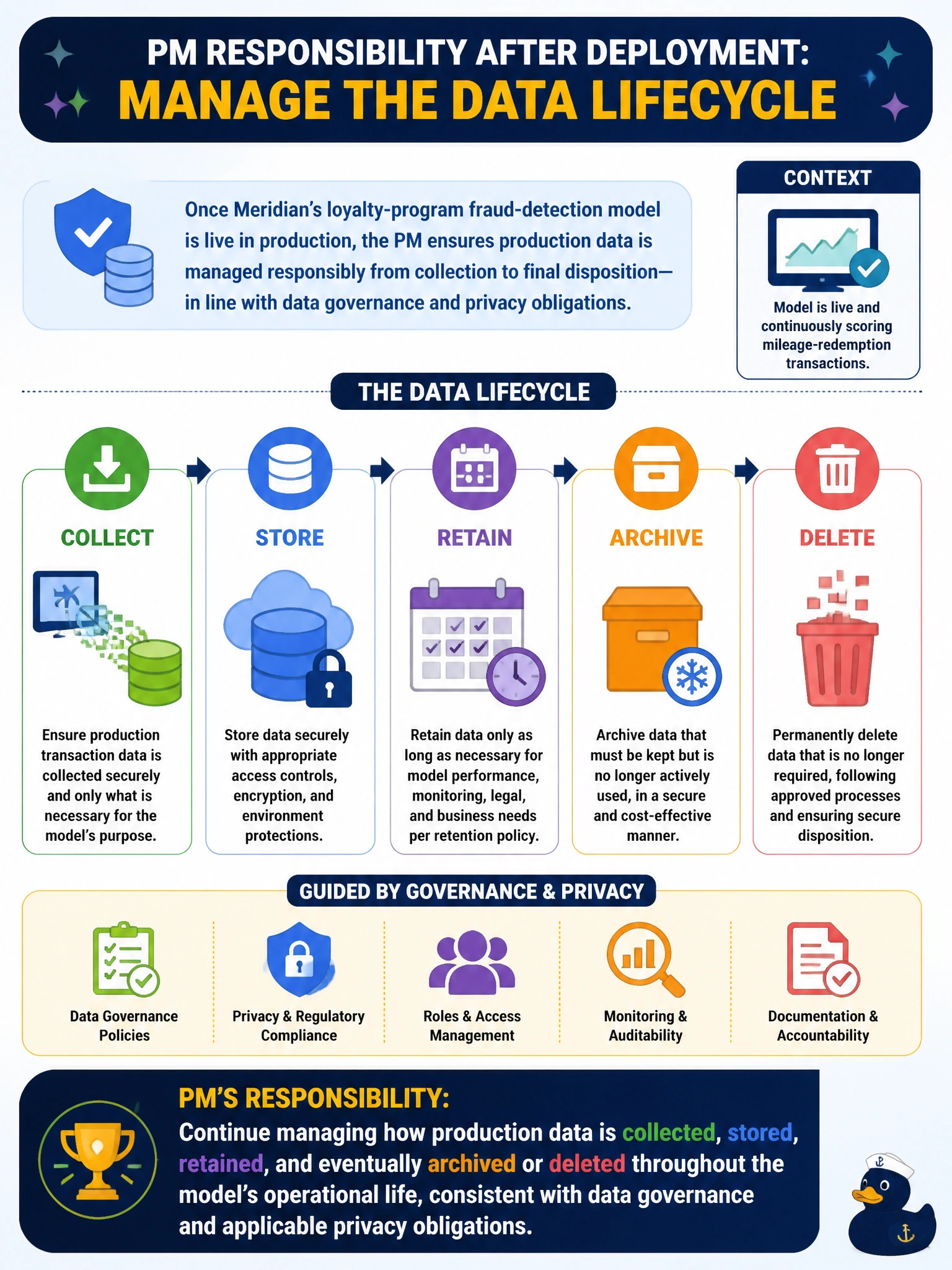
Data doesn't stop needing a plan just because the model went live — production is a data lifecycle too, with its own rules about how long you keep things, who's accountable for them, and what privacy law says you're allowed to do with them.
Full Explanation
CPMAI's Deploying Models for Production Environments task explicitly calls out managing data lifecycles throughout the production environment, not just during training. For a live fraud-detection system, the PM must ensure production transaction data is governed with defined collection, storage, retention and eventual archival or deletion practices, consistent with the airline's broader data governance program and applicable privacy obligations for passenger and loyalty-account data — including the added weight of GDPR-style requirements for European codeshare passengers. Claiming data lifecycle management ends at training ignores that production systems continuously generate new data requiring the same governance discipline, arguably with higher stakes since it's live customer financial and account data. Deleting all production data immediately after each prediction would likely violate audit, dispute-resolution, and model-monitoring needs, and eliminates the historical record needed to evaluate whether the model is still performing well. Indefinite retention with no policy at all creates unmanaged privacy exposure and is inconsistent with data governance principles that require deliberate retention decisions, not a default of keeping everything forever.