
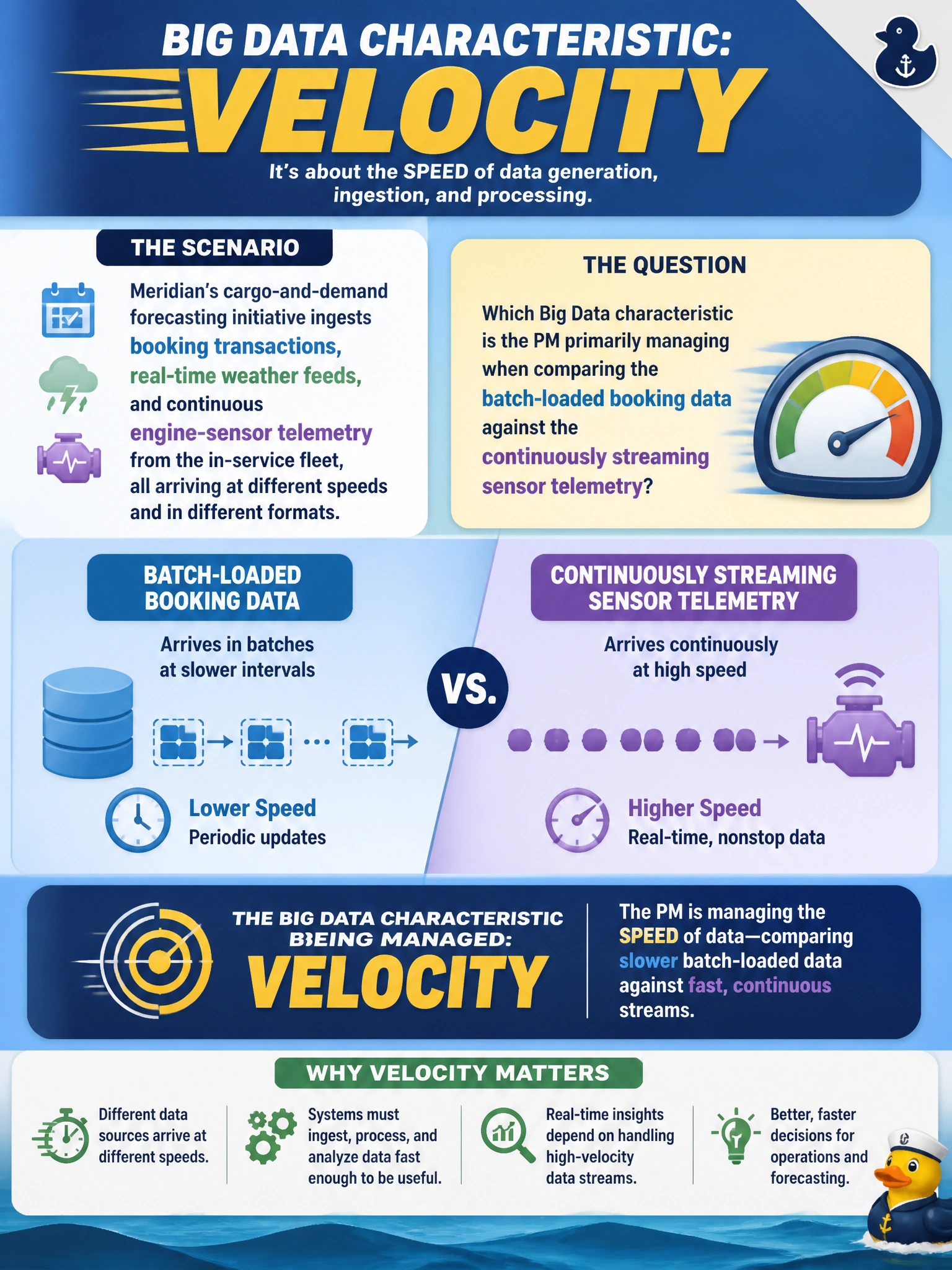
Meridian's cargo-and-demand forecasting initiative ingests booking transactions, real-time weather feeds, and continuous engine-sensor telemetry from the in-service fleet, all arriving at different speeds and in different formats. Which Big Data characteristic is the PM primarily managing when comparing the batch-loaded booking data against the continuously streaming sensor telemetry?
Select an answer to reveal the explanation.
Short Explanation
Velocity is the speed at which data arrives and needs processing — batch nightly booking extracts versus a live stream of engine sensor readings is a velocity contrast, not a size or format one. Don't let the mixed formats in the stem pull you toward 'variety' when the question is specifically about arrival speed.
Full Explanation
Big Data is conventionally described by characteristics such as volume (amount), velocity (speed of arrival/processing), variety (range of formats and sources), and veracity (trustworthiness). The scenario contrasts batch-loaded booking transactions with continuously streaming sensor telemetry — that is a difference in how fast data arrives and must be processed, which is velocity. Variety (option D) is a plausible distractor because the scenario does mention multiple data sources and formats, but the specific comparison drawn in the question — batch versus continuous/real-time — isolates velocity, not the range of formats. Volume (option B) concerns quantity, not speed, and nothing in the stem quantifies size. Veracity (option A) concerns trustworthiness/accuracy of the data, which isn't addressed here. A PM designing a data architecture must recognize which Big Data characteristic is driving an infrastructure decision — high-velocity sensor streams typically demand a different pipeline pattern than batch-loaded transactional data, a distinction covered further under Task 3 (data pipelines).