
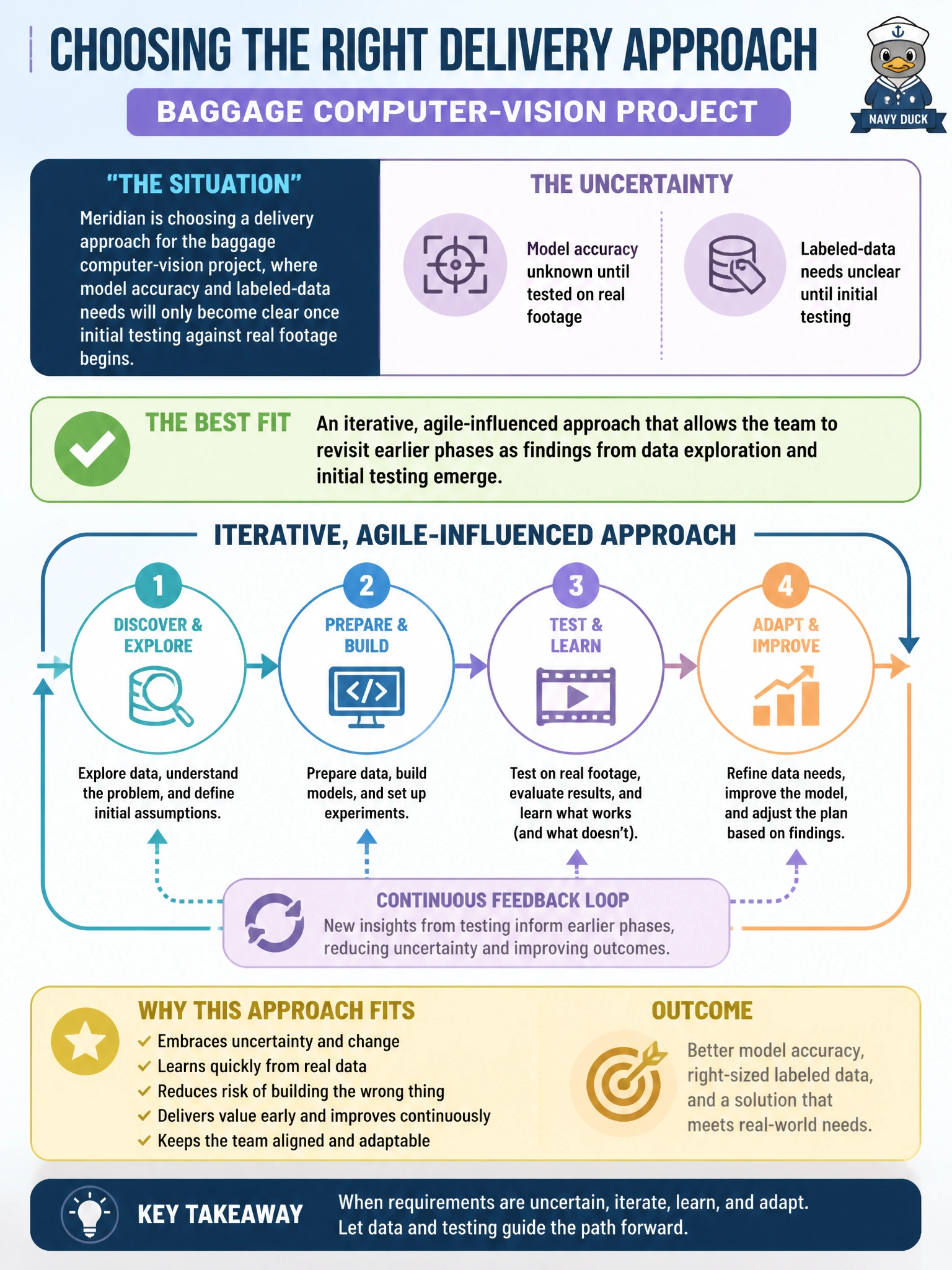
Meridian is choosing a delivery approach for the baggage computer-vision project, where model accuracy and labeled-data needs will only become clear once initial testing against real footage begins. Which approach best fits this uncertainty?
Select an answer to reveal the explanation.
Short Explanation
You can't waterfall your way through a problem you don't understand yet. When accuracy needs will only reveal themselves once you start testing, you need a loop back to earlier steps built into the plan, not a one-way sequence.
Full Explanation
This scenario tests the Task 1 enabler comparing waterfall, lean, and agile methodologies for AI projects. Because the model's accuracy and labeling requirements can only be discovered through initial testing against real data, a rigid, sequential waterfall approach is a poor fit — it assumes requirements can be fully fixed upfront, which is not true for a data-centric AI initiative. An iterative, agile-influenced approach explicitly builds in the ability to revisit Business Understanding, Data Understanding, or Data Preparation as new findings emerge from testing, which matches how CPMAI phases are designed to loop rather than proceed strictly linearly. Option A is the mismatched methodology being tested against and represents the classic error of applying traditional software assumptions to an AI project. Option C conflates a contracting/commercial structure with a delivery methodology and, worse, would actively prevent the team from adapting scope as data realities surface. Option D ignores the value of staged validation entirely, reintroducing the exact POC-to-production risk covered in Task 1's other enablers. Adapting methodology to fit data-centric uncertainty is a recurring CPMAI theme.