
A retailer serves the same product images to shoppers far from its only data center. Which function places cached copies of those images closer to the shoppers?
Select an answer to reveal the explanation.
Short Explanation
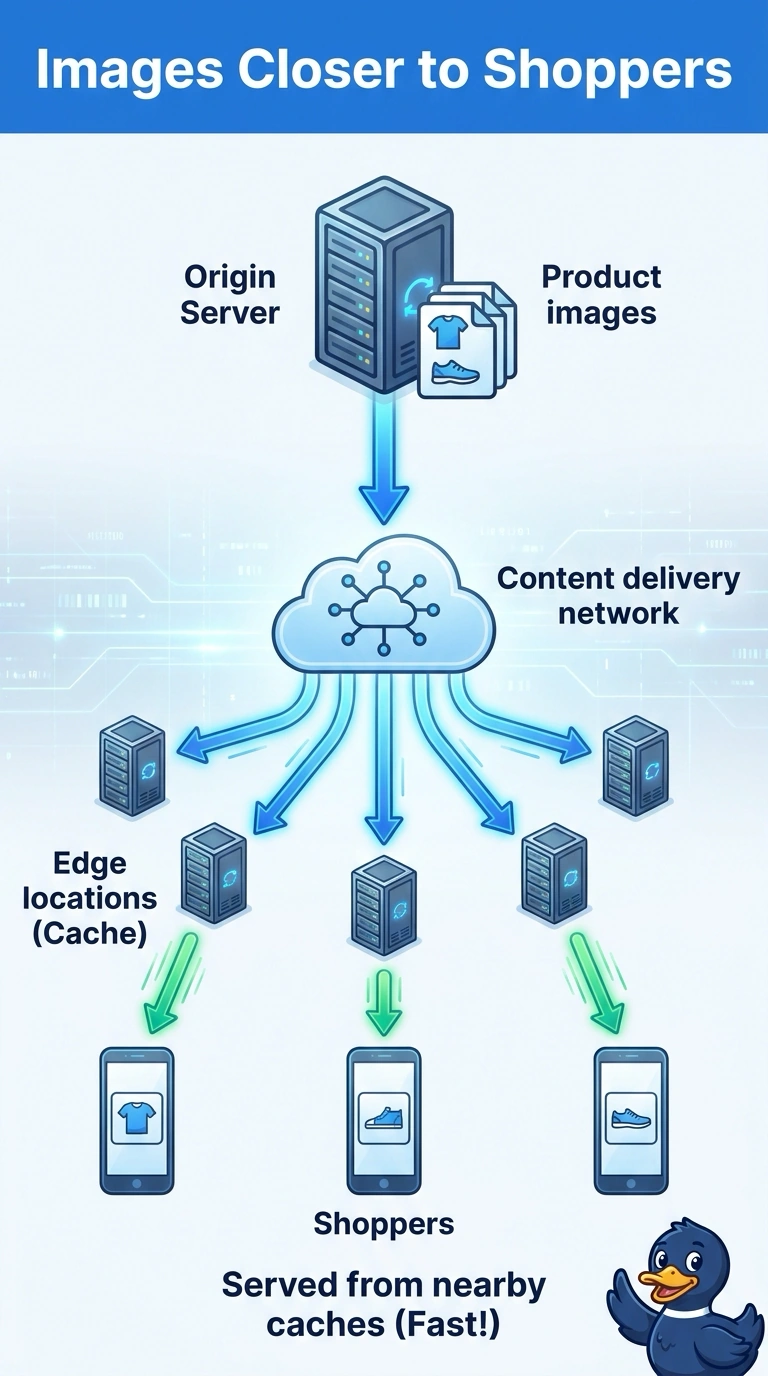
You don’t need every shopper to fetch the same image all the way from one distant data center. A content delivery network keeps cached copies nearer to shoppers; the storage-area network, route time-to-live value, and intrusion-detection sensor do not do that.
Full Explanation
A content delivery network caches copies of cacheable product images at edge locations, letting shoppers fetch them from nearer than the retailer’s origin data center. With one origin and a geographically spread-out audience, this reduces the distance data must travel and is the function designed for the problem. A storage-area network presents block storage to servers, usually inside or near the data center; it does not create geographically distributed image caches for shoppers. A larger time-to-live value on a route does not move content closer: TTL is a hop counter that routers decrement, not a mechanism for placing copies of images, and it is not a setting on a shopper’s default route in the way the option suggests. An intrusion-detection sensor analyzes a copy of traffic and may alert on suspicious activity; keeping a copy for later review does not distribute product images to shoppers. Exam caveat: a route’s TTL and a cached image’s freshness lifetime are different concepts, even though both use the term “time-to-live.” Practical check: request an image from a distant network, confirm that the response comes from an edge cache, and compare its latency with a request forced back to the origin.